Agriculture Minister Says Brazil’s Climate not Favorable to Organics
RIO DE JANEIRO, BRAZIL – Despite the fact that the number of organic producers has tripled in seven years in Brazil, Agriculture Minister Tereza Cristina said this week that the country’s warm climate is not favorable to this type of healthier production without pesticides. The minister made this and other controversial statements during a visit to the United Arab Emirates this week, as part of a diplomatic mission to the Middle East.

In an interview with the Emirates News Agency (WAM), the minister said that, as a result of the “unfavorable” climate, organic products would be “between 15 and 20 percent more expensive” than non-organic products, and would be consumed “only by the upper classes”.
The statements are in contradiction with information from the Ministry of Agriculture, Livestock, and Supply itself (MAPA). Between 2010 and 2018, the number of organic production facilities in the country grew from 5,406 to 22,064, an increase of over 300 percent. In addition, 90,000 producers have self-reported to the Brazilian Institute of Geography and Statistics (IBGE) as organic.
The registration shortfall, according to the Organic Production Coordination itself, a sector of the MAPA in charge of the National Register of Organic Producers, would be a factor for the low supply in the market and, consequently, the higher prices.
Burnings
In the interview with WAM, Tereza Cristina also minimized the severity of the fires in the Amazon, claiming that the media “overstated” the magnitude of the fires and that the outbreaks occurred only “on the Amazonian border, not in the rainforest”.
The National Space Research Institute (INPE) recorded 140,824 fires nationwide between January 1st and September 26th, a 54 percent increase over the same period last year. In August this year alone, the most critical period of the current environmental crisis, there was an increase of 288 percent in the number of outbreaks recorded in comparison to July. In addition to the Amazon forest, one of the most affected biomes is the Cerrado (savanna).
Transgenic crops
Tereza Cristina said she was eager to establish “active cooperation in the agricultural sector with the Gulf States”, among other areas, for the research and development of new genetically modified foods. During the interview, Jair Bolsonaro’s government minister also argued “with the conviction of her professional experience” that GM foods are “safe” and that “there is no scientific evidence” of the risks of this type of product.
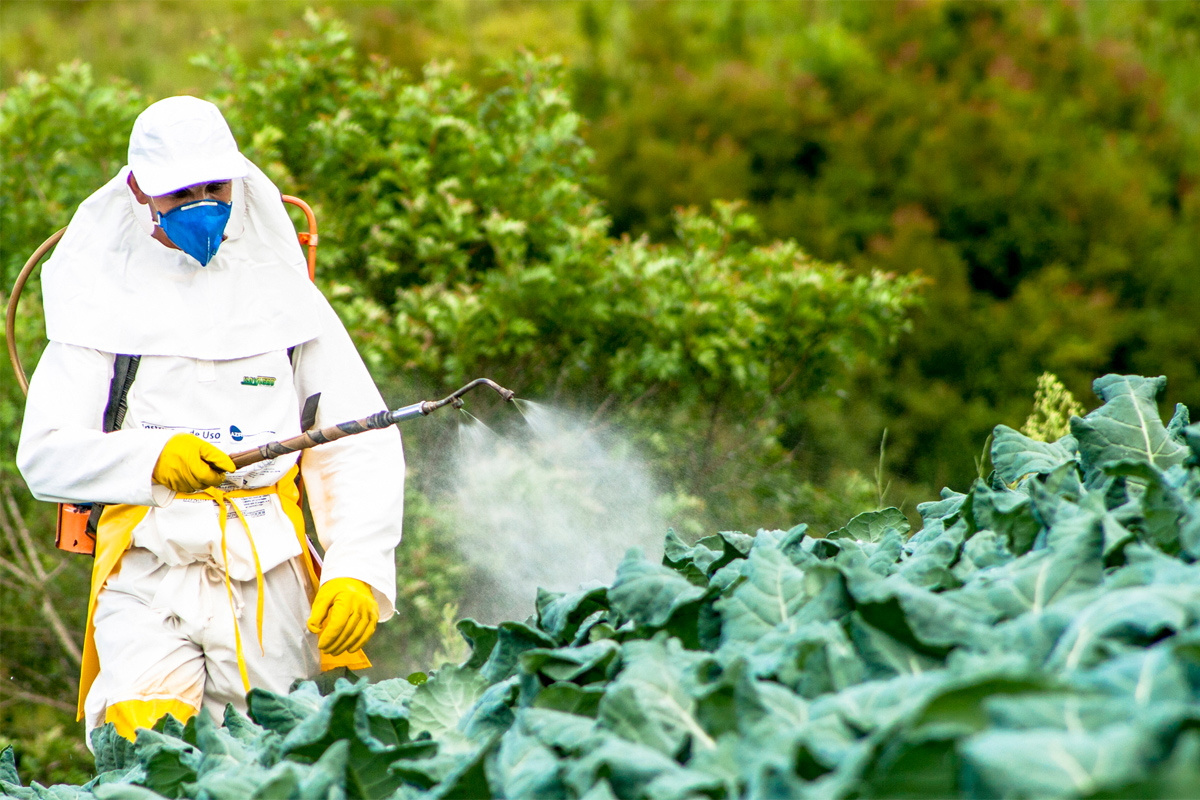
The minister’s statement, however, runs counter to international trends, as in the case of Germany, which has recently banned the use of glyphosate, based on studies that show that pesticides are behind the massive death of pollinating insects and the increased incidence of cancer in animals and presumably in humans. In the United States, the link between glyphosate and cancer has also been pointed out in a number of lawsuits.
In Brazil, a public consultation conducted in April by the National Health Surveillance Agency (ANVISA) pointed out that more than half of the respondents advocate the ban on glyphosate in Brazil because it is harmful to human health.
Before taking over the Agriculture portfolio in Bolsonaro’s government, Tereza Cristina chaired the Agricultural Parliamentary Front (FPA), known as the “ruralist group”, and was one of the main advocates of ‘PL 6299/2002’, the so-called Poison Bill, which proposes easing the authorization and marketing of pesticides in Brazil. However, the pace of pesticide release in the current government is so fast that the ruralists themselves have stopped insisting on processing the bill in Congress. In nine months, 325 new products have been released.
Tereza Cristina’s trip to the United Arab Emirates was part of an agenda in the Middle East to “open new markets for Brazilian agricultural products”. The minister met with investors and government representatives to discuss “business opportunities” and also traveled through Egypt, Saudi Arabia, and Kuwait.
More: Brazil news in English, every day from The Rio Times.
This article was produced by The Rio Times’ automated newsroom system. How we use AI · Report an error · Editorial responsibility: Matthias Camenzind, Editor-in-Chief