Brazil: UN Rapporteur Denounces Impunity for Environmental Crimes
RIO DE JANEIRO, BRAZIL – The UN Special Rapporteur on Toxins and Human Rights, Baskut Tuncak, has denounced the prevailing impunity for environmental crimes in Brazil. The country is on a “tragic path towards dismantling environmental protection institutions”, Tuncak concludes after his two-week fact-finding mission in December 2019.

As examples, he mentioned the increased deforestation rates and fires in the Amazon region, the current oil catastrophe off its coast, the intensive use of highly dangerous pesticides and toxic substances in mining. The UN expert voiced great concern as the government under President Jair Bolsonaro has not committed itself to more stringent environmental control measures.
Although some authorities have described certain cases as “environmental crimes”, no criminal proceedings have been brought or even penalties imposed. The awareness of impunity has encouraged criminals to increasingly and unscrupulously poison people, take away their land and destroy the environment. The failure of the judiciary to prosecute environmental crimes is leading to ecologically fatal changes in land use in favor of the expansion of industrial agriculture and land-intensive mining.
Concurrently, Tuncak also cautioned about the growing criminalization of environmentalists and human rights advocates. The current government is breaking up established cooperation channels with civil society activists and is seeking to intimidate and silence them.
Tuncak had repeatedly asked the government for an official invitation until it was finally granted. No minister welcomed him during his visit. The government provided feedback only five days before the start of the mission after he had submitted his travel agenda. In Brazil, although the rapporteur was given adequate support at working level by the Ministry of Foreign Affairs and the Ministry of Human Rights, he was not met with much enthusiasm by the Ministry of the Environment.
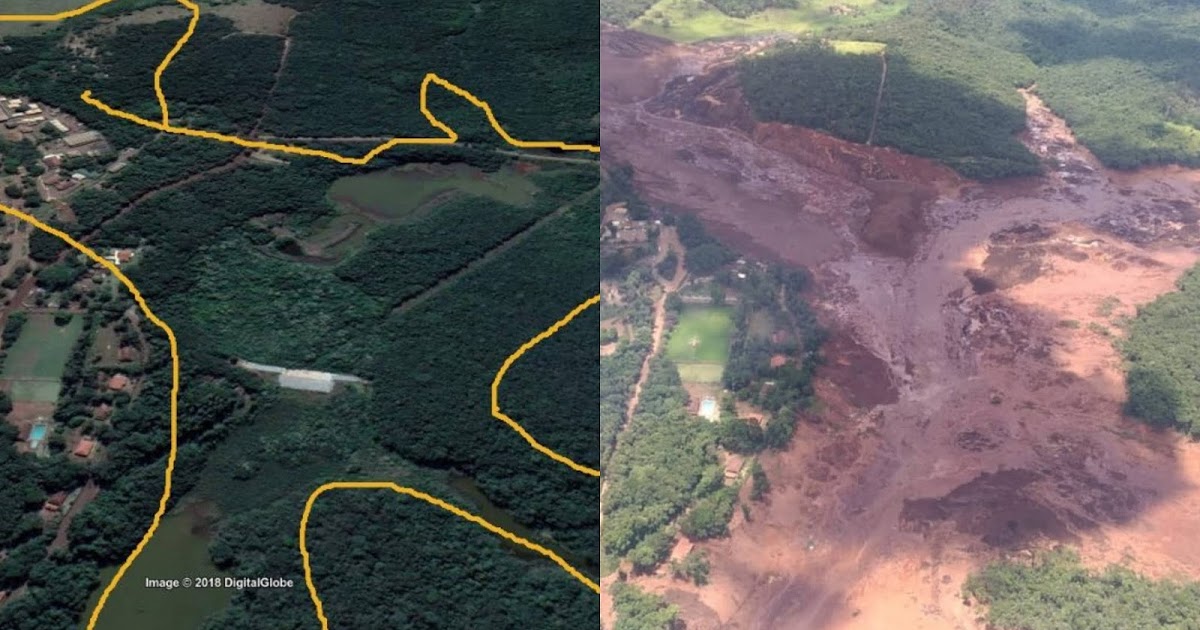
The Special Rapporteur also visited the victims of two dam breaks in Mariana and Brumadinho in the state of Minas Gerais. On January 25th, 2019, a dam collapsed in the open-cast iron ore mine Córrego do Feijão belonging to the Brazilian mining group Vale do Rio Doce. Around twelve million cubic meters of sludge containing toxic residues spilled over an area of approximately 290 hectares, burying people, houses, and animals beneath it. At least 270 people perished.
When the Fundão dam collapsed in 2015, a siltation dike from the iron ore production of the Samarco company broke. As a result, an avalanche of 60 million cubic meters of toxic sludge spilled over 663 kilometers across the rivers Gualaxo do Norte, Carmo and Doce. The disaster claimed 19 lives, affected the water supply of 35 communities and around 1,200 families lost their homes; the two villages of Bento Rodrigues and Paracatu were completely destroyed.
According to its own information, Tuncak had “difficult” conversations with residents and survivors of both environmental disasters. What shocked him the most was the slow reaction of authorities and the government’s dependence on the responsible companies. For years, these companies refused to acknowledge the existence of ecological contamination.
On the other hand, the health effects of the toxic sludge exposure by the population four years after the accident in Mariana have become increasingly clear. According to Tuncak, the companies continued to abuse their power by preventing the publication of health and safety data.
The UN rapporteur further questioned Bolsonaro’s government’s recent approval of hundreds of new pesticides – some 800 products. The Ministry of Agriculture plays this down. He met with doctors and community representatives, according to whom there is an existing issue of contaminated communities.
However, government officials have pointed out that they do not have the resources to provide the required monitoring. Brazil, for instance, allows the use of dozens of highly dangerous pesticides that are banned in the EU and many other countries.
Government action or inaction has triggered a disastrous wave of increased toxic pesticide use, deforestation, and mining, poisoning future generations unless urgent action is taken.
The UN expert concludes that Brazil is failing to meet its constitutional obligation to protect human rights from exposure to toxic substances and hazardous waste.
It has eliminated key ministries and funding for environmental and social programs, restricts public participation, and fails to enforce existing laws and court rulings that have been issued to prevent exposure to toxic substances.
The expert will submit his final report to the UN Human Rights Council in the second half of 2020.
More: Brazil news in English, every day from The Rio Times.
This article was produced by The Rio Times’ automated newsroom system. How we use AI · Report an error · Editorial responsibility: Matthias Camenzind, Editor-in-Chief