Brazilian Left-Wing Parties PDT and PSB Display Strength, May Become Alternatives to PT

RIO DE JANEIRO, BRAZIL – The 2020 municipal election left a scenario of left-wing desolation, which saw the political center conquer the vast majority of capital cities and grow in the number of city halls in the country.
But amid the desert, a sort of oasis remained nestled among some of the main capitals of the Northeast, defended by two parties that operate far from the PT (Workers’ Party), now in decline, but which had long been the main force in this ideological field.
The duo PSB-PDT (Brazilian Socialist Party-Democratic Labor Party), led by the Campos clans in Pernambuco (built by ex-governor Eduardo Campos, who died in a plane crash in 2014), and Ferreira Gomes, of the Ciro and Cid brothers in Ceará, passed the ballot box test and now emerges as a competitive force for 2022.

Despite the victories limited to the Northeast, the alliance can celebrate the consolidation of its partnership in the last election. The parties joined forces in eight capitals and, in a difficult scenario for the left, took two each (the PSB took Recife and Maceió, and the PDT won Fortaleza and Aracaju).
Moreover, they came third in the two largest electoral colleges in the country, São Paulo (with Márcio França PSB) and Rio de Janeiro (with Martha Rocha PDT). In most big cities, Lula and Gleisi Hoffmann’s PT refused to join the alliance, insisting on the frustrated strategy that it was necessary to defend the PT’s legacy at the polls. In the end, the party that ruled the country for thirteen years and headed nine capitals in the golden era of Lula, ended up with none – the worst election performance in its history.
In fact, it showed the former comrades that sometimes it’s even easier without the PT. The divorce was quite exposed in Recife’s harsh struggle. To overcome his cousin Marília Arraes (PT), João Campos (PSB), Eduardo’s son, invested heavily in an anti-PT crusade that included posters that read “PT never again” and remarks such as that “[t]he imprisoned party managers do not fit in two hands.”
Harsh statements for someone who in 2018 supported a “Free Lula,” and in 2019 met with the ex-president along with his mother, Renata Campos, who was pointed out by allies and opponents as one of the greatest coordinators of her son’s campaign, an important figure in the clan’s footsteps and responsible for keeping her husband Eduardo’s legacy alive.
An early PSB militant and belonging to another traditional family in the region, Andrade Lima, Renata has always been close to Mayor Geraldo Júlio (PSB) and Governor Paulo Câmara (PSB) – all three were auditors of the State Audit Court – and is viewed with caveats by a part of the Arraes family dynasty, precisely the one that supports Marília.
But what are these left-wing parties that triumphed in the last election? The PSB has as its main feature the domain established in Pernambuco since Eduardo Campos was elected governor in 2006. He held the office for two terms and sponsored his successor, Paulo Câmara, who is in his second term. In addition, the party has been running the city hall since 2013.
However, the family’s political influence comes from much earlier. The current hegemony was built on the legacy of Miguel Arraes, Eduardo’s grandfather, who ruled the state for three terms and the city for one, back in the late 20th century. Son of farmers from the backlands of Ceará, he became an icon of Pernambuco politics when he established himself as a representative of the sugar plantation workers and at the same time associated himself with the mill employers.
The ability to balance himself between being left-wing and dealing with the conservative countryside was a quality inherited by his grandson, who ruled virtually unopposed and managed to be an ally of both Lula, for whom he was Minister, and Aécio Neves (PSDB – Brazilian Social Democratic Party).
In Ceará, the dominance of the Ferreira Gomes dynasty is even more lasting. A political heir to Tasso Jereissati, Ciro became mayor of Fortaleza in 1989 and left there to become governor, a position also held by his brother Cid, now a senator. He helped to elect several mayors in the capital as the current one, Roberto Cláudio, and the future, José Sarto, both from the PDT.
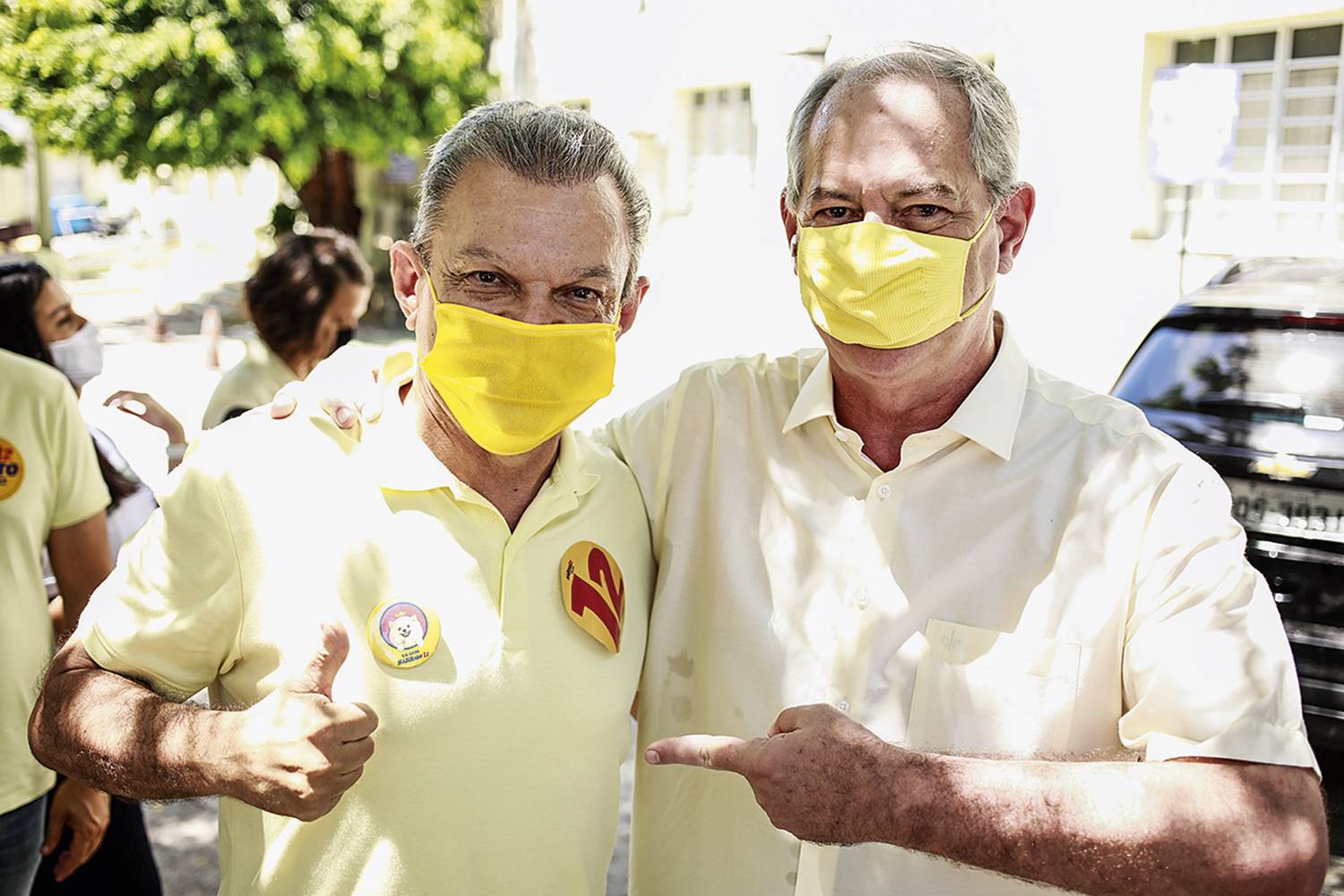
Currently considered the biggest name in the center-left, for having reached third place in the 2018 presidential race, Ciro has the opposite profile to Eduardo Campos. One day after electing Sarto over a candidate supported by Bolsonaro (Capitão Wagner, from the Pros – Republican Party of the Social Order), he placed the left-wing unity at risk by attacking the governor of Maranhão, Flávio Dino (PCdoB – Communist Party of Brazil), who, according to him, “lost all sense of reality” by voting wearing a T-shirt with the inscription “Free Lula”.
Dino retorted that he would not react in order to “prevent unnecessary conflicts from escalating”. While the PSB often extolled the name of Arraes, Ciro, who has been through six parties – including the PDS, heir to Arena, which supported the military – sometimes recalls the legacy of Leonel Brizola, another icon of the left and founder of the PDT.
But the nods to certain leftist heroes of old can only be a smokescreen of the new PDT and the new PSB. Without the shackles of the PT – and further and further away from the PSOL and the PCdoB – the leaders of the two parties began to glimpse the prospect of forming a broader front with the center-right in 2022.
“It is easier to talk with the DEM (Democratas) and PSDB than with the PT. The projects dialogue is more open,” says PDT president Carlos Lupi, who met more than once with Chamber president Rodrigo Maia (DEM), to discuss electoral alliances.
The president of PSB, Carlos Siqueira, was even tougher: “Between the PT and Brazil, the PT has always preferred to stick to itself. Some sectors of the two parties are already considering a merger, which would result in a party with the largest bench in the Chamber (59 deputies), outnumbering the PT (54).
This is uncertain for the moment. “But the alliance is more consolidated than ever,” said Governor Paulo Câmara, who in 2018 closed an agreement with Lula, still imprisoned by Lava-Jato, to isolate Ciro’s candidacy, who at the time declared himself “miserably betrayed by Lula and his minions.”
There is nothing, however, like a new election to heal the wounds. In the home straight in Recife, Ciro visited the city and got on a sound truck to ask for votes for João Campos – his party vice-president, Isabella de Roldão, had her candidacy rejected for the alliance with the PSB.
The backstage work for the two parties to walk together in last week’s election was conducted with planning and discipline. According to the Council, after 2018, the two parties discussed strategies for two years, while always respecting the peculiarities of each state. “And we made victorious alliances. The plan is to repeat them in 2022,” he says.
Ciro, obviously, is already flirting with the possibility of being the president of this set of forces. After Sarto’s victory, he celebrated with plenty of drinks and few masks at the house of Prisco Bezerra (PDT-CE), senator Cid’s alternate. On videos that ended up in the hands of the opposition, he is seen singing, with the cries of “Ciro President” from guests in the background.
A disaster during the last years in which it ran the Federal Government, the left is slowly starting to rebuild an alternative route. An important detail: without the PT in charge.
Source: Veja
More: Brazil news in English, every day from The Rio Times.
This article was produced by The Rio Times’ automated newsroom system. How we use AI · Report an error · Editorial responsibility: Matthias Camenzind, Editor-in-Chief