BRICS Fostering Cooperation Among Emerging Economies for Thirteen Years
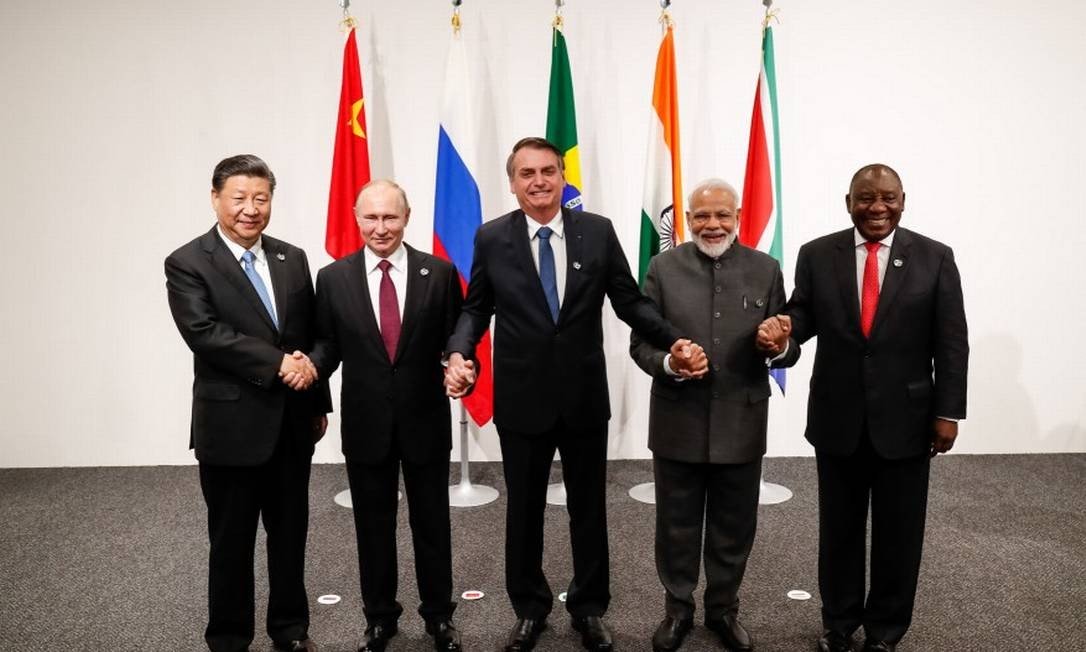
RIO DE JANEIRO, BRAZIL – What was conceived as a label for the financial market has gained momentum and has become a cooperation engine that includes 3.1 billion people and is equivalent to 41 percent of the world’s population. Joining the initials of Brazil, Russia, India, China, and South Africa, the BRICS is made up of the world’s five major emerging economies and is promoting its 11th summit meeting in Brasília on Wednesday and Thursday, November 13th and 14th.

In 2001, British economist Jim O’Neill, then head of Global Economic Research at Goldman Sachs investment bank, used the term BRIC (still without South Africa) to symbolize the growth of four developing economies. According to him, throughout the 21st century, these countries would share global economic power with the G7, the group of the world’s wealthiest economies.
The BRIC, however, was not founded until 2006, when the foreign ministers of the four countries met in New York at a parallel event to the United Nations General Assembly. The group was formalized at the first official meeting of heads of state in June 2009 in Yekaterinburg, Russia.
On that occasion, the presidents of Brazil, Russia, India, and China agreed to develop a cooperation system between the four economies. The governments would help each other to improve the global economic situation after the 2008 crisis and expand the involvement of emerging countries in international financial institutions, such as the International Monetary Fund (IMF).
At the second summit meeting in April 2010 in Brasília, the South African president, Jacob Zuma, attended as a guest. South Africa joined the group at the third summit in April 2011 in Sanya (China). From then on, the acronym gained a letter, and became BRICS.
In 2010, the BRIC played a key role in the approval of the reform that expanded the IMF’s share of emerging economies. The agreement only came into force in December 2015, when the voting power of developing countries rose from around 39.4 to 44.7 percent. The total number of Brazilian shares in the capital of the Monetary Fund rose from 1.78 to 2.32 percent, with Brazil rising from the 14th to the 10th position as a stakeholder.
Initiatives
The BRICS countries strengthened their ties in 2011 with the establishment of the BRICS Forum, an independent international organization that seeks to encourage political, commercial and cultural cooperation among its members. At the 2013 meeting in Durban (South Africa), the governments agreed to set up a joint financial institution. Also known as the BRICS Bank, the New Development Bank was formalized at the 2014 meeting in Fortaleza.
Headquartered in Shanghai (China), the bank was founded in 2015, with the aim of addressing the global scarcity of resources for the financing of infrastructure projects and becoming an alternative to the IMF and the World Bank. Each of the five countries contributed US$10 billion to form the capital of the financial institution.
In another initiative, the BRICS countries agreed to form the Reserve Contingent Arrangement, a joint fund with part of each country’s international reserves, to help countries experiencing external account difficulties. With US$100 billion, the fund has US$41 billion from China; US$18 billion each from Brazil, India and Russia, plus US$5 billion from South Africa. The agreement did not entail the transfer of international reserves. Each country pledged to lend these resources to a member in case of need.
New areas
Since 2015, the BRICS countries have sought to expand their cooperation areas. Among the sectors prioritized for Brazil are health, science, technology, innovation, digital economy, fighting transnational crime and bridging the gap between the New Development Bank and companies. In preparation for the 11th summit in Brasília, the BRICS communications ministers signed a joint letter in August this year, with the aim of establishing cooperation in the communications and information technology sector.
Source: Agência Brasil
More: Brazil news in English, every day from The Rio Times.
This article was produced by The Rio Times’ automated newsroom system. How we use AI · Report an error · Editorial responsibility: Matthias Camenzind, Editor-in-Chief
Great Powers in Africa
- Who Backs Whom in Africa 2026: China, Russia, US, Gulf
- Africa: The New Scramble
- DP World and AD Ports Drive Gulf States Africa Investment as Saudi Deals Follow
- China Slashes Africa Lending 46% as Kenya and Angola Race to Refinance Old Debts