Ceará State Police Radical Wing Reflect Bolsonarism, Set off Time Bomb
RIO DE JANEIRO, BRAZIL – The strike movement of State Police (PM) officers in Ceará – which escalated in tension on Wednesday when Senator Cid Gomes was shot twice while trying to drive a backhoe into a military area occupied by hooded people in the city of Sobral – is fragmented and lacking a defined leadership.

The incident exacerbated a crisis that began to unfold late last year, with negotiations for salary readjustments for the category. Governor Camilo Santana even included some of the demands in his initial proposal and, although associations linked to the police accepted an agreement, part of the base refused and rebelled. Battalions in different cities have been occupied since then. And a climate of panic rocked the state, when faced with the MP’s strike on the eve of Caranaval.
Four police officers were arrested and another 300 are being investigated for crimes ranging from the seizure of civilian vehicles to the burning of citizens’ vehicles critical of the movement. In the midst of a split class and a crisis fully exploited by local and national politicians, a new player has been empowered: a more radical wing, made up mainly of young soldiers and empowered by an authoritarian rhetoric that has been gaining ground in the police force in the wake of Bolsonarism.
“It was the first time in our lives that we saw a barracks occupied like this. All of them hooded. It is impossible to determine how many are police officers or if they are really police officers,” reported the senator for the State of São Paulo, Major Olímpio, who visited one of the occupied battalions in Fortaleza.
The politician is a member of the senators’ delegation that visited Ceará to find a way out of the crisis. Their concern is that the severe local crisis will produce a violent domino effect in the rest of the country, in a context in which at least six states have already been threatened by these workers, who carry firearms and are banned by law from going on strike.
However, the spotlight on Ceará also exposes a chess board of local and national politicians who have helped turn the crisis into a time bomb difficult to defuse. According to a survey by the G1 website, there have been at least 51 deaths over the past 48 hours in the State, compared to an average of six murders a day in 2020 so far. Among the victims, there is a mother who was killed in front of her children during a robbery and a teenager killed by men on motorcycles.
President Jair Bolsonaro, the country’s main authority and elected with the support of members of police forces, has yet to condemn the mutinies in Ceará’s state police barracks. During a Facebook live broadcast last Thursday night, he announced that he had authorized the Armed Forces to be deployed in the State, and once again advocated the liability exclusion cause for military personnel to act in the crisis.
“If we are in an urban war, we have to send people there to solve this problem,” he said. Hours earlier, former Minister Ciro Gomes had accused Bolsonaro of empowering the most radicalized protesters with his discourse, which includes pardoning public security agents who have committed crimes. “Do you think a 20-something boy would have the courage to shoot a person like that if he didn’t think he was in the service of the highest power in Brazil?” he asked journalists.
Ciro also mentioned as part of this empowerment the presence of a federal deputy from Rio de Janeiro linked to the Bolsonaro family in the State. Major Fabiana arrived in Ceará on Wednesday along with local leaders who made political careers from a previous strike in 2012, when Cid was governor. “For the first time we have a president who knows what it is to be a state police officer,” he spoke to strikers in an occupied barracks, interrupted by cries of “legend! legend!”.
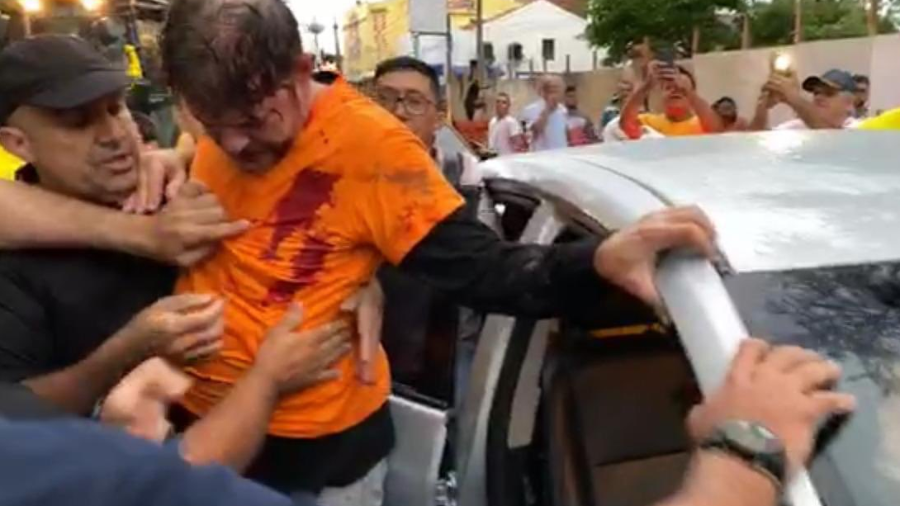
In the midst of this political dispute, the mutiny that began with salary demands gained yet another priority agenda in the face of the escalating tension in recent days that culminated in a senator being shot: the amnesty of riot police officers in the battalions. Governor Camilo Santana – an ally of the Ferreira Gomes family – has already signaled he is not willing to discuss the proposal.
The government has not dismissed any strikers so far, but has already announced that it will cut salaries for those who do not report to work. Nevertheless, police officers have decided to continue the strike.
“Whoever can solve this is adopting a mistaken strategy. They [police] now have to fight to at least guarantee amnesty,” says Sergeant Reginauro, a city councilor in Fortaleza who also has made a political career in the wake of police protests in recent years. The tensions that now explode are not unprecedented.
The current crisis in Ceará is marked by a number of changes achieved by another strike movement, almost a decade ago, which influenced both decisions on state security policies and changed structures within the corporation. Specifically in Ceará, the main opposition forces in both the Fortaleza City Hall and the State Government are made up of politicians who have built up their careers from police strikes.
The origins of the crisis
When the Ceará PM stopped their activities in December 2011, the capital Fortaleza became virtually a ghost town, with closed businesses and an informal curfew that the population accepted out of fear. A widespread panic took over the fifth-largest Brazilian capital city for at least one day, which preceded another five days of tension, despite the reinforcements of the National Forces.
Hooded men – allegedly police officers who demanded salary improvements from then-governor Cid Gomes – punctured car tires and took the keys of barracks to prevent colleagues who had not joined the strike from working. It was their wives’ role to show society the class’ discontent, a strategy to shield their husbands from administrative reprisals and to seek popular support that ultimately came to some extent.
In the midst of that crisis, a name became established in the public debate in Ceará. Captain Wagner – a deputy hitherto unknown outside the police force – emerged as the movement’s main leader. Wagner had founded an association of security agents and often used social media (at the time Orkut and Facebook) to denounce the state security leadership.
He gathered forces around himself in a class that includes at least eight representative associations in the state of Ceará. The strike propelled him politically. In that same year, he was elected the most voted city councilor in the history of Fortaleza. He then won seats in the Legislative Assembly and the Federal Chamber.
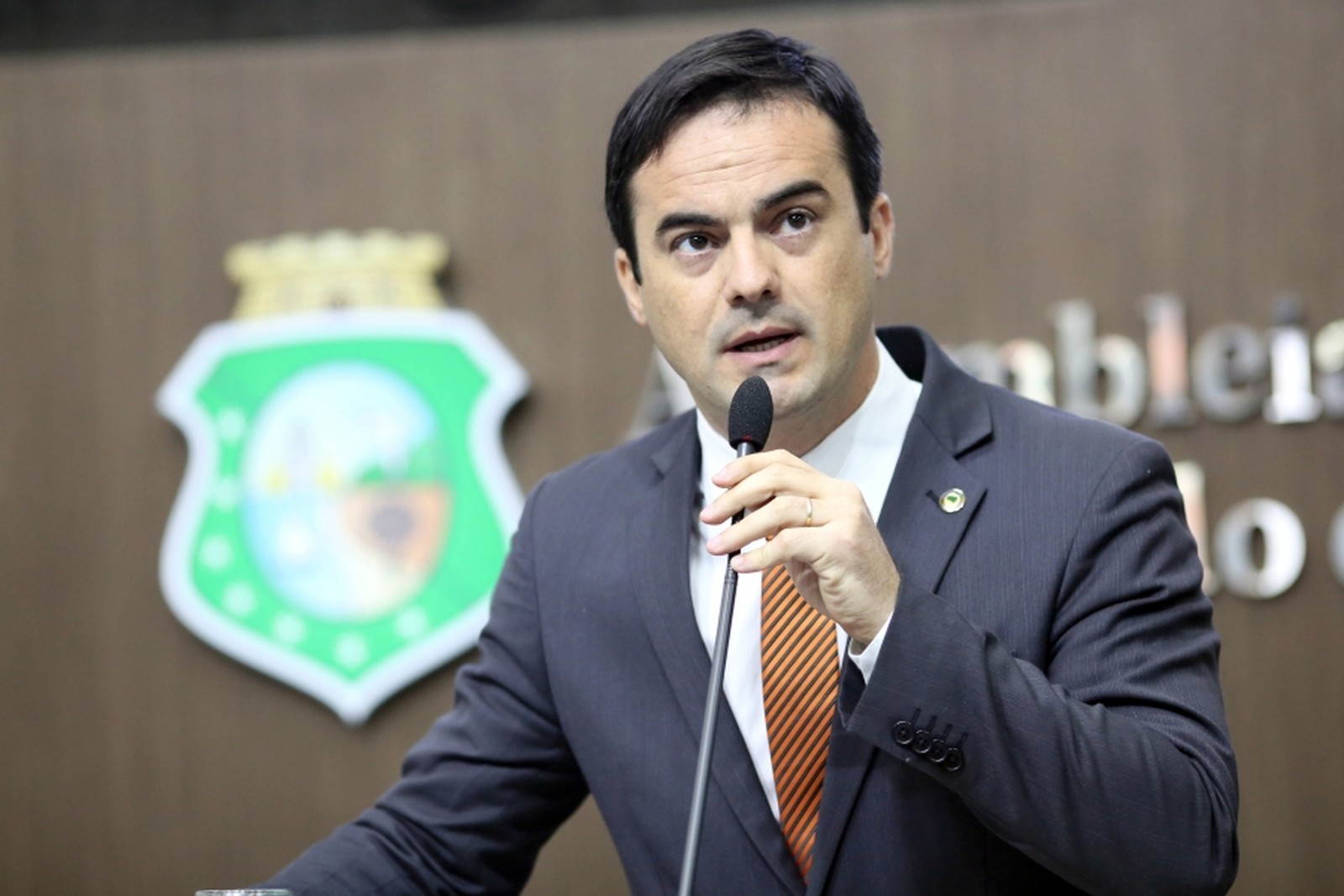
He also helped to elect to different legislatures at least three other police officers from different ranks who acted in that strike alongside him: Corporal Sabino, Private Noélio and Major Reginauro.
A leading player in the increase in the representativeness of PM officers in the Ceará state legislature, Captain Wagner has often used social media in the latter to denounce the government’s “lack of dialogue” with state police officers, but has tempered the rhetoric.
He is one of the main pre-candidates to the Fortaleza mayoralty in this year’s elections and has been slow to publicly support President Bolsonaro, who did not win the last elections in the state capital. So far, Wagner has no clear opponent for the municipal race. Although he is still influential in the class, he no longer holds the same central role he enjoyed in the January 2012 strike.
“There is no uniform representation [in the Ceará state police movement]. We can’t deal with it as one thing only,” Renato Roseno, a state deputy with a strong presence in the area of security and human rights, says. He says the number of PMs in Ceará has almost doubled in the past decade and that there are very different leaders among the 21,000 officers who make up the corporation today.
In addition, there are approximately 10,000 new officers who have not experienced the 2011 strike. A more radicalized wing in this movement, most of the soldiers, would be acting mainly in the capital’s outlying suburbs and in cities in the interior. “There are police officers acting as militias, terrorizing the population”, he accuses.
Researcher Luiz Fábio Paiva adds another feature to this context: the historical process of political intervention in the police. “Each new administration had the State Police as its subject. In Ceará, we had politicians testing security programs that interfered in the structuring of the police. This has consequences,” explains Paiva.
When he took over the Ceará government, Cid Gomes created a program called ‘Ronda do Quarteirão’ (Block Patrol), which set up a monitoring police force with better salaries, designer uniforms, and Hilux as official vehicles. The differences in conditions generated animosities within the corporation.
When Camilo Santana took power, he instituted a similar policy, this time providing better conditions for the Raio (specialized police that works in the Intensive and Ostensive Actions Patrol). “Governments have historically tried to create their own police within the PM,” analyzes the researcher.
The historical conflict between the police base and Governments now gain greater unpredictability in Ceará. “We have a Federal Government that encourages violence, attacks against opposition politicians, against journalists, against those who think differently. We need to be aware of how this rhetoric impacts the police,” alerts Paiva. Despite the violent escalation in the state in recent days (51 homicides in 48 hours of strike), the researcher considers to speak of militia action in Ceará.
“It’s hard to say that there is militia in the model found in Rio de Janeiro. Historically, Ceará has armed groups, extermination groups, with the participation of police. At this moment, what we see is how these groups are comfortable operating. As odd as it may seem, these hooded groups that are deflating car tires and producing this confrontation, in fact, demonstrate the fragility of institutions in Brazil,” he says.
Source: El País
More: Brazil news in English, every day from The Rio Times.
This article was produced by The Rio Times’ automated newsroom system. How we use AI · Report an error · Editorial responsibility: Matthias Camenzind, Editor-in-Chief