Chloroquine Production Places Bolsonaro in Audit Court Sights
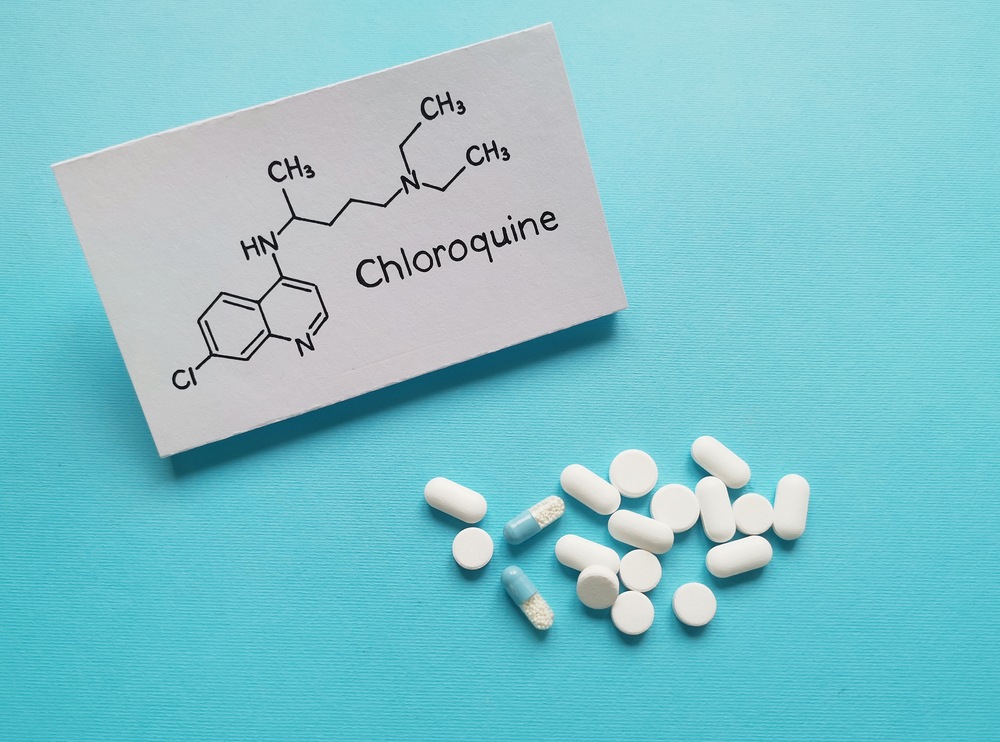
RIO DE JANEIRO, BRAZIL – The drug advocated by President Jair Bolsonaro to fight the Covid-19 pandemic, despite no scientific proof of its efficacy, has come into the Audit Court’s sights. An investigation was requested by the Prosecutor’s Office (MP) to establish whether there was overbilling in the purchase of raw materials for the production of chloroquine tablets by the Army.
Requested by the Deputy Prosecutor General of the MP before the Federal Court of Auditors (TCU) Lucas Furtado, the petition awaits the opinion of the body’s secretariat to then be examined by the Court in plenary session.
The proceeding also investigates the President’s direct accountability for the decision to significantly increase chloroquine production “without medical or scientific evidence that the drug is of any use in the treatment of Covid-19,” the document states.

The purchase of raw material from India, without bidding, cost six times more than the amount paid by the Ministry of Health last year. Finished at the Army’s Chemical and Pharmaceutical Laboratory, the production of pills has increased 84-fold in recent months compared to the same period last year, according to the Ministry of Health.
“Every scientific study produced reported the drug’s inefficacy against Covid,” Furtado told DW Brasil about the reasons for the proceedings. Should any irregularities be proven, Bolsonaro may be subject to several penalties, such as fines and payment for the damage caused.
The request for investigation argues that mass manufacture of the drug was a waste of public money that should be adequately investigated. “And those responsible (should) be penalized under the law, in particular, if there is suspicion of overbilling in the purchase of raw materials,” the document points out.
The Deputy Prosecutor General’s request prompted a reaction among Bolsonarist legislators. José Medeiros petitioned the TCU to investigate Furtado’s actions.
Promoted by Bolsonaro as a solution against the disease that has killed over 94,000 Brazilians by early August, chloroquine was banned by the World Health Organization (W.H.O.) in the treatment of Covid-19. Administered since the 1950s against malaria, the drug can cause severe side effects, such as heart conditions, and also increase the risk of death in patients with the novel coronavirus.
However, in Brazil Bolsonaro advised the army to increase the production of pills during the pandemic. “We have information that over R$1.5 million was spent on the production of chloroquine. The army’s laboratory has increased its production 100-fold since the pandemic began,” said Débora Melecchi, of the National Health Council (CNS).
By June 23rd, the Ministry of Health had distributed 4.4 million chloroquine tablets to Brazilian states.
“Strictly speaking, this acquisition [of the allegedly overpriced ingredient] should be inspected by the internal control agency of the Armed Forces. But we know that they are not going to do anything since the chief executive is advertising chloroquine,” comments Rudnei Marques, of the Permanent National Forum of Typical State Careers (FONACATE), which is following the TCU investigation.
Asked by DW about the volume of drug production and the TCU’s investigation request, the Army failed to comment.
Where chloroquine is lacking
In addition to the Army, Fiocruz’s public laboratory is producing the pills, but for exclusive use against Malaria, the institute reported by e-mail. Chloroquine- and hydroxychloroquine-based drugs are also manufactured by pharmaceutical companies such as Cristália, EMS, Sanofi, and Apsen.
At the start of the pandemic, Bolsonaro’s propaganda in favor of the drug prompted a rush to pharmacies and the drug vanished from shelves. Patients who need chloroquine to treat chronic diseases like malaria, lupus, and rheumatoid arthritis still find it difficult to buy the substance.
A survey conducted by Biored, an NGO that brings together patient associations, showed that 65% of respondents had difficulty accessing the drug before the pandemic. This percentage rose to 84 percent after the coronavirus settled in the country. The survey was conducted in June by interviewing 699 patients suffering from rheumatoid arthritis and lupus.
“These patients go without medication for over 40, 60 days, which can lead them to hospital care in a system that is already overwhelmed with Covid-19 cases,” Melecchi says.
Hard to find, the drug has also become more expensive. A patient who used to spend R$100 (US$20) per month, today needs to pay around R$450 in compounding pharmacies. On federal government recommendation, although science says otherwise, chloroquine stocks are prioritized for Covid-19 patients, Melecchi says.
It is difficult to know how much the pharmaceutical industry has profited in this muddle. “They don’t report how much revenue has increased, but data from the Pharmaceutical Industry Syndicate (SINDUSFARMA) show that the consumption of chloroquine by Brazilians grew 358 percent during the pandemic,” points out Flávio Emery, president of the Brazilian Association of Pharmaceutical Sciences.
SINDUSFARMA data confirm the sales surge in March. In the following months, the product’s output continued to rise, compared to the same period in 2019.
Furthermore, it is not only chronic-disease lupus and malaria patients who are suffering the effects of this policy that prioritized the drug without proven efficacy in the treatment of Covid-19.
Severe patients who reach hospitals often face several difficulties. There are reports of the lack of the so-called intubation kit, comprised of 22 drugs.
“New ventilators were purchased, but the drugs purchased did not match. There is a great deal of government delay in purchasing the kits,” Melecchi points out. “What the federal government distributed to ten states a few weeks ago is a minimal quantity, it’s already running out, or it’s over.”
Some of these purchases, according to CNS, were made through the Pan American Health Organization (PAHO). Like US President Donald Trump, Bolsonaro has threatened to withdraw his support for the organization, which, along with the US, would mean a 65 percent cut in PAHO’s budget.
In addition to supplies against Covid-19, the purchase of other important raw materials for Brazilians is at risk if there is withdrawal from PAHO. “Brazil acquires medication for the treatment of AIDS through the PAHO. If these drugs do not reach the country anymore, it will be chaos,” laments Melecchi.
The Ministry of Health was also approached but failed to comment.
Source: Deutsche Welle
More: Brazil news in English, every day from The Rio Times.
This article was produced by The Rio Times’ automated newsroom system. How we use AI · Report an error
Read More from The Rio Times