Public Defender’s Office: Flagrant Detention Underscores Structural Racism in Rio
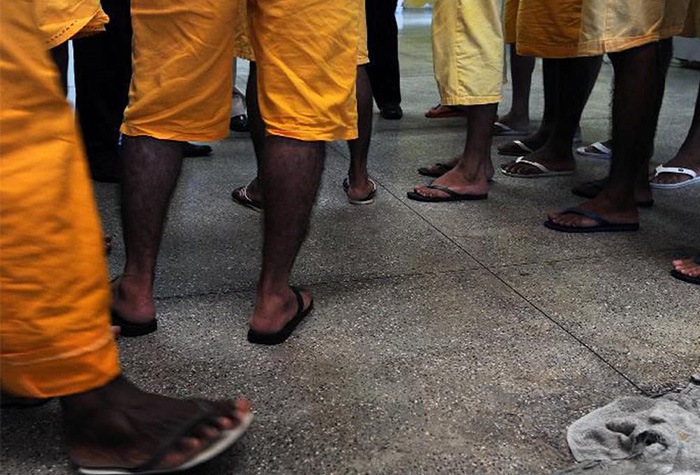
RIO DE JANEIRO, BRAZIL – An unprecedented survey by the Rio de Janeiro Public Defender’s Office shows that eight out of ten prisoners in the state declare themselves black or mixed race. This part of the population is also more attacked (40 percent compared to 34.5 percent of whites) and has greater difficulty in securing provisional release (27.4 percent compared to 30.8 percent of whites).
The data are included in a study released on Tuesday, August 5th, by the body and were debated at 4 PM in the ‘Five Years of Custody Hearings’ webinar: a look at the profile of prisoners in detention in Rio de Janeiro, broadcast live by the Defender’s Office YouTube channel.
The survey included 23,497 interviews conducted by the Defender’s Office in custody hearings between September 2017 and September 2019, with an average of 31 hearings per day in the period analyzed. The process began operating in the capital in September 2015.

According to the Public Defender’s Office’s custody hearing coordinator, Caroline Tassara, the data reflect the racial and social selectivity of the Brazilian criminal justice system.
“The research provides very rich data that allows us to determine, from the examination of over 23,000 cases, who are the people arrested in flagrante delicto in the state of Rio de Janeiro and to denounce the undeniable selectivity of the criminal justice system.”
The survey also shows that in over 80 percent of the cases analyzed, people were arrested on theft, robbery, or drug law charges, and that only one in three are granted provisional release or detention relaxation.
Among the cases analyzed, a total of 22,052 had judicial decisions handed down at the custody hearing, 6,432 of which were for bail and 203 for detention relaxation. Only 49 had their prison sentences converted into house arrest and the remaining 15,368 people changed from permanent detention to pre-trial detention.
Among the cases assisted by the Public Defender’s Office, about a quarter, a total of 3,531 people, had prior judicial convictions. Among these, 81.7 percent remained imprisoned after the hearing. Only 21 percent had been through the socio-educational system during adolescence and, among these, 76.5 percent had their permanent detention converted into provisional.
Of the total of people taken to custody hearings in the state, 93,6 percent are men, 50 percent are between the ages of 18 and 25, 39 percent were in the 26 to 40 age range, 78,7 percent were self-declared black or mixed race, 64,3 percent had only attended elementary school, 91 percent were born in the state and 90,9 percent said they worked before being arrested, even if informally, and 61,7 percent were paid less than one minimum wage.
Among the six percent of women taken to custody hearings, over half achieved provisional release, compared to 30 percent of men, and 12 had their detention relaxed. The socio-economic and indictment profile of women does not differ from that found among men. Among them, 80 percent had at least one child and 58.1 percent of the 155 who had children under the age of 12 were granted provisional release. Another 6.4 percent of the mothers had their imprisonment converted to house arrest.
Among the imprisoned monitored in the period by the public defender’s office were 54 trans males and 38 trans females. In 2,086 cases, the interview form did not include gender identity.
The research also collected data on police violence at the time of the arrest. According to Caroline Tassara, the interviews point out that there was a drop in reports one year after the custody hearings began to be held throughout the state, with the opening of the central offices in Volta Redonda and Campos in October 2017.
“Comparing the 2018 and 2019 data, we observed a 23 percent reduction in assault reports at the time of arrest in the second year that custody hearings began to be held across the state. This confirms, based on evidence, the effective functioning of custody hearings as a tool to prevent and fight torture and ill-treatment at the time of the arrest. It is clear how much this promotes civilization progress.”
Of the assaults against those arrested while committing crimes, 60 percent were committed by state police, a total of 3,380 reports, and 30 percent by the population, a total of 1,679. Over 80 percent of assaulted prisoners were black and almost 40 percent of respondents reported being photographed by police before identification at the police station.
Among women, 22 percent said they had been assaulted at the time of arrest, 71.8 percent of them black and 23.7 percent white.
According to the Public Defender’s Office, the type of crime committed also strongly influences the granting or not of provisional release. Crimes related to the Drug Law were the charges against 37 percent of inmates, with only 19.5 percent of them granted provisional release. Of the 26 percent accused of theft, seven percent were released, and the proportion rises to 65.6 percent of the 19.3 percent in pretrial detention charged with theft.
According to Deputy Criminal Defense Coordinator Ricardo André de Souza, the data show that there is a policy of over-incarceration supported by the Drug Law and in trafficking arrests, which persisted this year during the Covid-19 pandemic.
“Drug policy is the backbone of Brazilian criminal policy, and the data related to the pandemic period testify to this. It is crucial that the public debate be enlightened by data such as those featured in this survey, which relies on a massive database, perhaps unique in the world, with respect to custody hearings.”
The survey emphasizes that the majority of people arrested in the act are indicted for trafficking crimes and remain in jail after the custody hearing, even if they are first-time offenders. The defender’s text states that this fact demonstrates “the need to rethink the public safety policy that prioritizes the detention of those arrested while committing crimes, often based on their location, considered to be controlled by a criminal organization linked to trafficking, although the amount of drugs seized and no other circumstance substantiates their involvement in such organization.”
Source: Agência Brasil
More: Brazil news in English, every day from The Rio Times.
Editorial responsibility: Matthias Camenzind, Editor-in-Chief · Editorial standards · Report an error