Disputes Over Venezuela and Bolivia Disrupt the BRICS Summit
RIO DE JANEIRO, BRAZIL – Brazil hosts the first major international summit in the Jair Bolsonaro era. The president has replaced his common anti-communist rhetoric with praise and the pledge to “expand and diversify the relationship” with China when he welcomed his counterpart, Xi Jinping, in Brasília, on Wednesday.
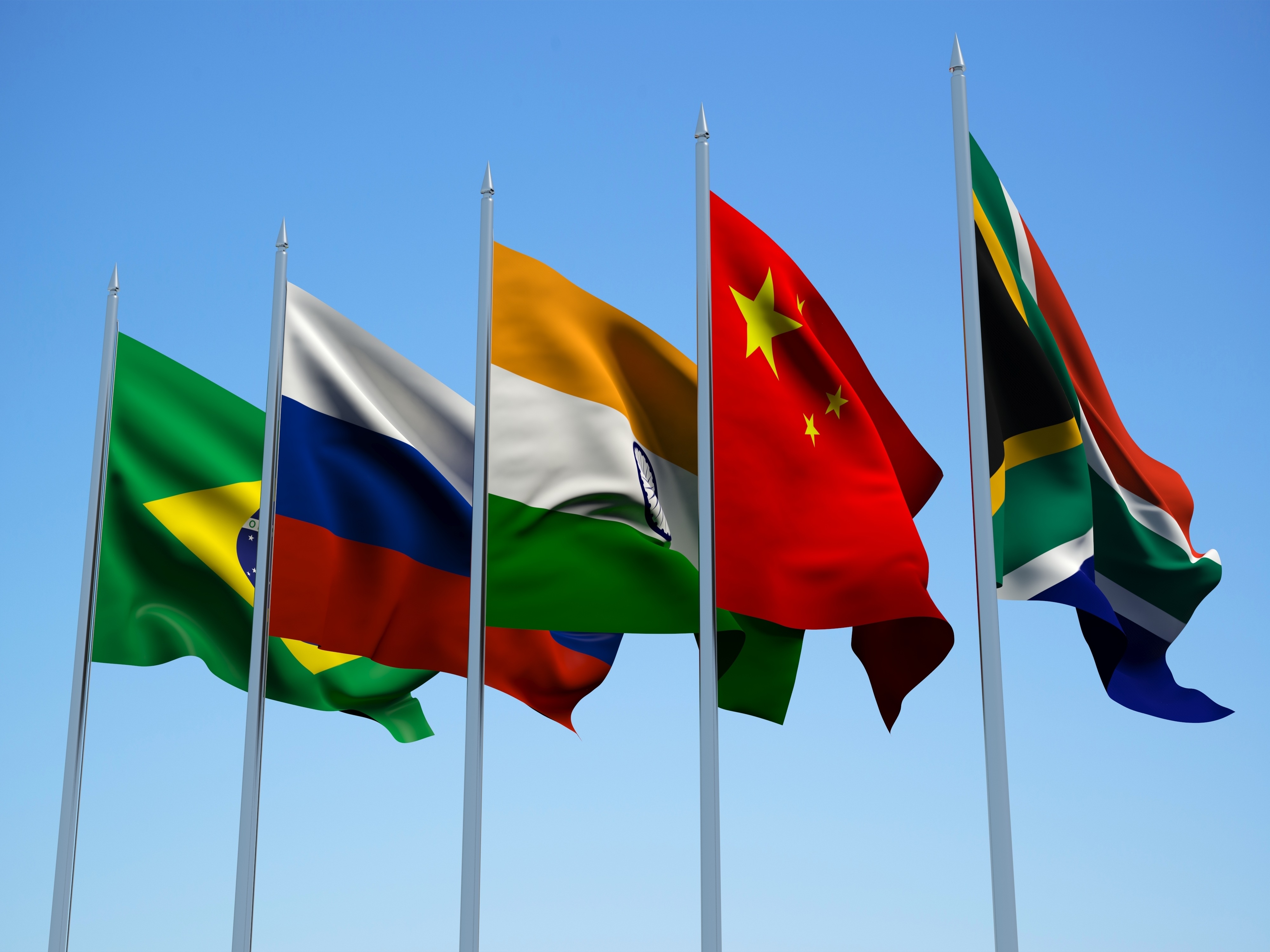
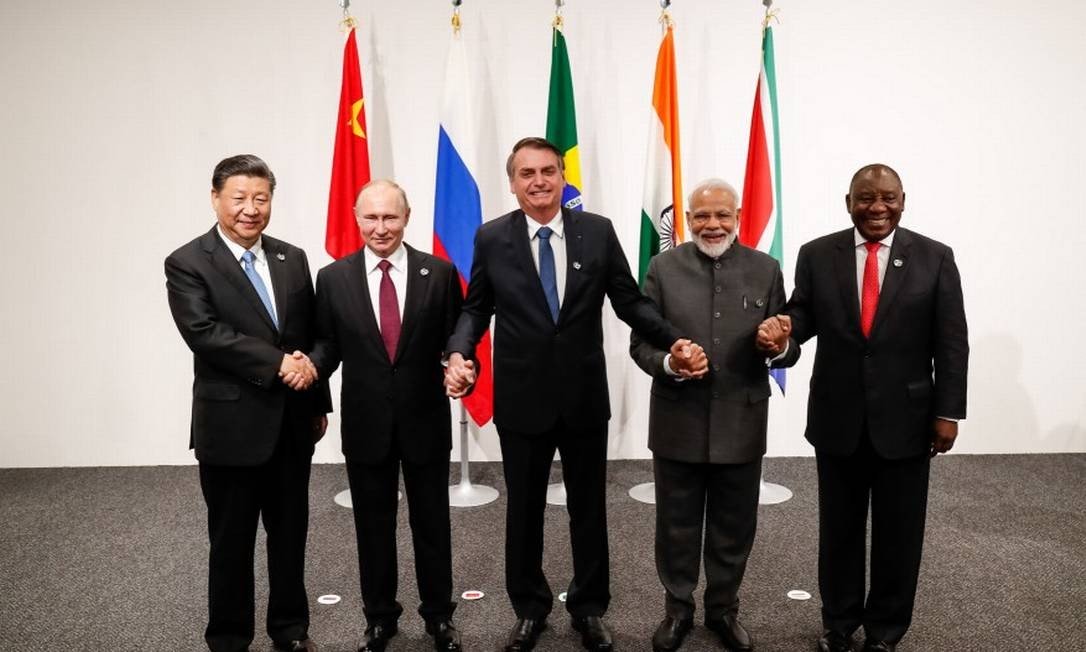
They were joined by Russian Vladimir Putin, Indian Narendra Modi, and South African Cyril Ramaphosa at the BRICS summit, the world’s five largest emerging economies, which continues today. Bolsonaro’s visit to Taiwan during the election campaign and his allegation that China was buying Brazil, which angered Beijing so much, is water under the bridge. And although the BRICs are meeting to mainly discuss business, the Bolivian and Venezuelan crisis have disrupted the agenda.
Ultra-right-wing Bolsonaro was welcoming Xi as the Venezuelan embassy in Brasília was becoming the stage for a dispute over control of the diplomatic mission: representatives of Venezuelan opposition leader Juan Guaidó, the country’s self-proclaimed president, entered the building at dawn, which was still in the hands of officials loyal to Nicolás Maduro.
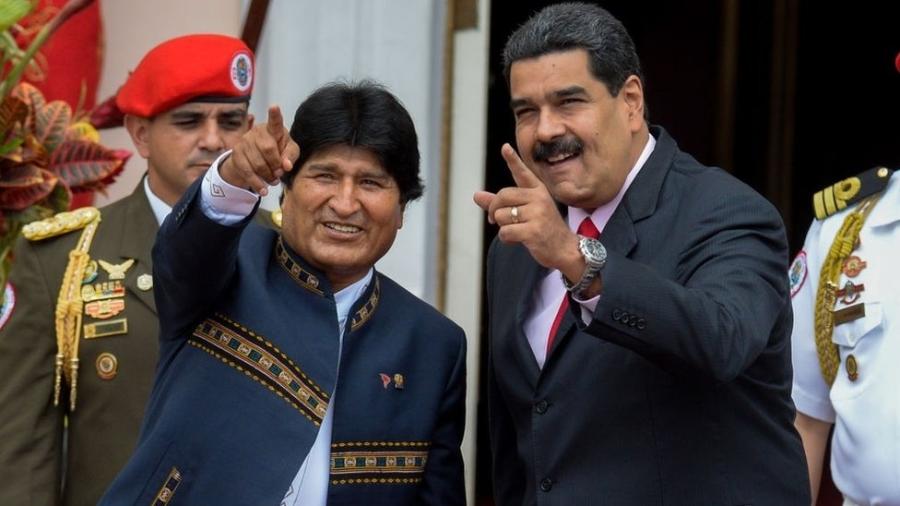
A reminder that the defense of one or the other side in regional conflicts jeopardizes the relationship between some BRICS members, particularly between Bolsonaro, who supports Guaidó and the change in Bolivia, and Russia and China, who support Maduro and Evo Morales. The Brazilian government hastened to acknowledge opposition senator Jeanine Áñez as the legitimate interim president of Bolivia on Tuesday, in place of the exiled Morales.
It was in this context that the summit started, the first act of which was the confirmation that the relationship between Brazil and China opens a new stage. They both know they need each other because, as analyst Oliver Stuenkel of the Getulio Vargas Foundation and El País columnist explains, “China does not enjoy food and energy self-sufficiency and will continue to rely on Brazil and Latin America for its raw materials”.
He adds that Bolsonaro’s position is not as relevant to the Chinese because they are looking to the long term. In any case, the Brazilian did a sort of an act of contrition when he said before Xi that China should be “addressed with due regard, respect and consideration” because “all of us, Brazilians and Chinese, have something to gain”.
Before, he had been grateful for the fact that, during the controversy over the fires in the Amazon in August, China defended Brazilian sovereignty over the rainforest. Xi invested in a relationship “based on mutual respect for Brazil as a platform for Latin America, which, together with China, are the main emerging markets”.
Both sides paved the way for reconciliation in October, during Bolsonaro’s visit to Beijing.
The BRICS summit was convened with modest goals and, unlike previous editions, will not be followed by a regional meeting of heads of government. The reason is Venezuela, according to Stuenkel. “Bolsonaro wanted to invite Guaidó, but the others [BRICS countries] suggested inviting all the regional presidents, with the exception of Venezuelan representatives.
“Brazil refused,” he said. This, together with the suspension of the Asia-Pacific Economic Cooperation Forum, which the Chilean government canceled along with the climate summit due to the protests in the country, undermined the trip of leaders from China, India, Russia and South Africa to Latin America.
Geopolitical and economic pathways, always so intertwined, sometimes -only sometimes – diverge. The recent development of the BRICS is an example of the exception that confirms the rule: following the golden decade of growth at the beginning of the century, the group of countries that long ago took the lead of the West in the engine room of the world economy – the decisive year was 2007, when the emerging countries matched the developed countries with 50 percent of global GDP each bloc – now looks back over those golden years.
The S&P risk rating agency questions even the value of the famous acronym coined by Jim O’Neill in the early 2000s.
“The long-term divergent trajectory between the five countries weakens the analytical value of the five as a coherent economic group,” S&P experts said in a recent customer note.
The BRICs – quintessence of the emerging economies – averted the greatest threat hanging over their heads two years ago, when they tried to take off and feared that a general rise in interest rates in wealthy nations would have an impact on their ever-volatile currencies and made their debt more expensive in dollars.
At that moment, however, Donald Trump’s protectionist yearning emerged, a blow that is mainly affecting China, the main target of the Republican’s protectionist fury, which has added to the slowdown that has brought Chinese growth to its lowest point in 27 years.
India, on the other hand, always pointed out as one of the potential beneficiaries of the dispute between the two major powers, has barely been able to capitalize so far. But the two are the great victors of the group, with growths that, although slowed down, cause jealousy in other partners, and rightly so: despite the gradual slowdown, the two economies will close 2019 with a growth rate close to six percent.
The situation is very different in Russia, Brazil, and South Africa, countries that have only partially harnessed the raw materials boom, have suffered the rigors of recession and political instability – Moscow was the exception in this area – and are only now rehearsing an attempt at recovery, which is taking much longer than expected.
The price of a barrel of oil, stagnant at around US$60 (R$240), is not good news for Russia, one of the largest producers in the world. And Brazil, which last week suffered a resounding failure in the pre-salt auction, which promised to take it to the oil Olympus -but which only managed to attract the attention of state-owned Petrobras, with a small amount of help from two Chinese companies-, sees how the promises of rapid growth made by Bolsonaro were not materialized two months away from him completing one year of office.
Perhaps, as Bloomberg recently pointed out, O’Neill was wrong and, instead of Brazil and South Africa, he was more accurate about Indonesia and Vietnam, whose trajectory is closer to that expected for the BRICS.
In comparative terms, however, the ills are smaller: despite all this, the emerging bloc totals 60 percent of global GDP and the BRICS one-third of the total, after a decade outperforming the Western powers. The consolation comes from the deceleration of the more developed economies, which are experiencing a stagnation that seems to be becoming long-lasting, except for the honorable exceptions of the United States, Australia, Eastern Europe and, in recent years, Spain.
And with the fact that, despite the economic stagnation of its non-Asian members, its weight in the global governance bodies has not ceased to grow since the popularization of a concept, BRICS, which is increasingly closer to obsolescence.
Source: El País
More: Brazil news in English, every day from The Rio Times.
This article was produced by The Rio Times’ automated newsroom system. How we use AI · Report an error · Editorial responsibility: Matthias Camenzind, Editor-in-Chief
Great Powers in Africa
- Who Backs Whom in Africa 2026: China, Russia, US, Gulf
- Africa: The New Scramble
- DP World and AD Ports Drive Gulf States Africa Investment as Saudi Deals Follow
- China Slashes Africa Lending 46% as Kenya and Angola Race to Refinance Old Debts