Dom Leonardo Steiner Embraces Resistance to Jair Bolsonaro in the Amazon
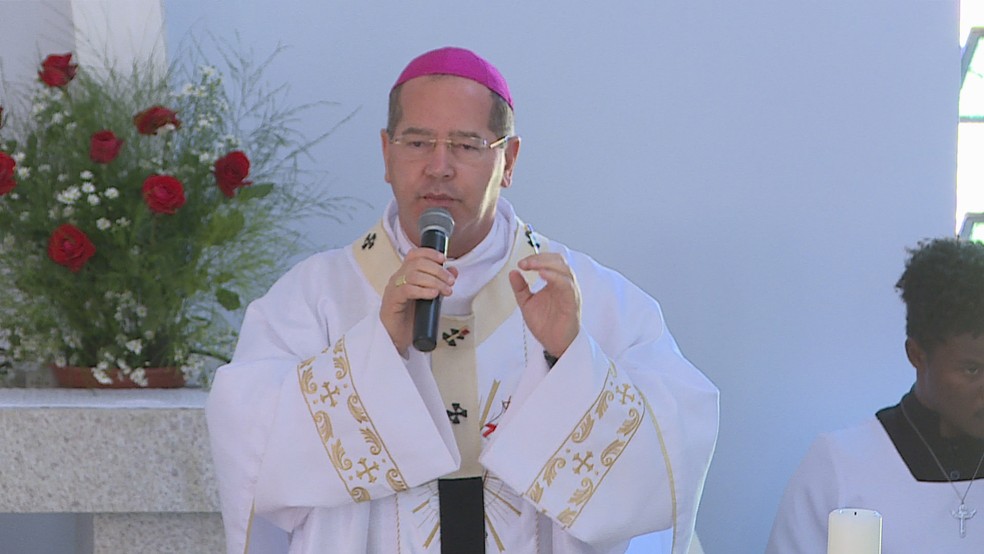
RIO DE JANEIRO, BRAZIL – “We are trying to govern the country based on false news, aggressiveness, violence. This does not build Brazil. (…)” The statement was not heard in any plenary or stage, but rather from the altar. More specifically in the Mass that consecrated Don Leonardo Steiner, the new archbishop of Manaus.

The clergyman who for eight years headed the best-know position of the National Conference of Bishops of Brazil (CNBB) will now work in the Amazon. And he promises not to be silent against the government’s abuses. He wants to be, as he declared on that same occasion, “leaven and light in the reality that is unequal, violent, unbalanced, social and environmental”.
When asked about the ‘communist’ stance they try to attach to him, he replies: “To talk about democracy has become communism. The CNBB had and has a key role in Brazilian society, despite the desire for it to be silent. It is better to try to live the Gospel, the life of Jesus, than to waste time with such statements”.
Steiner is a disciple of Catalan Pedro Casaldáliga, the “bishop of the people”. He is also close to Bishop Claudio Hummes, the Brazilian Cardinal who exerts the greatest influence on Pope Francis. Initially, the bishop was offered a position in the Archdiocese of Cuiabá. Had he accepted, he would have remained under the auspices of a conservative Salesian archbishop.
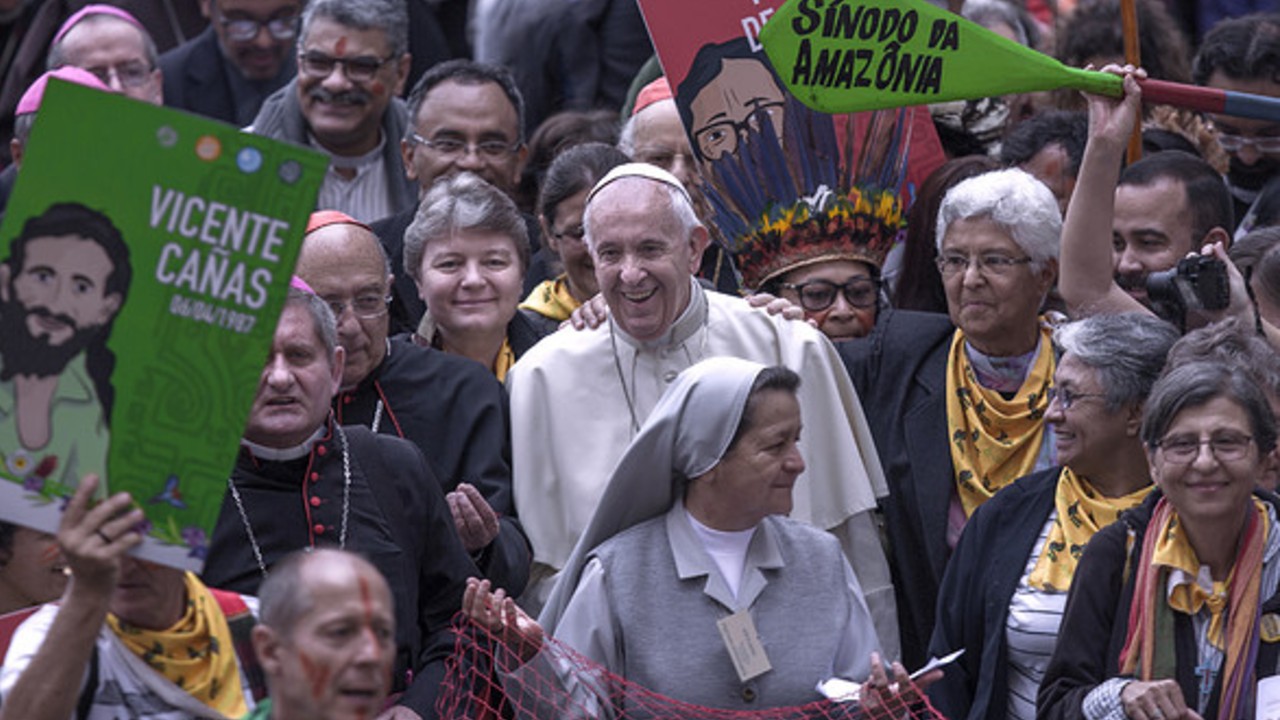
He would have had to live closely with Fr. Paulo Ricardo, an ultraconservative vicar converted into a virtual celebrity. Steiner declined. He asked the Holy See for a transfer to Amazonia – he is the fourth Franciscan bishop since the Synod to hold office in that region. He has spent recent months visiting local communities. He has pledged to implement the directives that Francis will provide in the post-Synodal Letter, which has not yet been made public.
It is hoped that the Pope will endorse most of the Synod’s suggestions, such as the ordination of viri probati (married men) and a liturgy that incorporates concepts of the indigenous cosmovision. The day before his inauguration, at an event promoted by Catholic deputy José Ricardo, he championed a Christian presence in politics.
The bishop said: “Pope Francis has insisted that politics is the greatest expression of love. It does not seem so, but it is. And it is crucial that we Christians be present in politics. It is essential that Catholics be involved in politics”. A priest who follows him in the Amazonian endeavor underlines: “Don Leonardo is with the Pope. And to be with the Pope, at this time, is to be against the government”.
Steiner’s arrival is viewed as a welcome refreshment to the stagnation that has taken over the CNBB. Nine months after the conclave that elected the new executives in the Conference, everything is on standby. While the dreaded right-wing shift has not materialized, CNBB has lowered its tone of antagonism to the government. It has successively analyzed the situation but has not put it into practice.
The theory that a clash with the bishops would produce the “ideal enemy” for Bolsonaro prevailed within the ecclesial walls. The moderate nature of the new president-elect, Archbishop Walmor Oliveira de Azevedo of Belo Horizonte, was the main reason behind this. The left-wing branch believes him to be too institutional. The network connected to Bolsonarism attaches to him the communist taint, because under his direction, the archdiocese of Belo Horizonte has welcomed a pastoral ministry of sexual diversity.
Walmor is, in fact, moderate. His major project is to build the impressive ‘Catedral Cristo Rei’ (Christ the King Cathedral), the future headquarters of the archdiocese of Minas and the last work left to the city by Oscar Niemeyer. “Walmor is more of a conservative. He is an institutionalist, an administrator of the Church. He has more ambitious pretensions and so he will try to please the whole episcopate”, sums up a speaker for the Minas Gerais bishops.
It was expected that Bishop Jaime Spengler, Archbishop of Porto Alegre, would be elected CNBB President. However, the archbishop was left with the vice-presidency. “Nobody expected that Don Walmor would be elected,” says another layperson close to the organization. The result prevented Don Joaquim Giovanni Mol, dean of PUC-Minas univesity and known for his progressive stance, from succeeding Don Leonardo in the General Secretariat. Joel Portella, assistant to the conservative Orani Tempesta in Rio de Janeiro, took over the post.
By tradition, the secretary-general manages the CNBB’s daily routine. Although Don Walmor is very centralizing, Don Portella has been able to act in the day-to-day of the institution. He is regarded as speaking for the Catholic right-wing.
Rio is the state least affected by the Vatican’s plans. Only 45.8 percent of the state’s population claimed to be followers of the Pope, according to the 2010 Census. In the midst of this decline and the marked aging of the faithful, the most visible faces of ultraconservative Catholicism are there. One is the infamous Don Bosco Center, a think tank that is the arch-enemy of freedom of expression.
The demographer José Eustaquio Diniz Alves, a professor at IBGE, estimates that in 2022 Catholics will be less than 50 percent of the Brazilian population for the first time. According to him, followers of the evangelical faith have grown by an average of 0.8 percent per year since 2010. The number of Catholics drops in the same period by 1.2 percent.
Under this progression, in 2032 Catholics and Evangelicals would be tied in the number of faithful. From then on, those who follow pastors rather than priests will become the majority. And it is precisely in Brazil’s Northern Region that the evangelical current flows most rapidly: the region has the largest proportion of evangelicals (39 percent), according to Datafolha.
According to Paulo Fernando Carneiro de Andrade, a professor in the Department of Theology at PUC-Rio, the neo-Pentecostal worldview is in tune with the ideology, now prevalent, that sees the state as an obstacle to prosperity. The theory of the so-called spiritual battle, according to which evil spirits intervene in earthly life, would lay the basis for the undermining of politics.
In an essay on the subject, he writes: “When my son enters university through the quota policy, I see in it only a gift, a gift from God that has driven the devil out of my life, and not an opportunity created by public policy.” The Catholic Church’s social doctrine, in turn, sees the state as something good, a principle of authority that promotes harmony and justice. A Church that acts closer to the people, promoting dialogue and denouncing reality, could amplify this rhetoric.
It is estimated that the CNBB today has 30 percent of its bishops aligned with Francis. Another 60 percent obey him because he is the Pope. And ten percent do little to hide their displeasure with the Pontiff’s reformist ideals. The conservative camp advocates an internal, clericalist action, based on traditional norms and centered on liturgy and charity.
The pro-Francis wing, on the other hand, wants a Church that acts outside its walls, which criticises social inequality and effectively fights poverty with pastoral ideals. The remaining 60 percent is considered quite susceptible to pressure. In trying to get along with everyone, one risks setting aside the poorest. It would not suit the church of progressive bishops Hélder Câmara, Paul Evaristo Arns and Pedro Casaldáliga.
The Pope versus Mammon
After focusing the Catholic flock’s attention on the Amazon, another urgent topic is on Pope Francis’ agenda. It is up to the Argentinian Pontiff to lead a global pact against global poverty. On Wednesday, February 5th, the Pope gathered economists, ministers, and bankers from all over the world at the Vatican to discuss the issue. He made an adamant call on that occasion. “A rich world and a vibrant economy can and should be able to include, feed, care for and clothe the very bottom of society, rather than exclude them.”
In a month’s time, between March 26th and 28th, the call extends to young economists summoned to take part in the Economy of Francis. The debates are divided into three main areas: perspectives for the integration of another type of economy, adding and valuing specific practices, and the reform of the curriculum of economics schools.
The initiative is praised by Nobel Prize winners, such as the Indian Amartya Sen. The American economist Joseph Stiglitz, also an award winner, is the project coordinator by invitation of the Pope. The proposals submitted at the event should serve as a draft for a new global financial structure. The Brazilian delegation, which includes over a hundred people, is the second-largest so far.
Source: Carta Capital
More: Brazil news in English, every day from The Rio Times.
This article was produced by The Rio Times’ automated newsroom system. How we use AI · Report an error · Editorial responsibility: Matthias Camenzind, Editor-in-Chief