Extensive Covid-19 Antibody Tests Could Prevent Second Global Lockdown
RIO DE JANEIRO, BRAZIL – No country yet knows how many of its fellow citizens have actually been infected with the new Sars-CoV-2 – and are hence already immune. As a result, no one can currently project whether the infection rate will immediately rise again following the lifting of the strict lockdowns and other measures restricting contact.
To prevent this – and thus another lockdown that would be catastrophic for the economy and society – so-called antibody tests would need to be started as soon as possible.

Testing students and teachers before school opens
Such tests can be used to determine whether a person was infected with the coronavirus. According to the current findings, the person is then immune for at least a few weeks or months. This is because the organism produces antibodies specifically directed against the pathogen.
Experts currently assume that such Sars-CoV-2 antibodies show in the blood between the eighth and eleventh day after the onset of the first symptoms. During the infection, mainly IgM type antibodies are circulating, followed by IgG type antibodies.
Specialized tests for these subtypes can thus be used to determine whether a patient is still in the acute stage of the disease or is already in its post-stage. However, because of the delayed onset of antibody formation after infection, antibody tests are not suitable for detecting an infection. For this purpose, so-called PCR tests are used worldwide, which detect the genetic material of the virus in nasal or throat swabs.
Extensive test programs provide the urgently needed data for a multitude of cases. In order to protect risk groups after a lockdown, hospital staff or staff in old people’s and nursing homes would have to be identified who, thanks to their immune protection, should primarily be used in the care of patients or senior citizens.
This would protect everyone, staff as well as patients and residents, from infections.
Similarly, in the first stage after lockdown, primarily immune staff could be allowed access to companies or schools and kindergartens could be opened where a large number of students and teachers are immune.
Many undetected sars-CoV-2 infections are likely to have occurred and continue to occur in children and adolescents in particular, because in this age group the infection is often mild and therefore goes undetected.
Also the discharge of patients who have the Covid-19 lung disease caused by the virus could become more efficient and safer for the population through antibody tests, as reported by a hospital in Wuhan. The hospital has been using such tests since early March, according to Chinese media reports.
If a patient has no IgM but many IgG antibodies, then it is clear that they have survived the disease and can be discharged, explain the doctors.
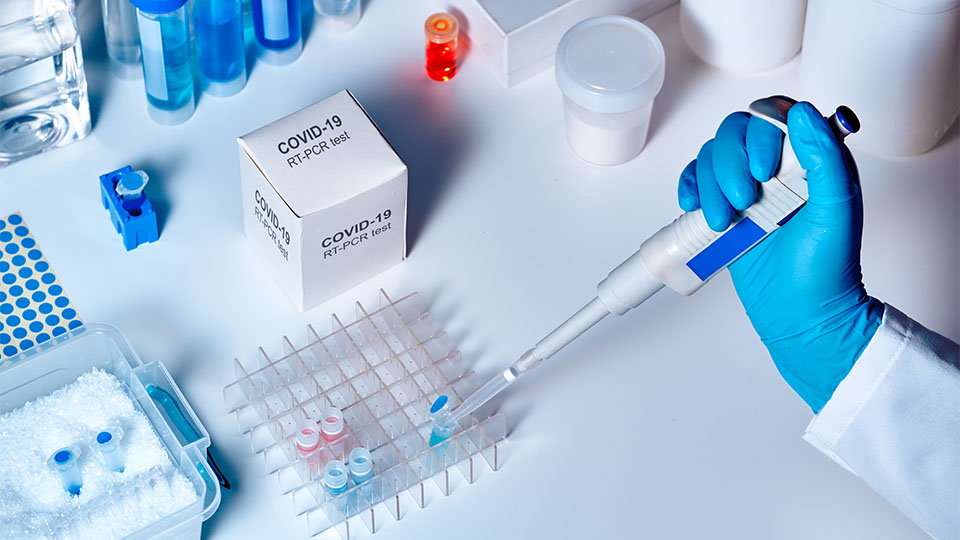
Numerous tests are being developed worldwide
Singapore has recently launched a major testing program to assess immunity in the general population. In fact, millions of antibody tests would have to be performed in each country for these very extensive screenings. And these would have to be repeated at regular intervals.
Since the production and evaluation of antibody tests is comparatively simple and can be automated, testing a blood sample in mass production costs only a few cents.
Such programs would therefore be much cheaper for each country than the multi-million-dollar aid funds that are currently being set up in many countries.
Because antibody tests are such an important tool, they are currently being developed by a large number of institutions and companies worldwide. China is a pioneer in this field: almost a dozen such tests have already been approved there, some also in the USA.
In Switzerland and Germany, antibody tests for Sars-CoV-2 are currently only available for research purposes; one is being tested at the University Hospital in Zurich, for instance.
However, one problem remains: the antibody tests have been developed so rapidly that nobody knows exactly how reliable they are.
Little has been published about them to date. And the scant available data, such as those from the University of Rotterdam or the Icahn School of Medicine at Mount Sinai in New York, show that although the tests are reliable, they have so far only been tested with the blood of very few Covid-19 patients.
However, for conclusive mass screenings, extensive analyses must prove that a test can detect antibodies against Sars-CoV-2 very precisely, but not those against other coronaviruses (which have been present in the population for years).
Only if the specificity is very high does a screening of the population provide reliable results. In contrast, many false-positive results would massively overestimate the immunity against Sars-CoV-2.
Naturally, antibody tests alone do not prevent new infections. This requires a prudent population that returns to social life with due caution after the social distancing measures have been lifted.
People with symptoms or suspected infection would have to remain isolated and examined with PCR tests.
More: Brazil news in English, every day from The Rio Times.
This article was produced by The Rio Times’ automated newsroom system. How we use AI · Report an error · Editorial responsibility: Matthias Camenzind, Editor-in-Chief