Moro’s Exit Inflates Price Charged by ‘Centrão’ to Shield Bolsonaro From Impeachment
RIO DE JANEIRO, BRAZIL – The crisis surrounding Sérgio Moro’s departure from the Ministry of Justice has raised the price for Centrão’s support for the Jair Bolsonaro government. The Centrão is a loose group of congressional political parties with no ideological orientation that aims to ensure proximity to the executive power in order to obtain advantages.
If, before Moro’s downfall, only second and third tier executive positions were being targeted by the group that is drawing closer and closer to the President, it now has its eye on at least one Ministry, namely that of Infrastructure.

The price of Centrão is increasing in proportion to the undermining of the President’s popular support. A survey by the consultancy Atlas Político shows that 54 percent of the population would be in favor of his impeachment, the first time that a majority of Brazilians advocate his removal from office. In a Datafolha poll, 45 percent support his impeachment, while 48 percent reject the idea – in practice, a draw due to the three-point error margin in the survey.
The Centrão currently comprises some 160 federal deputies. It is a caucus that, together with a group of deep-rooted Bolsonarists (members of NOVO, PSL, PSC, MDB, and other minor parties), is in a position to halt a potential impeachment process or the prosecution of charges made by the Prosecutor’s Office.
To prevent the initiation of a presidential impeachment process, 172 votes out of 513 deputies are required. The same number is required to block a formal indictment, such as that which the Office of the Prosecutor General could bring since the Supreme Court has authorized an investigation into the President based on ex-Minister Moro’s allegations.
Since the second Fernando Henrique Cardoso administration in the early 2000s, the Centrão has held sway in Congress. It was behind the overthrow of President Dilma Rousseff, despite holding positions in her cabinet, and for preventing the removal of Michel Temer, who was facing two corruption charges while President of Brazil. Internally, it was instrumental in the elections of Eduardo Cunha and Rodrigo Maia as Chamber presidents.
The Centrão leadership have yet another motive to get closer to Bolsonaro: they want to prevent a potential takeover by his vice president, Hamilton Mourão, with whom they have little or no affinity. Bolsonaro has the experience of 28 years in Congress and close relations with several of the deputies and former deputies who are wooing him today.
Mourão is regarded by these politicians as an outsider, as he never held any political office before becoming vice president and is thought to be less open to negotiations. The vice president enjoys better relations with the military, foreign ambassadors, and entrepreneurs than with legislators, governors, and mayors.
Currently, the Centrão’s target, the Ministry of Infrastructure, is under the command of Tarcísio Freitas, a former military and career servant of the Chamber of Deputies, who is considered a technical, non-political appointment. The Liberal Party is the one most interested in the Ministry, having former deputy Valdemar Costa Neto as its articulator. He was convicted of passive corruption and money laundering in the ‘Mensalão’ scandal, a vote-buying scheme that threatened to bring down the government of Luiz Inácio Lula da Silva in 2005. In theory, Bolsonaro does not intend to dismiss Tarcísio.
Together with the Minister of Economy, Paulo Guedes, the Minister of Infrastructure is among those trying to curb the eagerness of the Centrão. If he remains in office, he will have to deal with a dispute over the command of the National Department of Infrastructure and Transport (DNIT), an arm of infrastructure that for years has been one of the main focuses of corruption, particularly when it was commanded by Costa Neto’s allies. They are also trying to gain access to Valec, the company in charge of railway construction that is in the process of being merged.
Pledges and impeachment
If they have not yet managed to penetrate these areas, there are now indications that they will obtain the Port of Santos. The agency’s chief administrative position, linked to the Ministry of Infrastructure, was offered to the Solidariedade (Solidarity) party, chaired by deputy Paulo Pereira da Silva. However, he says this is not the time to hold government positions, although Costa Neto is already preparing his nomination for the position.
Initially, Bolsonaro had designed the following structure for the main parties in the Centrão: the PL (Liberal Party) would take over the Banco do Nordeste (Bank of the Northeast); the Progressistas (Progressives; PP), under the direction of legislators investigated by Lava Jato, Senator Ciro Nogueira and Deputy Arthur Lira, would take over the National Department of Works Against Droughts (DNOCS) and the National Education Development Fund; and the PSD (Social Democratic Party), of former Minister and Mayor of São Paulo Gilberto Kassab, would take over the National Health Foundation. Accommodating nominees of the PTB (Brazilian Labour Party), PROS (Republican Party of the Social Order), Avante (minor populist centrist party), and Republicanos (Republican Party) would still be required to satisfy the Centrão’s wish list.
Moving closer to members of Centrão was described as something that was necessary, by Vice-President Mourão. “This move by the President is important to effectively build a parliamentary base that supports the government’s ideas. This will work to reduce tensions and make it easier for us to overcome this final stage of the fight against the coronavirus”, said the general in an interview with political analyst Murillo de Aragón, from the Arko Advice consultancy.
First tier executive changes may also result in the downfall of federal deputy Tereza Cristina (DEM) from the Agriculture portfolio. Not to accommodate someone from the Centrão, but rather to punish her party, which has already held three Ministries and has failed to be the ally Bolsonaro expected in Congress. Quite the opposite.
In recent weeks, Bolsonaro has said that Rodrigo Maia, Chamber president and the main leader of the DEM (Democrats), has been working to remove him from office. However, in practice, Maia has already said that, at the moment, he is not planning to pursue any of the almost 30 requests for Bolsonaro’s impeachment being processed in the Chamber.
“I think the Chamber should keep its focus on what is the main thing, which is the fight against the coronavirus,” said the deputy at a press conference on Monday. An injunction in the Supreme Court is charging Maia with omission and calling for the requests to be examined – so far, the Chamber president has only been urged to comment on the case, without any deadline set for examination.
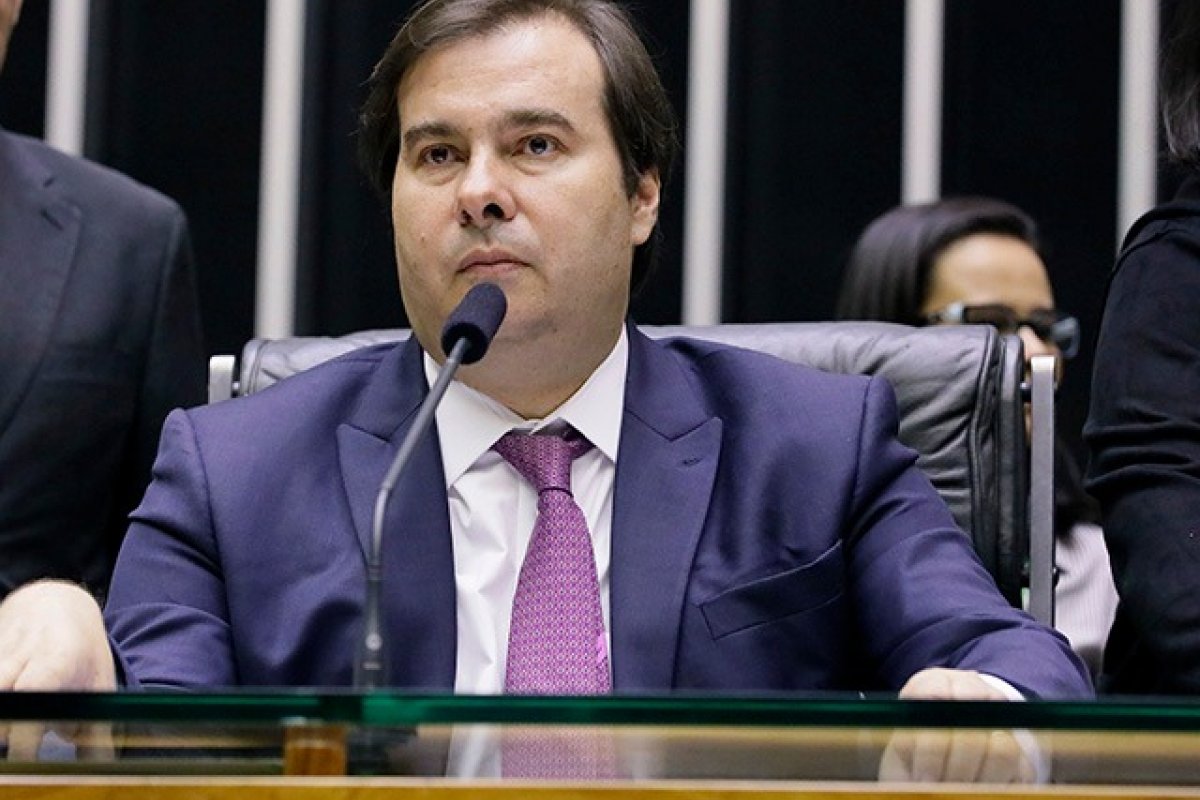
The deputy also stated that this would not be the time to set up parliamentary inquiry committees to investigate whether Bolsonaro intends to politically interfere in the Federal Police, as denounced by Minister Sérgio Moro upon leaving office. “We cannot, in any way, let Congress be another instrument of crises and uncertainties that have occurred in our country”.
In order to preserve himself while trying to distance himself from the crises on the Planalto, Maia placed the responsibility for potential investigations into the President on the judiciary. He directly mentioned one of the two requests for investigation brought by Augusto Aras, Federal Prosecutor General, seeking to determine if Bolsonaro did, in fact, want to interfere in the Federal Police.
Last week, the Prosecutor General first requested to hear Moro regarding potential crimes of misrepresentation, coercion in the course of a proceeding, peddling, malfeasance, obstruction of justice, privileged passive corruption that would have been committed by Bolsonaro.
If these crimes are not proven, the ex-Minister would be liable for slanderous denunciation and a crime against honor. On Monday night, the dean of the STF, Justice Celso de Mello, authorized this investigation and determined that Moro must be questioned within 60 days.
Meanwhile, Bolsonaro has placed long-time allies in both the Federal Police and Moro’s formal office. The President appointed André Mendonça as his new Minister of Justice and Public Safety, and Alexandre Ramagem as the new Director-General of the Federal Police.
A friend of Bolsonaro’s sons, Ramagem comes to the position already under suspicion, after Moro said the President wanted someone he could call to obtain intelligence from the police.
The reaction so far has been only from the center-left opposition, which is trying to overthrow the appointments in the courts.
Source: El País
More: Brazil news in English, every day from The Rio Times.
This article was produced by The Rio Times’ automated newsroom system. How we use AI · Report an error · Editorial responsibility: Matthias Camenzind, Editor-in-Chief