IBOV 171,031.73 ▲ 1.85% IPSA 11,338.38 ▲ 0.89% IPC MEX 65,729.18 ▲ 2.14% MERVAL 2,913,184 ▲ 1.35% COLCAP 2,459.23 ▲ 0.61% BVL PERÚ 58,698.13 ▲ 2.60% USD/BRL5.14▼ 0.14% USD/MXN16.90▼ 0.36% USD/CLP914.28— 0.00% USD/COP3,038▼ 1.18% USD/PEN3.35▼ 0.06% USD/ARS1,499▲ 0.12% USD/UYU40.20▲ 1.58% USD/PYG5,996▲ 1.55% USD/BOB11.43▲ 0.41% USD/DOP58.82▲ 0.20% USD/CRC450.05▲ 3.34% USD/GTQ7.62▲ 2.21% USD/HNL26.81▲ 0.31% USD/NIO36.62▲ 0.61% USD/VES778.00▼ 0.13% USD/PAB1.00— 0.00% USD/BZD2.00— 0.00% USD/JMD 157.28 — 0.00% USD/TTD6.71▲ 0.79% EUR/BRL6.00▼ 0.64% BRENT 88.88 ▼ 0.03% WTI 83.11 ▼ 0.11% IRON ORE 161.91 — — COPPER 6.61 ▲ 0.03% GOLD 4,461 ▲ 1.78% SILVER 65.59 ▲ 1.26% SOY 1,184 ▲ 3.20% CORN 480.50 ▲ 10.02% WHEAT 655.00 ▲ 3.93% COFFEE 317.25 ▼ 5.51% SUGAR 16.43 ▼ 1.79% ORANGE JUICE 138.55 ▼ 0.47% COTTON 85.03 ▲ 2.33% COCOA 5,719 ▲ 3.18% BEEF 223.60 ▼ 3.93% CATTLE 339.10 ▼ 3.16% LITHIUM 75.20 ▲ 1.47% PETR4 41.64 ▼ 0.05% VALE3 72.97 ▲ 0.83% ITUB4 38.60 ▼ 1.03% BBDC4 16.85 ▲ 0.36% ABEV3 14.89 ▼ 0.80% BBAS3 19.37 ▲ 0.47% B3SA3 14.26 ▼ 0.21% WEGE3 47.59 ▲ 0.49% PRIO3 59.14 ▼ 0.19% SUZB3 41.33 ▲ 2.35% RENT3 34.68 ▼ 0.09% AZZA3 15.89 ▼ 2.63% CSAN3 3.22 ▼ 1.83% RAIZ4 0.25 — 0.00% PCAR3 2.75 ▼ 0.36% GMAT3 3.65 ▼ 1.08% PSSA3 48.13 ▼ 0.54% CVCB3 1.33 ▼ 2.92% POSI3 3.36 ▲ 2.44% SLCE3 13.34 ▲ 0.30% NATU3 8.14 ▼ 0.73% IBOV 171,031.73 ▲ 1.85% IPSA 11,338.38 ▲ 0.89% IPC MEX 65,729.18 ▲ 2.14% MERVAL 2,913,184 ▲ 1.35% COLCAP 2,459.23 ▲ 0.61% BVL PERÚ 58,698.13 ▲ 2.60% USD/BRL 5.16 ▲ 0.01% USD/MXN 17.06 ▼ 0.24% USD/CLP 913.98 ▲ 0.04% USD/COP 3,140 ▲ 0.03% USD/PEN 3.36 ▼ 0.66% USD/ARS 1,493 ▲ 0.10% USD/UYU 40.27 ▲ 1.24% USD/PYG 5,939 ▲ 1.68% USD/BOB 11.64 ▼ 0.76% USD/DOP 58.34 ▲ 1.25% USD/CRC 445.92 ▲ 0.89% USD/GTQ 7.62 ▲ 2.21% USD/HNL 26.79 ▲ 1.57% USD/NIO 36.62 ▲ 0.69% USD/VES 762.44 ▼ 0.13% USD/PAB 1.00 — 0.00% USD/BZD 2.00 — 0.00% USD/JMD 157.28 — 0.00% USD/TTD 6.70 ▲ 0.61% EUR/BRL 5.95 ▲ 1.01% BRENT 88.88 ▼ 0.03% WTI 83.11 ▼ 0.11% IRON ORE 161.91 — — COPPER 6.61 ▲ 0.03% GOLD 4,461 ▲ 1.78% SILVER 65.59 ▲ 1.26% SOY 1,184 ▲ 3.20% CORN 480.50 ▲ 10.02% WHEAT 655.00 ▲ 3.93% COFFEE 317.25 ▼ 5.51% SUGAR 16.43 ▼ 1.79% ORANGE JUICE 138.55 ▼ 0.47% COTTON 85.03 ▲ 2.33% COCOA 5,719 ▲ 3.18% BEEF 223.60 ▼ 3.93% CATTLE 339.10 ▼ 3.16% LITHIUM 75.20 ▲ 1.47% PETR4 41.64 ▼ 0.05% VALE3 72.97 ▲ 0.83% ITUB4 38.60 ▼ 1.03% BBDC4 16.85 ▲ 0.36% ABEV3 14.89 ▼ 0.80% BBAS3 19.37 ▲ 0.47% B3SA3 14.26 ▼ 0.21% WEGE3 47.59 ▲ 0.49% PRIO3 59.14 ▼ 0.19% SUZB3 41.33 ▲ 2.35% RENT3 34.68 ▼ 0.09% AZZA3 15.89 ▼ 2.63% CSAN3 3.22 ▼ 1.83% RAIZ4 0.25 — 0.00% PCAR3 2.75 ▼ 0.36% GMAT3 3.65 ▼ 1.08% PSSA3 48.13 ▼ 0.54% CVCB3 1.33 ▼ 2.92% POSI3 3.36 ▲ 2.44% SLCE3 13.34 ▲ 0.30% NATU3 8.14 ▼ 0.73%
since 2009
Sunday, August 23, 2026

No Risk in Seafood Consumption So Far, Says Brazilian Health Minister

By · November 1, 2019 · 3 min read

Daily Brief

The morning intel from across Latin America. Free.

By subscribing you agree to our privacy policy. We never share your email.

RIO DE JANEIRO, BRAZIL – Health Minister Luiz Henrique Mandetta said yesterday, October 31st, that he has no evidence to warrant an “abrupt interruption” of seafood consumption, despite the oil slicks that have surfaced on Brazil’s northeastern beaches.

Brazilian Health Minister Luiz Henrique Mandetta.
Brazilian Health Minister Luiz Henrique Mandetta. (Photo: internet reproduction)
One-stop reference
Company Intelligence
Every listed company in Latin America — financials, ownership and structure for 1,450+ companies across 26 exchanges, in one place.
Browse the directory →
RT
Ask Rio Times
This story and the bigger picture.
Open the full Ask Rio Times →

According to him, the monitoring is being constantly carried out so that, upon the first sign of risk, the population may be warned.

“So far we don’t have any evidence to suggest [to the population] that consumption should be halted. We are, at all times, analyzing and retrieving oysters, shellfish, mussels, lobsters, fish, hake, barracudas and we haven’t found anything that poses a risk so far. When it occurs, the Ministry of Health will immediately issue a warning,” the minister told Agência Brasil, upon arriving for an event at the Pan American Health Organization (PAHO) in Brasília.

The monitoring of the effects that the oil has had on marine life has been conducted through a partnership with the Ministry of Agriculture, Livestock, and Supply (MAPA). “What we know so far is that we haven’t found anything that, according to the precautionary rule, would require us to abruptly interrupt the food chain,” he added.

Health Centres

According to Mandetta, assistance to people with health issues as a result of having come into contact with the oil found on beaches, is decreasing after warnings to wear boots and gloves, thus avoiding direct skin contact.

“The occasional intoxications that we notice, of skin irritation and headaches, are essentially due to the fact that people have used benzine as a solvent on the skin to remove the substance. I believe that this occurred because, at the beginning, people didn’t know how to deal with the situation”, he said. According to the minister, in these cases, soap and water or even cooking oil are the most recommended to use.
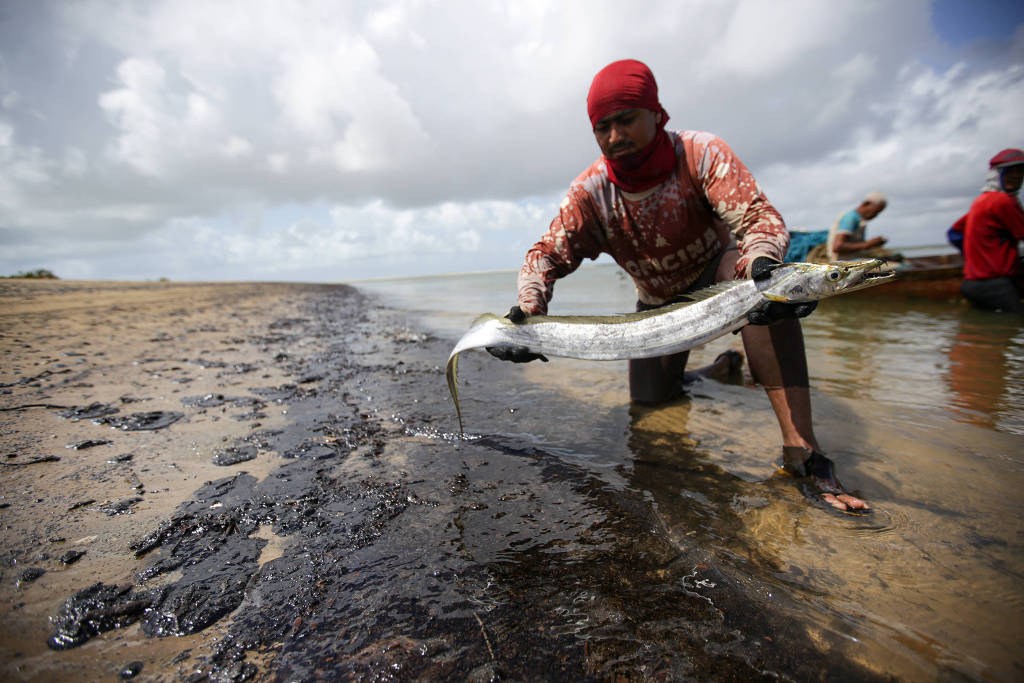
Health Minister Luiz Henrique Mandetta said there is no evidence to warrant an "abrupt interruption" of seafood consumption, despite the oil slicks that have surfaced on northeastern beaches.
Health Minister Luiz Henrique Mandetta said there is no evidence to warrant an “abrupt interruption” of seafood consumption, despite the oil slicks that have surfaced on northeastern beaches. (Photo: internet reproduction)

Oil slick

Mandetta commented on statements by researchers from the federal universities of Rio de Janeiro (UFRJ) and Alagoas (UFAL) who, based on imagery detected by the European satellite Sentinel 1A, said they had spotted an oil slick off the southern coast of Bahia State, measuring between 200 and 300 square km (km²).

According to the minister, the issue has already been clarified by IBAMA and the Navy, which said that the image would not be oil, but most likely a meteorological phenomenon in intense activity: “We are guided by the Brazilian Navy, which possesses the best equipment and the best marine expertise”.

When contacted by Agência Brasil, the Ministry of Defense said that “inspections have already been carried out by a Brazilian Air Force (FAB) aircraft and Navy ships in the region, confirming the absence of oil in the area”.

After attending a ceremony to sign a sectoral agreement with organizations in the electrical and electronics sector, Environment Minister Ricardo Salles also commented on the case. “It was not an oil slick, but we proceeded with monitoring and with the work of collecting, monitoring and disposing of oil in the Northeast”.

Source: Agência Brasil

This article was produced by The Rio Times’ automated newsroom system. How we use AI · Report an error

Read More from The Rio Times

The Rio Times · Power Map
See who really holds power in Latin America
Click to open the Power Map

Rotate for Best Experience

This report is optimized for landscape viewing. Rotate your phone for the full experience.