One of Brazil’s Most Exotic National Parks to be Downsized, Opened to Development
RIO DE JANEIRO, BRAZIL – The Lençóis Maranhenses National Park, one of Brazil’s most exotic tourist destinations, should see its boundaries altered, opening up areas for tourist developments as well as relocating, outside the revised park boundaries, villages where some 2,000 people currently live.
The proposal to change the park’s boundaries is being discussed in the Senate, in a bill by Senator Roberto Rocha, and is supported by Jair Bolsonaro‘s government. It provides that villages such as Travosa, Betânia, and Ponta Mangue cease to be part of the environmental protection area and have greater flexibility for construction.
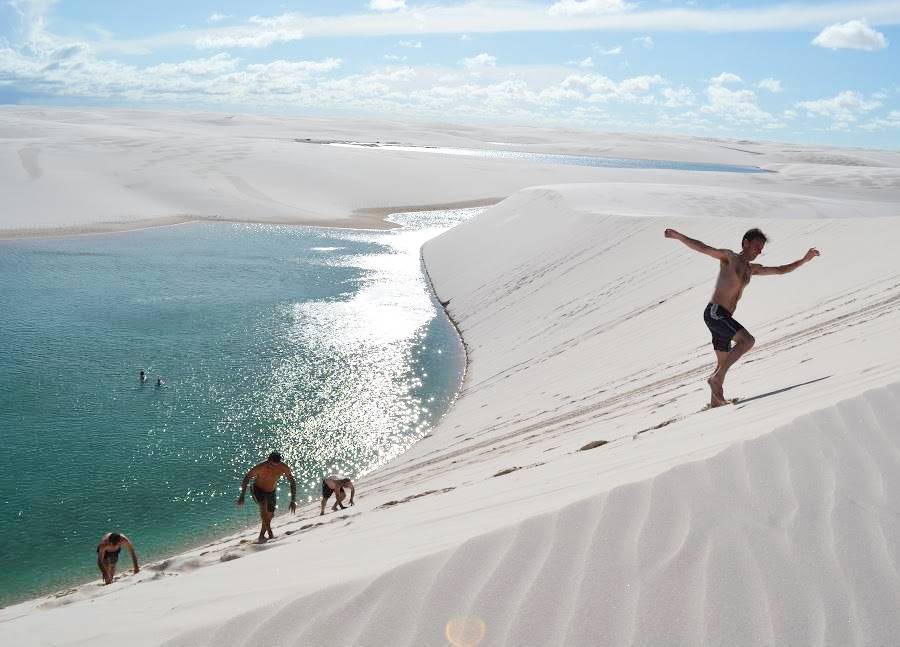
With an area of 150,000 hectares, equivalent to the size of the city of São Paulo, Lençóis Maranhenses boasts an ecosystem formed by dunes, freshwater lagoons, coastal forest areas, and mangroves. The national park was established in 1981 and is managed by ICMBio (Chico Mendes Institute for Biodiversity Conservation), an environmental agency linked to the Ministry of the Environment.

The prospect of changes in the park’s boundaries has drawn criticism from environmentalists and anthropologists, has prompted apprehension among the inhabitants of the region’s towns, and has opened another matter of contention among local politicians.
The proposal could also reduce the economic potential of a prospective concession for the exploitation of services within the park, since it will leave outside the park’s boundaries perennial lagoons that generate tourist flows throughout the year.
The concession is advocated by Environment Minister Ricardo Salles, who aims to leverage investments, increase tourist visits and reduce the national park’s maintenance costs.
The removal of villages will cause the number of people living in Lençóis Maranhenses to drop from 2,603 to 588. Made up of farmers, fishermen, and shellfishers, the traditional communities to be excluded will no longer be able to exploit the area’s resources within the park.
Folha visited villages in Lençóis Maranhenses and heard reports from residents about the potential changes. They expressed concern over losing some of their income sources such as the extraction of wine-palm fiber used in handicrafts, the collection of shellfish such as clams, common on the Maranhão coast, and fishing.
A study conducted by a team led by anthropologists Maristela Andrade and Benedito Souza Filho, professors at the UFMA (Federal University of Maranhão), points to potential environmental risks and harmful consequences to traditional communities.
They recommend that scientific field studies be carried out and advocate that the areas removed from the park be converted into extractive reserves, ensuring environmental protection, but with more flexible rules for the residents.

Real estate pressure is also a concern. After the start of the bill’s processing, invasions and fencing of land in areas with tourist potential have been recorded.
Lagoa da Esperança, one of the park’s most important lakes, is an example of this, as it remains replenished even during the dry season. An amendment made to the project in the Senate Regional Development and Tourism Committee removes the entire lagoon area from the park, freeing the area for new construction.
With about 100,000 visitors per year, the Lençóis Maranhenses Park is the main tourist destination in Maranhão. The increase in tourist flow, however, was not matched by an increase in inspections – the park has only three inspectors to ensure the protection of its territory.
Faced with such a limited number of staff, it is common for people to circumvent the park’s rules. In July this year, an ICMBio operation detected cases of trawling on the coast and irregular traffic of private vehicles over the dunes. Under current rules, only accredited tourism vehicles are allowed into the park.
Senator Roberto Rocha, the author of the project that redesigns the park’s boundaries, says that, in addition to boosting the region’s tourism potential, the project will provide more infrastructure for the towns and free their residents from the national park’s rules.
Source: Folha de S.Paulo
More: Brazil news in English, every day from The Rio Times.
Editorial responsibility: Matthias Camenzind, Editor-in-Chief · Editorial standards · Report an error