Prosecutor General Advocates Use of Banking and Tax Data Without Court Order
RIO DE JANEIRO, BRAZIL – The Prosecutor General of the Republic, Augusto Aras, advocated yesterday, November 20th, at the Federal Supreme Court (STF), the direct communication of suspicious tax and financial transactions to the Federal Prosecutor’s Office (MPF).

On Wednesday morning, November 20th, the Supreme Court (STF) plenary began to discuss whether oversight or “intelligence” entities may share data with investigation officials without the need for judicial authorization. In essence, justices discussed whether or not this would violate individuals’ banking and tax confidentiality.
Aras argued that the reports of control bodies, such as the Financial Intelligence Unit (UIF, the former Financial Activities Control Council, the COAF) and the Federal Treasury do not contain evidence of any crime, but only general primary data to suggest potential lines of investigation. Therefore, there is no breach of confidentiality in access to such data.
According to the Prosecutor General (PGR), there would also be a practical impossibility of submitting all communications on suspicious movements to the prior scrutiny of a judge, given the large volume of information. In the UIF alone, there are 15,000 communications a day, he said.
Aras also emphasized that the system of direct communication of suspicious transactions to investigative officials by control and intelligence bodies is a procedure adopted in 184 countries, and that to restrict this system would bring “issues for Brazil to justify itself before the international community”, as well as hindering access to international financial markets for Brazilians.
“We are running the serious risk of Brazil being technically regarded as a tax haven, an excessively damaging blemish for a country that needs to regain the course of economic growth and establish social well-being,” said the PGR.
IBCCrim
As a friend of the court (amicus curiae), attorney Gustavo Badaró spoke on behalf of the Brazilian Institute of Criminal Sciences (IBCCrim). He argued that the sharing with investigation officials of confidential data obtained by control bodies should be subjected to a prior review of “necessity, adequacy, and proportionality” by a judge.
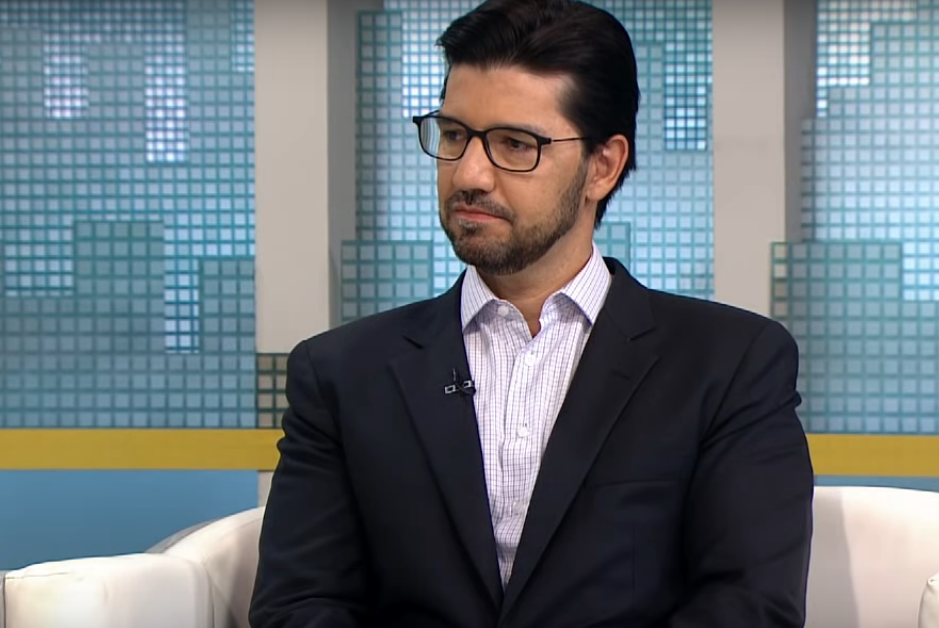
Badaró argued that the issue concerns the protection of the privacy and intimacy of individuals, an issue that gains relevance in digital times, in which the amount of data increases exponentially in both quantitative and qualitative terms.
He argued that UIF reports, for instance, would provide even more detailed data than a bank statement. Badaró believes that for this reason, the body that has direct access to such data cannot be the same as the one with the power to lodge criminal complaints, as this would be the only way to prevent potential abuse of authority.
“We are not advocating an obstacle to prosecution. Far from it. What we are doing is simply demanding from those with specific prosecution powers, that more detailed, more restrictive or deeper levels of data regarding privacy be properly accessed by the courts,” said Badaró.
Understanding the issue
Currently, oversight bodies such as the Federal Treasury and the Financial Intelligence Unit (UIF) send reports on atypical transactions which may point out illegal activity to the Federal Prosecutor’s Office (MPF).
In this case, the justices are hearing the MPF’s appeal against the annulment by an appellate court of a conviction for tax evasion of the owner of a gas station in São Paulo. The investigation was based on a report by the Tax Authorities, which was forwarded directly to the prosecutors.
The Supreme Court has already established that the decision on the case will have “general repercussion”. Similar to the legal doctrine called “stare decisis”, this means that the STF judgment will constitute a general rule which all courts in the country should follow in cases of this nature.
Source: Agência Brasil
More: Brazil news in English, every day from The Rio Times.
Editorial responsibility: Matthias Camenzind, Editor-in-Chief · Editorial standards · Report an error