IBOV 177,999.00 ▲ 0.47% IPSA 11,016.85 ▼ 0.13% IPC MEX 66,935.53 ▼ 0.58% MERVAL 3,291,323 ▼ 0.41% COLCAP 2,392.10 ▲ 2.12% BVL PERÚ 57,890.85 — — USD/BRL5.07▼ 0.02% USD/MXN17.32▼ 0.17% USD/CLP 930.47 — 0.00% USD/COP3,148▼ 0.08% USD/PEN3.40▲ 0.15% USD/ARS1,485▼ 0.03% USD/UYU 40.20 — 0.00% USD/PYG 5,931 — 0.00% USD/BOB 12.10 — 0.00% USD/DOP58.11▲ 0.21% USD/CRC 448.40 — 0.00% USD/GTQ 7.62 — 0.00% USD/HNL 26.76 — 0.00% USD/NIO 36.62 — 0.00% USD/VES746.91▼ 0.13% USD/PAB1.00— 0.00% USD/BZD2.00— 0.00% USD/JMD157.49▲ 0.19% USD/TTD6.72— 0.00% EUR/BRL5.86▲ 0.20% BRENT 90.12 ▲ 1.22% WTI 80.63 ▼ 4.77% IRON ORE 161.91 — — COPPER 6.54 ▲ 1.54% GOLD 4,114 ▲ 1.61% SILVER 58.21 ▲ 1.07% SOY 1,179 ▲ 0.60% CORN 460.50 ▲ 4.48% WHEAT 636.25 ▼ 0.47% COFFEE 313.55 ▼ 2.94% SUGAR 14.65 ▲ 1.52% ORANGE JUICE 153.35 ▲ 5.03% COTTON 81.20 ▲ 2.25% COCOA 5,537 ▲ 8.31% BEEF 227.25 ▼ 1.72% CATTLE 343.78 ▼ 0.78% LITHIUM 69.22 ▼ 0.85% PETR4 43.42 ▲ 1.35% VALE3 76.28 ▲ 0.25% ITUB4 42.89 ▲ 0.35% BBDC4 18.43 ▲ 0.22% ABEV3 15.99 ▲ 0.19% BBAS3 21.35 ▲ 0.76% B3SA3 15.73 ▲ 0.64% WEGE3 47.20 ▲ 0.81% PRIO3 60.85 ▲ 1.48% SUZB3 43.32 ▲ 1.38% RENT3 37.61 ▼ 1.62% AZZA3 16.42 ▲ 3.53% CSAN3 4.07 ▲ 2.01% RAIZ4 0.26 — 0.00% PCAR3 2.59 ▼ 5.47% GMAT3 4.03 ▲ 1.26% PSSA3 54.70 ▲ 0.64% CVCB3 1.31 ▲ 0.77% POSI3 3.55 ▲ 0.85% SLCE3 13.38 ▲ 0.91% NATU3 8.38 ▲ 0.60% BRKM5 5.97 ▲ 0.67% RANI3 8.11 ▲ 1.00% CSNA3 4.84 ▼ 2.22% CMIN3 5.71 ▼ 0.17% USIM5 7.36 ▼ 2.52% ENEV3 26.31 ▲ 0.61% CPFE3 46.14 ▲ 0.11% CMIG4 11.34 ▲ 0.98% EQTL3 38.66 — 0.00% LREN3 13.60 ▲ 0.59% VIVT3 32.63 — 0.00% RAIL3 14.44 ▲ 1.12% KLABIN 18.25 ▲ 1.11% RAIA DROGASIL 18.48 ▲ 1.26% RDOR3 34.64 ▲ 0.64% HAPV3 11.28 ▲ 2.45% FLRY3 17.14 ▲ 1.00% SMTO3 14.52 ▲ 0.83% UGPA3 33.05 ▲ 0.39% VBBR3 36.05 ▲ 1.18% BBSE3 41.26 ▲ 0.98% BPAC11 56.80 ▲ 0.32% CURY3 30.09 ▼ 1.02% AERI3 2.15 ▲ 0.94% VIVARA 22.18 ▲ 0.09% COMPASS 24.84 — 0.00% VAMOS 3.34 ▼ 2.34% SANB11 28.62 ▲ 13.35% ASAI3 8.50 ▲ 1.07% SBSP3 27.70 ▲ 1.06% WALMEX 50.36 ▲ 0.34% GMEXICO 208.29 ▼ 2.20% FEMSA 221.95 ▲ 1.19% CEMEX 20.54 ▼ 0.73% GFNORTE 199.64 ▼ 0.32% BIMBO 62.08 ▲ 2.26% TELEVISA 9.79 ▼ 0.91% AMX 22.00 — 0.00% GAP 376.64 ▼ 1.08% ASUR 275.62 ▼ 0.34% OMA 231.05 ▼ 0.96% KOF 187.94 ▼ 0.14% GRUMA 258.23 ▼ 4.00% KIMBER 40.19 ▼ 0.17% SQM-B 62,700 ▼ 0.93% COPEC 6,350 ▲ 0.79% BSANTANDER 80.99 ▲ 0.36% FALABELLA 6,216 ▼ 0.06% ENELAM 87.99 ▲ 0.39% CENCOSUD 1,955 ▲ 0.51% CMPC 1,055 ▲ 2.43% BANCO CHILE 193.71 — 0.00% LATAM AIR 24.74 ▼ 0.64% YPF 82,900 ▲ 1.94% GGAL 7,890 ▼ 1.56% PAMPA 5,555 ▲ 0.36% TXAR 655.50 ▲ 1.16% ALUAR 977.50 ▼ 0.20% TGS 10,050 ▲ 2.45% CEPU 2,396 ▼ 0.33% MIRGOR 16,350 ▼ 1.95% COME 44.03 ▼ 1.94% LOMA NEGRA 3,620 ▼ 1.76% BYMA 296.00 ▼ 0.34% TELECOM ARG 4,408 ▲ 2.14% ECOPETROL 16.77 ▼ 1.58% BANCOLOMBIA 92.52 ▼ 1.46% GRUPO AVAL 5.28 ▲ 2.75% CREDICORP 400.58 ▼ 0.42% SOUTHERN COPPER 182.71 ▼ 1.24% BUENAVENTURA 30.28 ▼ 4.96% MERCADOLIBRE 1,878 ▼ 0.41% NUBANK 14.33 ▼ 1.10% XP 17.06 ▼ 0.81% PAGSEGURO 9.64 ▼ 2.03% STONE 11.38 ▼ 0.48% GLOBANT 36.60 ▲ 0.58% TECNOGLASS 43.44 ▼ 0.34% GAP AIRPORT 217.35 ▼ 1.02% ASUR 275.62 ▼ 0.34% OMA AIRPORT 106.90 ▼ 1.10% AMX ADR 25.37 ▲ 0.18% FEMSA ADR 127.99 ▲ 0.97% CEMEX ADR 11.82 ▼ 0.92% PETROBRAS ADR 19.40 ▲ 1.46% VALE ADR 15.06 ▲ 0.47% ITAU ADR 8.46 ▲ 0.24% SANTANDER BR 5.67 ▲ 12.28% AMBEV ADR 3.11 ▼ 0.32% CSN 0.99 ▼ 2.42% GERDAU 4.96 — 0.00% LATAM ADR 52.75 ▼ 2.21% BTC 63,246 ▲ 0.77% ETH 1,872 ▲ 1.56% SOL 73.16 ▲ 1.80% XRP 1.08 ▲ 1.91% BNB 584.55 ▲ 1.67% ADA 0.19 ▲ 7.97% DOGE 0.07 ▲ 1.52% AVAX 6.53 ▲ 5.59% LINK 8.34 ▲ 3.54% DOT 0.80 ▲ 1.98% LTC 44.68 ▲ 1.12% BCH 212.30 ▲ 2.11% TRX 0.33 ▼ 0.48% XLM 0.17 ▲ 1.54% HBAR 0.07 ▲ 0.92% NEAR 1.71 ▲ 2.30% ATOM 1.26 ▲ 3.19% AAVE 91.74 ▲ 1.35% SELIC 14.25% GGBR4 24.98 — 0.00% EMBRAER 86.89 ▲ 0.87% EMBRAER ADR 68.33 ▲ 0.32% JBS 14.02 ▼ 1.89% JBS BDR 70.70 ▼ 2.01% MBRF3 17.54 ▼ 2.34% MBRFY 3.39 ▼ 2.31% INTER 5.60 ▼ 0.71% IBOV 177,999.00 ▲ 0.47% IPSA 11,016.85 ▼ 0.13% IPC MEX 66,935.53 ▼ 0.58% MERVAL 3,291,323 ▼ 0.41% COLCAP 2,392.10 ▲ 2.12% BVL PERÚ 57,890.85 — — USD/BRL 5.07 ▼ 0.02% USD/MXN 17.32 ▼ 0.17% USD/CLP 930.47 — 0.00% USD/COP 3,148 ▼ 0.08% USD/PEN 3.40 ▲ 0.15% USD/ARS 1,485 ▼ 0.03% USD/UYU 40.20 — 0.00% USD/PYG 5,931 — 0.00% USD/BOB 12.10 — 0.00% USD/DOP 58.11 ▲ 0.21% USD/CRC 448.40 — 0.00% USD/GTQ 7.62 — 0.00% USD/HNL 26.76 — 0.00% USD/NIO 36.62 — 0.00% USD/VES 746.91 ▼ 0.13% USD/PAB 1.00 — 0.00% USD/BZD 2.00 — 0.00% USD/JMD 157.49 ▲ 0.56% USD/TTD 6.72 ▲ 0.86% EUR/BRL 5.86 ▲ 0.20% BRENT 90.12 ▲ 1.22% WTI 80.63 ▼ 4.77% IRON ORE 161.91 — — COPPER 6.54 ▲ 1.54% GOLD 4,114 ▲ 1.61% SILVER 58.21 ▲ 1.07% SOY 1,179 ▲ 0.60% CORN 460.50 ▲ 4.48% WHEAT 636.25 ▼ 0.47% COFFEE 313.55 ▼ 2.94% SUGAR 14.65 ▲ 1.52% ORANGE JUICE 153.35 ▲ 5.03% COTTON 81.20 ▲ 2.25% COCOA 5,537 ▲ 8.31% BEEF 227.25 ▼ 1.72% CATTLE 343.78 ▼ 0.78% LITHIUM 69.22 ▼ 0.85% PETR4 43.42 ▲ 1.35% VALE3 76.28 ▲ 0.25% ITUB4 42.89 ▲ 0.35% BBDC4 18.43 ▲ 0.22% ABEV3 15.99 ▲ 0.19% BBAS3 21.35 ▲ 0.76% B3SA3 15.73 ▲ 0.64% WEGE3 47.20 ▲ 0.81% PRIO3 60.85 ▲ 1.48% SUZB3 43.32 ▲ 1.38% RENT3 37.61 ▼ 1.62% AZZA3 16.42 ▲ 3.53% CSAN3 4.07 ▲ 2.01% RAIZ4 0.26 — 0.00% PCAR3 2.59 ▼ 5.47% GMAT3 4.03 ▲ 1.26% PSSA3 54.70 ▲ 0.64% CVCB3 1.31 ▲ 0.77% POSI3 3.55 ▲ 0.85% SLCE3 13.38 ▲ 0.91% NATU3 8.38 ▲ 0.60% BRKM5 5.97 ▲ 0.67% RANI3 8.11 ▲ 1.00% CSNA3 4.84 ▼ 2.22% CMIN3 5.71 ▼ 0.17% USIM5 7.36 ▼ 2.52% ENEV3 26.31 ▲ 0.61% CPFE3 46.14 ▲ 0.11% CMIG4 11.34 ▲ 0.98% EQTL3 38.66 — 0.00% LREN3 13.60 ▲ 0.59% VIVT3 32.63 — 0.00% RAIL3 14.44 ▲ 1.12% KLABIN 18.25 ▲ 1.11% RAIA DROGASIL 18.48 ▲ 1.26% RDOR3 34.64 ▲ 0.64% HAPV3 11.28 ▲ 2.45% FLRY3 17.14 ▲ 1.00% SMTO3 14.52 ▲ 0.83% UGPA3 33.05 ▲ 0.39% VBBR3 36.05 ▲ 1.18% BBSE3 41.26 ▲ 0.98% BPAC11 56.80 ▲ 0.32% CURY3 30.09 ▼ 1.02% AERI3 2.15 ▲ 0.94% VIVARA 22.18 ▲ 0.09% COMPASS 24.84 — 0.00% VAMOS 3.34 ▼ 2.34% SANB11 28.62 ▲ 13.35% ASAI3 8.50 ▲ 1.07% SBSP3 27.70 ▲ 1.06% WALMEX 50.36 ▲ 0.34% GMEXICO 208.29 ▼ 2.20% FEMSA 221.95 ▲ 1.19% CEMEX 20.54 ▼ 0.73% GFNORTE 199.64 ▼ 0.32% BIMBO 62.08 ▲ 2.26% TELEVISA 9.79 ▼ 0.91% AMX 22.00 — 0.00% GAP 376.64 ▼ 1.08% ASUR 275.62 ▼ 0.34% OMA 231.05 ▼ 0.96% KOF 187.94 ▼ 0.14% GRUMA 258.23 ▼ 4.00% KIMBER 40.19 ▼ 0.17% SQM-B 62,700 ▼ 0.93% COPEC 6,350 ▲ 0.79% BSANTANDER 80.99 ▲ 0.36% FALABELLA 6,216 ▼ 0.06% ENELAM 87.99 ▲ 0.39% CENCOSUD 1,955 ▲ 0.51% CMPC 1,055 ▲ 2.43% BANCO CHILE 193.71 — 0.00% LATAM AIR 24.74 ▼ 0.64% YPF 82,900 ▲ 1.94% GGAL 7,890 ▼ 1.56% PAMPA 5,555 ▲ 0.36% TXAR 655.50 ▲ 1.16% ALUAR 977.50 ▼ 0.20% TGS 10,050 ▲ 2.45% CEPU 2,396 ▼ 0.33% MIRGOR 16,350 ▼ 1.95% COME 44.03 ▼ 1.94% LOMA NEGRA 3,620 ▼ 1.76% BYMA 296.00 ▼ 0.34% TELECOM ARG 4,408 ▲ 2.14% ECOPETROL 16.77 ▼ 1.58% BANCOLOMBIA 92.52 ▼ 1.46% GRUPO AVAL 5.28 ▲ 2.75% CREDICORP 400.58 ▼ 0.42% SOUTHERN COPPER 182.71 ▼ 1.24% BUENAVENTURA 30.28 ▼ 4.96% MERCADOLIBRE 1,878 ▼ 0.41% NUBANK 14.33 ▼ 1.10% XP 17.06 ▼ 0.81% PAGSEGURO 9.64 ▼ 2.03% STONE 11.38 ▼ 0.48% GLOBANT 36.60 ▲ 0.58% TECNOGLASS 43.44 ▼ 0.34% GAP AIRPORT 217.35 ▼ 1.02% ASUR 275.62 ▼ 0.34% OMA AIRPORT 106.90 ▼ 1.10% AMX ADR 25.37 ▲ 0.18% FEMSA ADR 127.99 ▲ 0.97% CEMEX ADR 11.82 ▼ 0.92% PETROBRAS ADR 19.40 ▲ 1.46% VALE ADR 15.06 ▲ 0.47% ITAU ADR 8.46 ▲ 0.24% SANTANDER BR 5.67 ▲ 12.28% AMBEV ADR 3.11 ▼ 0.32% CSN 0.99 ▼ 2.42% GERDAU 4.96 — 0.00% LATAM ADR 52.75 ▼ 2.21% BTC 63,246 ▲ 0.77% ETH 1,872 ▲ 1.56% SOL 73.16 ▲ 1.80% XRP 1.08 ▲ 1.91% BNB 584.55 ▲ 1.67% ADA 0.19 ▲ 7.97% DOGE 0.07 ▲ 1.52% AVAX 6.53 ▲ 5.59% LINK 8.34 ▲ 3.54% DOT 0.80 ▲ 1.98% LTC 44.68 ▲ 1.12% BCH 212.30 ▲ 2.11% TRX 0.33 ▼ 0.48% XLM 0.17 ▲ 1.54% HBAR 0.07 ▲ 0.92% NEAR 1.71 ▲ 2.30% ATOM 1.26 ▲ 3.19% AAVE 91.74 ▲ 1.35% SELIC 14.25% GGBR4 24.98 — 0.00% EMBRAER 86.89 ▲ 0.87% EMBRAER ADR 68.33 ▲ 0.32% JBS 14.02 ▼ 1.89% JBS BDR 70.70 ▼ 2.01% MBRF3 17.54 ▼ 2.34% MBRFY 3.39 ▼ 2.31% INTER 5.60 ▼ 0.71%
since 2009
Monday, August 3, 2026

Opinion: Bankrupt States Rio de Janeiro and Rio Grande do Sul Presage National Troubles

By · October 10, 2020 · 7 min read

Daily Brief

The morning intel from across Latin America. Free.

By subscribing you agree to our privacy policy. We never share your email.

RIO DE JANEIRO, BRAZIL – It was on November 27th, 1937, 17 days after the establishment of the Varguista dictatorship with the Estado Novo, that Getúlio Vargas organized a ceremony in Rio de Janeiro to set the state flags on fire.

One by one, the flag stands burned in a pyre, in a symbolic gesture to illustrate the national union, but with the practical effect of reducing the states’ autonomy, a mark of the country until now.

There were plenty of uprisings, and even civil wars, through which the country managed to achieve this Union.

Rio de Janeiro citizens over 60 total 19.3 percent of the population, and in Rio Grande do Sul the figure is 19 percent.
Rio de Janeiro citizens over 60 total 19.3 percent of the population, and in Rio Grande do Sul the figure is 19 percent. (Photo: internet reproduction)
One-stop reference
Company Intelligence
Every listed company in Latin America — financials, ownership and structure for 1,450+ companies across 26 exchanges, in one place.
Browse the directory →
RT
Ask Rio Times
This story and the bigger picture.
Open the full Ask Rio Times →

In 1893, the Federalist Revolution opposed the Southern states (with the exception of São Paulo, which was part of the region at the time) against the federal government. The war ended with 12,000 deaths, 2,000 of whom were beheaded.

The victory of Marechal Floriano Peixoto’s forces would still lead to an unexpected event. Discarding other suggestions, Governor Hercílio Luz would name the capital of Santa Catarina Florianópolis, “city of Floriano”. In short, the “Iron General”, who had 200 people executed on the island, would eventually be paid homage.

The reasons for these uprisings are not surprising. In a country with 15 million inhabitants and 1 million voters (of whom only 336,000, or 2.2 percent of the population, in fact, voted), federalism was gaining even more weight.

Until the Vargas dictatorship, states still retained their own armed forces, with cannons and tanks that were often used to prevent federal intervention.

However, since then, this story has radically changed. Brazilian states have consistently lost autonomy, an irony given the very concept of the Federative Republic of Brazil and something that produces tremendous losses.

Taking a leap forward to the 1988 Federal Constitution, our 7th “Magna Carta”, the absence of autonomy became obvious, even in the form of revenue and autonomy. The federal Government, using so-called “contributions”, began to take a larger part of the tax pie for itself.

In Brazilian law “tributos” encompasses two different types of taxes: “contributions” that are collected for a specific purpose, such as social security, and “taxes” that are unconnected to specific purposes. According to the Constitution, federal revenue from “taxes”must be shared with the states and municipalities; but revenue from “contributions” are not shared: the federal government retains all of it.

The result is that nowadays the federal government has 70 percent of all tax revenue, against 24 percent for states and 6 percent for municipalities.

The situation had not created many problems when states could create money and finance themselves through inflation, using their own state banks.

The spending spree, which led Brazil to a cumulative inflation of 14 quadrillion percent in 25 years – between 1967 and 1993, Brazil created four new currencies, each time lopping off 3 zeros from the former one. This produced harmful effects such as increasing inequality and poverty, but at least sustained state spending at the time.

Forced by the Real Plan, and later by the Fiscal Responsibility Law, to live on what they collect in taxes, the states began to face severe problems.

The absence of autonomy, however, is not restricted to tax collection. The states and municipalities are still subject to federal tax, administrative, and social security regulations issued in Brasília, with little or no distinction between them.

The competitive environment seen in other federations, such as the economic dispute between the states of Texas and California in the USA, is absent here. Take for instance the reason why countless companies have been established in Austin, Texas, fleeing from the San Francisco region in California.

In Texas, building rules are much more flexible, making the state a relatively cheaper place to settle, something that has a significant impact on companies’ costs. In Silicon Valley one needs to spend US$64,000 (R$320,000), on average, on housing, but in Austin, the cost drops to US$35,000 or US$29,000 less, which makes the place attractive for young entrepreneurs.

Competition among states fosters a dispute to improve the business environment, innovation, and quality of life in the USA. There, fiscal instruments are also different among states, with estate and income taxes varying according to the federal entity.

In our false Federation, Brazilian states are dependent on Brasília to act. There is no great innovation and the problems pile up.

This lack of autonomy extends to other areas. Take, for instance, the constitutional minimums in health and education. They determine that states invest 15 and 20 percent of their budgets in these two areas, respectively. However, the problem is that the human demographics of states are very different.

A demographically younger state, such as Bahia, is forced to apply the same percentages as an older state, such as Rio Grande do Sul or Rio de Janeiro.

The result is that, while the number of students in the state’s school system has dropped from 1.5 million to 900,000 over the past 20 years and the elderly population has increased by 181 percent over the period, spending obligations remain the same.

While Rio de Janeiro citizens over 60 total 19.3 percent of the population, and in Rio Grande do Sul the figure is 19 percent, those in the same age group total only 14.3 percent in Bahia (below the national average of 15.4 percent).

An older population invariably demands more resources invested in health, but not only that. There is also a higher obligation in spending on pensions.
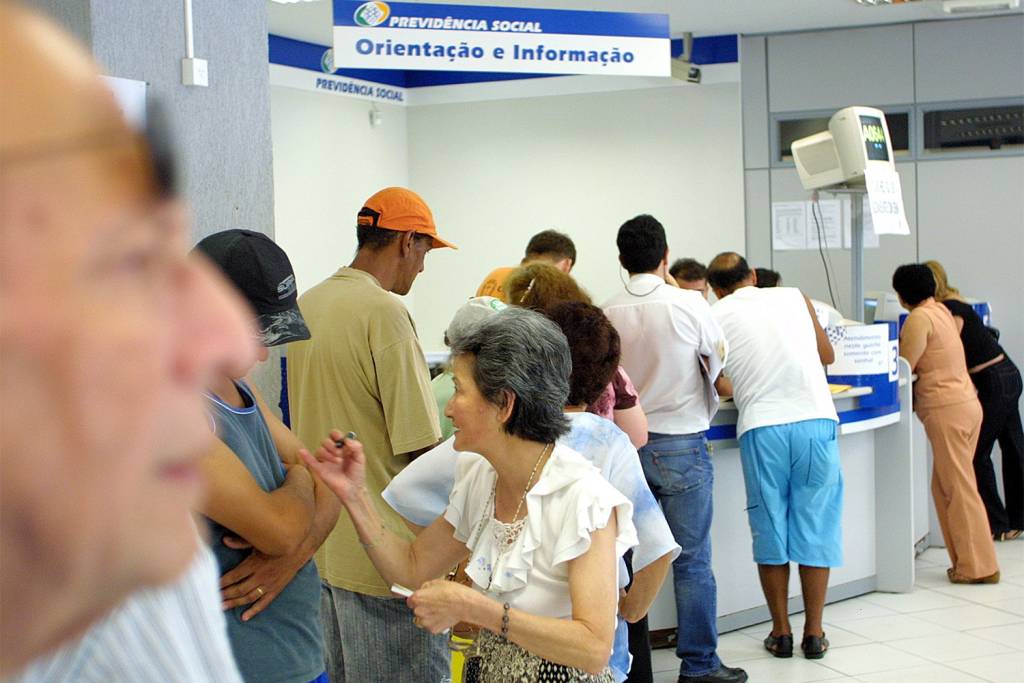
Not by chance, Rio Grande do Sul and Rio de Janeiro are the states that spend the most on pensioners.
Not by chance, Rio Grande do Sul and Rio de Janeiro are the states that spend the most on pensioners. (Photo: internet reproduction)

Not by chance, Rio Grande do Sul and Rio de Janeiro are the states that spend the most on pensioners. In the civil service, the situation is grim. Some 56 percent of Rio Grande do Sul’s civil servants are already retired rather than working, consuming most of the personnel expenditures that should supply the population via public services.

In economic terms, the issue is also impacted by the national tax model. With strong benefits for the primary sector, the two states ultimately wasted their industrial potential.

Because of federal legislations such as the Kandir Law, which exempts exports of ICMS (a state VAT tax on goods and services), and the chain of cascading taxes that make the industry pay three times more taxes than the primary sector, both states become exporters, with no complexity on their production chain.

Were we in fact a federation, we could have experiments at a local level. Perhaps welfare or tax reform in older states, the results of which would guide a national discussion.

Demography is an inescapable issue in Brazil. We are getting older, and nothing suggests that this will change. By looking at both of the most “bankrupt” states in the country today, we can understand the effects of this structural change and act to change the situation at a national level.

However, our eyes do not typically grasp local experiences. Planning here spreads from Brasília down to the rest of the country, not the other way around.

Consider another example, that of personnel spending. While Rio de Janeiro’s economy has grown the least over the past 20 years, personnel spending has grown the most in the country, almost three times the national average.

The imbalance of Rio de Janeiro’s finances is a threat to the quality of public service offered to the population. It could be a warning about how a state with a higher average age, which did not promote administrative and social security reforms in time, fails to ensure quality care in essential sectors such as health, education, and safety.

Over the same period, the state of Rio de Janeiro promoted tax exemptions for businesses that established themselves in the state, to the tune of around R$138 billion. Companies in the beverage sector received credits of R$700 million and generated 60 jobs. Those in the automotive sector had entire assembly plants financed by the state government.

This is a tragic experience for Rio, but ignored by the rest of Brazil. Federal legislation on the oil and gas sector, for its part, prevented foreign investments from reaching the pre-salt boom between 2008 and 2013, precisely the period in which the price of a barrel of oil exceeded US$100.

Thousands of jobs ceased to be created. All because an office in Brasília needs to legislate on the matter.

Looking at the experiences of these two states, and particularly understanding that Brazil will reach the same average age of its population, we could learn about the need for reforms, thereby anticipating a problem we will have within ten years.

We have a unique opportunity to consider practical examples of how the tax and administrative situation and all of our legislation behaves with a rapidly aging population.

However, we prefer to ignore the numbers. We continue to base our discussions on Brasília, wasting an opportunity that could clarify many of our problems.

The two states with the oldest population in the country are also the two with the worst fiscal situation. If this fails to alert us and ensure that other states can adjust in time, it is an indication that we have failed in the basics: learning from our own mistakes and experiences.

Source: InfoMoney

This article was produced by The Rio Times’ automated newsroom system. How we use AI · Report an error

Read More from The Rio Times

The Rio Times · Power Map
See who really holds power in Latin America
Click to open the Power Map
All News Brazil art news Brazil Best English News Brazil Best News Brazil Brazil Brazil economy Brazil football Brazil Museum Fire Brazil national football team Brazil News Brazil Pension Reform Brazil Real Brazil Visa Brazilian Newspaper Business News Brazil Covid-19 Latin America culture news Brazil English Culture News Brazil English Info Brazil English Info Rio de Janeiro English News Argentina English News Belo Horizonte English News Bolivia English News Brasilia English News Brazil English News Chile English News Colombia English News Cuba English News Curitiba English News Ecuador English News El Salvador English News Falklands English News Florianopolis English News Guetamala English News Latin America English News Mexico English News Panama English News Paraguay English News Peru English News Rio de Janeiro English News Sao Paulo English News Uruguay English News Venezuela English Newspaper Brazil English Newspaper Rio de Janeiro Falkland Islands General News Brazil Info Brazil Info Rio de Janeiro Invest in Brazil Mining News Brazil Natioal Museum of Brazil News Argentina News Bolivia News Brasilia news Brazil News Chile News Colombia News Cuba News Ecuador News El Salvador News Falklands News Florianopolis News Guatemala News Latin America News Mexico News Panama News Paraguay News Peru News Rio de Janeiro News Uruguay News Venezuela Oil News Brazil President of Brazil Rio de Janeiro São Paulo News Science News Brazil travel Brazil Travel News Brazil Universities Brazil

Rotate for Best Experience

This report is optimized for landscape viewing. Rotate your phone for the full experience.