Low Interest Rate and Quarantine: How Brazil’s Real Estate Market Boomed This Year
RIO DE JANEIRO, BRAZIL – Despite a crisis that has plagued several economic sectors, the real estate market is experiencing one of its best years in a long time. With the drop in the basic lending rate, at its lowest historical level, buying a property has become cheaper.
Brazilians in a position to do so are looking for larger properties and are willing to move away from the center and the workplace as a result of the remote work option. And they are beginning to pay more for the purchase, albeit saving on cheaper credit.
Real estate loan interest rates have halved in four years, from 15.6 percent per year in 2016 to 7.6 percent in 2020. For building companies, the drop in the interest rate represents a massive inflow of new potential consumers: people with a lower income, who would not be able to afford a property, now have access to the market.

“The potential market for our products has more than tripled,” says Fabrício Mitre, president of Mitre building and development company. The São Paulo company is currently enjoying the highest sales rate in its history, with R$113 million sales in the year. “Consumers realize that the price is lagging and that they have access to cheaper financing lines. Moreover, families’ savings have increased, people haven’t gone out to dinner or travel in six months,” says the CEO.
MRV, Brazil’s largest building company with R$3.16 billion in revenues in the first semester of the year, has broken its sales records. If at the start of the pandemic there was a projected 50 percent decline, in the first nine months of the year the reverse was true, with a 40 percent sales increase. “We had prepared the company for digital sales for some time. We started April with an even greater aggressiveness on prices and investments on digital,” says Rafael Menin, MRV’s CEO.
The heated market pushed Gafisa, which had not launched any new development since 2018. After the exit of Korean shareholder Mu Hak You, who had changed the entire management and board and rocked the company in January 2019, and the sale of a stake to Planner Corretora, Gafisa has restructured and is launching again.
“The new management joined last year to revisit all the projects and improve each one, from apartments to common areas,” says Guilherme Benevides, Gafisa Operations VP.
This year, the company has already launched two developments in São Paulo and one in Curitiba. The company is also buying land in São Paulo, in its hometown Rio de Janeiro, and in other capitals. Gafisa is also keeping an eye on acquisitions. In February the company bought Upcon Incorporator and in August proposed a merger with Tecnisa.
IPOs on the rise and a lot of pocket capital
After so many negative years in the real estate market, companies have started to raise funds again and to open up their capital through the stock market. A great part of the resources raised on the stock market by building and incorporation companies will be used on the purchase of land.
The first to debut on the stock market was Mitre, just before the pandemic, raising R$1.2 billion and inaugurating the capital opening period of the year, followed by Moura Dubeux, raising R$1.25 billion. Melnick Even, a subsidiary of Even, raised R$620 million in September.
One of the most significant examples of capitalization in the real estate market is Cyrela. Since the start of the year, the construction development company has undertaken an IPO of three of its subsidiaries: Plano & Plano, which raised R$690 million, Cury, with R$977.5 million, both for low-income housing, and Lavvi, which raised R$1.1 billion and focuses on high-income housing.
“We are going full steam ahead, we will launch everything we had planned. The landbank is healthy and we are open to all opportunities, “says Orlando Barbosa Pereira, commercial director of Cyrela Realty.
With so many offers, however, some decided to cancel their IPOs, such as Pacaembu Building Company and You.
Growth after the crisis
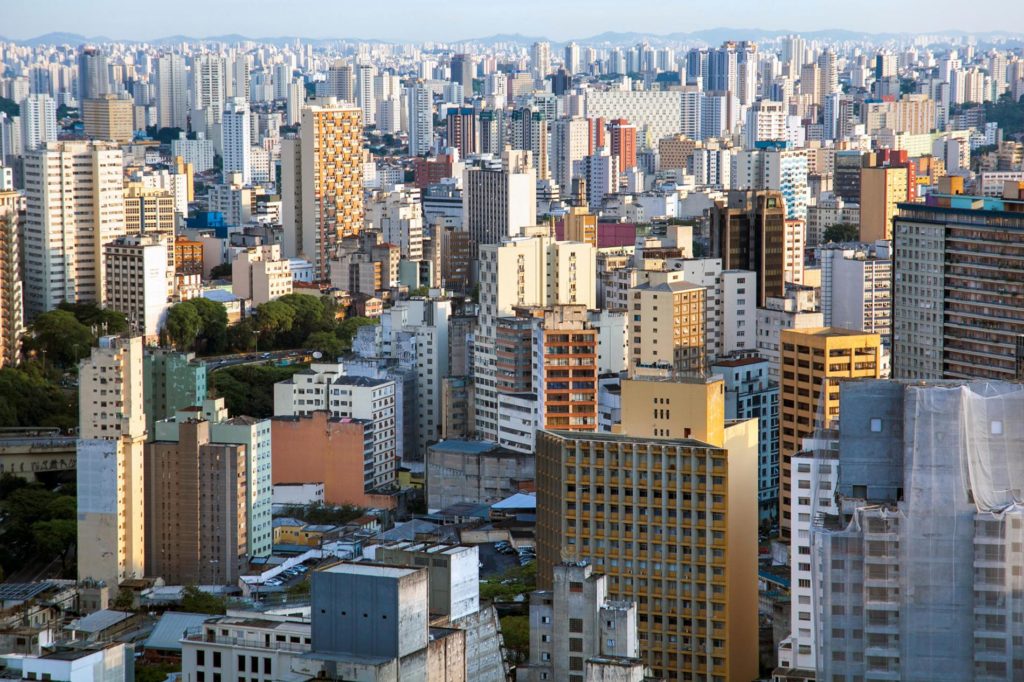
The 2014-to-2018 economic crisis deeply shook the real estate market and, for many years, building companies and real estate developers resisted making launches. The time to sell inventory, from 7.1 months in 2013, reached 17.9 months in 2016 in the city of São Paulo, for instance. There is a repressed demand and builders and developers have now expedited launches. In certain regions of the city of São Paulo, it is impossible to look at the skyline without seeing several tall buildings under construction.
The buying speed has also increased. The average time to sell the stock in the city of São Paulo, which reached a peak of almost 18 months at the height of the crisis in 2016, is currently 7.7 months, according to Mitre’s survey. The competition is fierce, particularly in the city of São Paulo, which accounts for over half of the total market. “In some regions or niches in the city, we run the risk of an oversupply,” says MRV’s Menin, who has properties in 162 cities across the country, where there is much less competition, to protect himself from this competition.
More expensive real estate?
Despite the increase in new real estate offers, prices only tend to rise. If between 2015 and the present day, real estate prices have remained virtually stable, this situation is about to change. Not only because prices are out of sync, but also because some essential costs, such as land, are higher.
“With many companies capitalized, we are finding it difficult to buy land in the market,” says Abrão Muszkat, CEO and founder of You,inc. According to him, the building company has in its inventory the land required for launches until 2022, but continues to look for more opportunities.
Yet another pressure factor on costs are raw materials – or the lack thereof. With this launch boom in some capitals, there is a shortage of steel and cement to erect buildings. “Industries were not prepared and there is a shortage of items even for the furnished and decorated apartments,” says Muszkat, who expects this situation to be under control until the first semester next year.
Source: Exame
More: Brazil news in English, every day from The Rio Times.
This article was produced by The Rio Times’ automated AI newsroom. Editorial responsibility: Matthias Camenzind, Publisher and Editor-in-Chief. The Rio Times also runs Ask Rio Times, which answers from 100,000+ of our own articles, the daily Latin America Power Map, and prediction-market odds on elections and markets.. How we use AI · Report an error
Brazil runoff, Sunday, October 25: Brazil runoff: date, poll closing times and when results start. Latest: Brazil runoff polls, Flávio 51%, Lula 49%.