Brazilian Real (R$) falls over 2% as spiraling pandemic undermines outlook
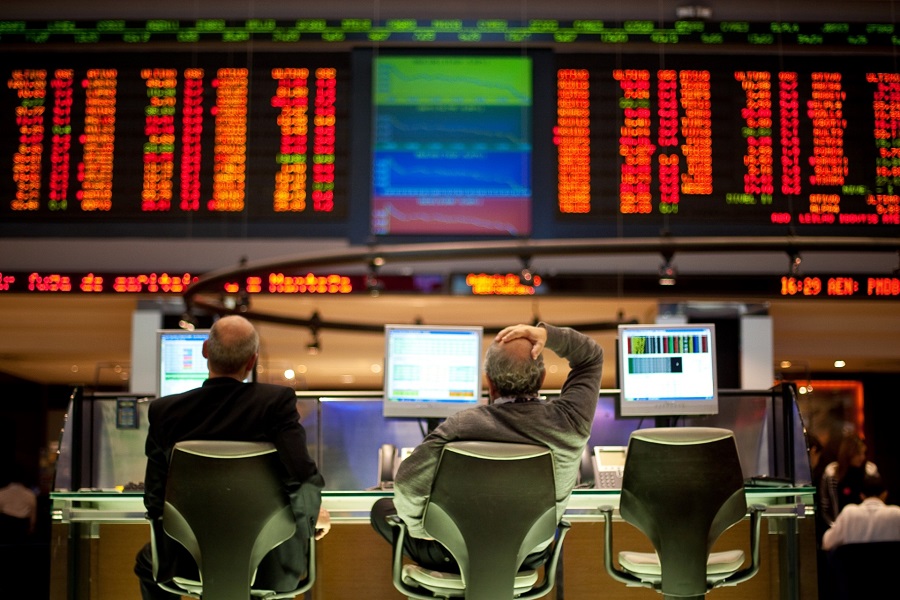
RIO DE JANEIRO, BRAZIL – The U.S. dollar jumped 2.20% on Wednesday, March 24th, and recorded the highest daily rise in six months, climbing back above R$5.60, in a movement driven by worsening risk perception related to Brazil as the pandemic explodes in the country and threatens the prospect of economic recovery and debate on reforms.
Morgan Stanley downgraded its growth forecast for the Brazilian economy from 4.3% to 3.5% in 2021, citing impacts from the worsening health crisis and persistent fiscal and now inflationary uncertainty.

With the rally of this session, the dollar zeroed the losses accumulated since last week, when the Central Bank surprised by raising interest rates at a stronger pace than imagined.
The spot dollar closed Wednesday quoted at 5.6380 reais on sale. The rise of 2.20% is the strongest since September 18, 2020 (+2.77%).
The currency showed great oscillation between the minimum (5.491 reais, down 0.47%) and the maximum (5.6435 reais, gain of 2.30%).
But the lowest quotation of the day was registered right at the beginning of the trading session. In the sequence, the dollar entered a gradual and stable upward path, reaching intraday peaks near the close of business in the spot market.
“There is a discomfort with fiscal, debt and the accelerating pandemic,” said Joaquim Kokudai, manager at JPP Capital. “The foreigner’s perception towards Brazil is really bad,” he added.
Evidence of this, according to the manager, was another day of jump in the interest rates of the DI contracts of the B3, which reached the end of the afternoon in highs of up to 30 basis points.
The slope between the DIs January 2027 and January 2023 – a measure of risk perception – jumped to 212.5 basis points on Wednesday, from 201 basis points on Tuesday and well above the level of 170 basis points on March 18, when the risk premium on the curve fell after the Central Bank unexpectedly raised the Selic by 0.75 percentage point, to 2.50% per year.
Even the Ibovespa stock index, which held up for much of the session, ended up falling 1.06% by the close.
The malaise in the Brazilian market also had an external component, since the markets on Wall Street fell and the dollar rose against a basket of rivals, but the intensity of the losses here was once again greater. The Real had, by far, the worst performance in the world on Wednesday, and the Ibovespa contradicted the signal of most of its Latin American peers, which closed higher.
The Health Ministry’s decision to promote changes in Covid-19 death records, later suspended due to pressure from governors, also perturbed the marke.
The Ministry’s attempt to make changes occurred the day after the country reported for the first time more than 3,000 deaths in 24 hours from Covid-19, approaching the 300,000 mark. Brazil is now the global epicenter of the pandemic and has caused concern among health authorities and governments around the world due to the inability to control the spread of the disease.
Earlier, after a meeting between the heads of government branches, ministers and governors, President Jair Bolsonaro announced the creation of another committee, with the responsibility of defining the actions to combat the epidemic of Covid-19, in coordination with the governors.
Even after the speech the night before, in which he was in favor of vaccines, there are still doubts in the market about the extent to which the president will adopt a more combative stance towards the health crisis.
According to Barclays professionals, Brazil is currently involved in the intensification of three crises – acceleration of the pandemic, deterioration of growth perspectives and growing risk of fiscal rupture -, with an additional factor coming from the resurgence of former president Lula in the political scene.
The private bank still sees chances for the real to appreciate in the period of three to six months, but estimates that the relief will be short-lived, with the currency suffering again in the fourth quarter as discussions about the 2022 Budget and the spending cap before the 2022 elections gain traction. The dollar is forecast to close 2021 at 5.50 reais.
Source: Infomoney
More: Brazil news in English, every day from The Rio Times.
This article was drafted with automated assistance and reviewed before publication. How we use AI · Report an error · Editorial responsibility: Matthias Camenzind, Editor-in-Chief