Reforms and Growth May Lead to Rise in Brazil’s Sovereign Rating
RIO DE JANEIRO, BRAZIL – The continued progress of tax reforms and the increased pace of economic growth will be the two main factors that may lead Brazil to a sovereign rating raise in 2020 by international rating agencies.
But they do not envision an easy time for the government: the year of regional elections and the absence of a cohesive political base, in addition to the recent tensions in its Latin neighbors, threaten to delay the processing of proposals and/or weaken them along the way.

Nevertheless, rating agencies point to a more favorable scenario for the country’s growth in 2020 compared to 2019: Moody’s and S&P Global Ratings believe in a two percent growth, while Fitch estimates a 2.2 percent increase next year.
The three institutions point to a slight decline in the nominal deficit as a proportion of GDP next year, with the help of the reduction in the SELIC rate, which will also help reduce the pace of expansion of gross and net debts, although the levels of these official liabilities remain high for emerging markets in the same sovereign rating category.
“But the country’s growth will progress more broadly, beyond 2.5 percent per year after 2021, particularly with the help of tax reforms like those recently proposed by the government, which have a good chance of being endorsed by Congress next year, such as the Emergency SGP and the independence of the Central Bank,” commented Livia Honsel, associate director of S&P Global Ratings.
Brazil has garnered special attention from international rating agencies for domestic issues, within a complex social context recorded by several Latin American countries.
The government’s economic agenda, with the approval of the Welfare reform and the introduction of proposals for fiscal adjustment, privatizations, commercial openness and the independence of the Central Bank, is a standout compared to other large countries in the region, such as Argentina and Mexico, whose reformist thrust is in the opposite direction.
A growth rebound of two percent per year, although too small to reduce very high unemployment after the recent recession, is far better than the average contraction of 0.8 percent recorded between 2014 and 2018.
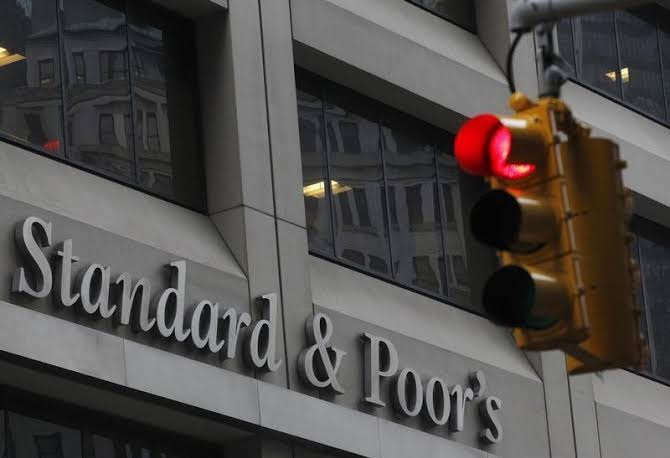
S&P raised Brazil’s outlook from stable to positive on December 11th and retained its sovereign rating at BB-. Should the agency raise the country’s rating next year, it will climb to BB, but still far from investment grade.
“The administrative reform is very significant, but we don’t rely on it in our scenario for 2020, due to the government’s position of waiting a little to advance it with the legislators, particularly because it fears the emergence of public demonstrations in the country as occurred in neighboring nations recently,” said Livia.
The rating agencies also have favorable prospects for progress on the tax reform debate in Congress next year, but do not believe it will be approved by legislators in 2020.
“Tax reform is very relevant to improve the business environment and encourage investment and GDP in the medium term,” said Samar Maziad, Moody’s vice president and chief analyst for Brazil.
“However, it is not the only factor that could enable the country to raise its rating, but rather a set of elements, such as the progress of tax reforms that allow the spending ceiling to be met and increase the government’s flexibility to administer the Budget”.
Fitch points out that political division in the Chamber and Senate and “difficult corruption issues” are obstacles to speeding up reforms next year.
While he points out that the federal administration’s “Mais Brasil” (“More Brazil”) package is positive, including to reduce fiscal austerity and create a new framework for managing public accounts among the government, states and municipalities, delays and distortions of these proposals may occur.
The fact that the Executive Branch does not have a “stable and reliable” political base in Congress may delay the approval of structural changes by legislators in 2020.
Source: InfoMoney
More: Brazil news in English, every day from The Rio Times.
This article was produced by The Rio Times’ automated newsroom system. How we use AI · Report an error · Editorial responsibility: Matthias Camenzind, Editor-in-Chief