Court Sluggishness Cited in Study as Main Reason for Not Seeking Justice in Brazil
RIO DE JANEIRO, BRAZIL – According to a survey released yesterday, December 2nd, in Rio de Janeiro by the Association of Brazilian Magistrates (AMB) and the Getúlio Vargas Foundation (FGV), 64 percent of the population see court sluggishness and red-tape as the main factors that most discourage people from seeking justice.
In addition, 28 percent consider that lack of motivation is justifiable since judicial decisions only favor the wealthy and powerful.

On the other hand, 83 percent of people believe that the Judiciary is important or very important for democracy and 59 percent believe that resorting to justice is worthwhile. Entitled “Study of the Image of the Brazilian Judiciary,” the survey comprised 2,000 face-to-face interviews between July and August 2019. The margin of error is 2.2 percentage points.
Asked which power best fulfills its role, 33 percent answered the Judiciary, nine percent the Legislative, eight percent the Executive, six percent all, 28 percent none. A further 15 percent did not answer or said they did not know. The Judiciary was rated as excellent or good by 21 percent of respondents, fair by 41 percent, and bad or terrible by 35 percent.
The Executive, in turn, was rated as excellent or good by 16 percent, fair by 36 percent and bad or terrible by 46 percent. In the case of the legislature, these percentages are 10 percent, 37 percent, and 51 percent, respectively.
According to the study, the judiciary is the one most trusted by the population among the three branches of government: 52 percent of people say they trust it and 44 percent say they do not. Asked if they trust the presidency of the Republic, only 34 percent said they did and 63 percent said they did not. The result is even more negative in relation to Congress: 19 percent trust it and 79 percent do not.
“What is striking is that the assessment is better among people who use the service. Those who have used the Judiciary, those who have been a plaintiff or a defendant, those who have litigated, evaluate it better than those who have not. This suggests that the service is being provided with some quality.
Simultaneously, there may be a failure to communicate with those who did not use the Judiciary”, said the Minister of the Superior Court of Justice (STJ) and research coordinator, Marco Aurélio Bellizze.
Among those who have used the Judiciary at one time or another, 53 percent said they trusted it and 25 percent gave it an excellent or good evaluation. These percentages drop to 51 and 19 percent, respectively, among people who have never used the judicial sphere.
Belizze also listed some measures that could improve the image of the judiciary. “Sluggishness is pointed out as the main issue. It’s not exclusively a Brazilian issue, but we must try to address the issue of demand. The demand is unlimited and the resources are limited”.
“So how will we provide a service in which demand increases every year and resources decrease? We need to computerize, use artificial intelligence, create educational campaigns. We need public service bodies to also fulfill their role so that not everything is decided in the Judiciary”.
Respondents were also asked how they felt about the judiciary and were presented with a list of adjectives as a potential answer. They could select up to two words. The most chosen was ‘concerned’, an option for 45 percent. The other three most selected were hopeful (25 percent), ashamed (25 percent) and indignant (24 percent).
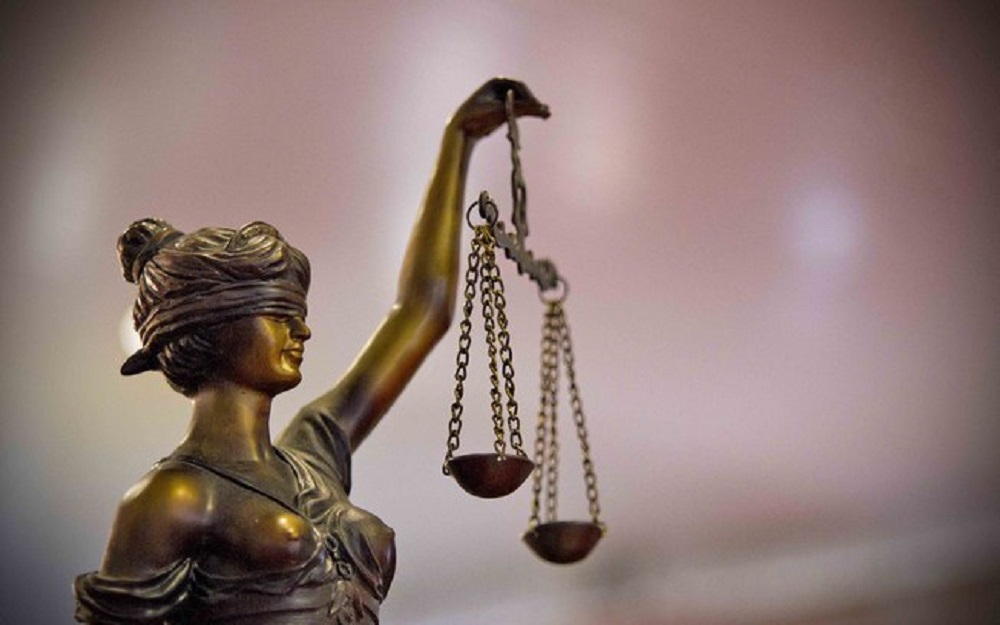
In addition to the survey release, the FGV’s Center for Innovation, Administration, and Research of the Judiciary was inaugurated and will be coordinated by the institution’s professor and STJ Judge Luis Felipe Salomão. Wilson Witzel, the governor of Rio de Janeiro, proposed a discussion on tax and civil enforcement.
“This research will help signal the need to improve enforcement, which, in Brazil, is now our Achilles’ heel. Without an efficient execution, there is no point in delivering a beautiful and wonderful sentence. It can’t take ten years to enforce what is lawful”, he commented.
Confidence
The study also measured confidence indices in other segments: 66 percent, for instance, said they trusted the Brazilian Bar Association (OAB), while only 14 percent said the same about political parties. In terms of public safety, the confidence index in the Fire Department reached 91 percent, exceeding the Civil Police (64 percent) and the State Police (59 percent).
Religion was also tested: 63 percent expressed confidence in the Catholic Church and 49 percent in the Evangelical Church.
As for the media, all answers showed that there is more mistrust than trust – 53 percent of respondents said they do not trust newspapers or magazines. In addition, 59 percent are suspicious of television, 68 percent of websites and blogs, and 72 percent of social media.
Source: Agência Brasil
More: Brazil news in English, every day from The Rio Times.
This article was produced by The Rio Times’ automated newsroom system. How we use AI · Report an error · Editorial responsibility: Matthias Camenzind, Editor-in-Chief