Worst Case for Brazil: 1.15 Million Deaths, 188 Million Infected If No Containment Measures Taken
RIO DE JANEIRO, BRAZIL – It is inevitable that the next wave of the pandemic will overwhelm Latin America, the Lancet medical journal alerted on Friday in an editorial. Brazil will be the most affected country and may have up to 1.15 million deaths, according to another study’s projections.
The Lancet stresses that a number of governments are still not taking the disease seriously and specifically mentions President Jair Bolsonaro, the only ruler to have his name mentioned – and criticized.

The study “The Global Impact of Covid-19 and Mitigation and Suppression Strategies” by the Imperial College’s Covid-19 Response group in London projected the number of deaths in Brazil to be 1,152,283 if containment measures are not taken. At the other end, with the most radical and early measures, this figure would drop to 44,000 deaths.
“Many governments have been quick to react, but many still do not take the Covid-19 threat seriously – for instance, ignoring the World Health Organization’s (WHO) recommendation to avoid crowds. Brazil’s president, Jair Bolsonaro, has been strongly criticized by health experts and faces an increasingly negative reaction for his poor response,” the editorial says.
The scenario for Brazil is bleak
A study by this same group from the Imperial College led to the British premier, Boris Johnson, who is now infected himself, to change the country’s policy and embrace radical social distancing, with a number of more restrictive measures.
The group drew up four scenarios.
In the first scenario, no social isolation measures are taken. In it, within 250 days of the first case, 187 million Brazilians would be infected, of which 6.2 million would be hospitalized and 1.5 million would be sent to the ICU. The majority of these would die: 1,152,283, according to the projection.
In the second scenario, only mild measures are taken, banning large events and crowds. Of the 122 million infected Brazilians, 627,000 would die.
The third scenario is the isolation of the elderly and people suffering from diseases associated with the increased risk of the Covid-19. According to the Imperial College, 121 million would be infected and 530,000 would die, with 3.2 million people hospitalized.
The fourth scenario, the one championed by the WHO, doctors and scientists, provides for more radical measures: mass testing, quarantining cases, tracking contacts and social distancing. The researchers have divided this scenario in two. If measures are taken when the epidemic causes 1.6 cases per 100,000 inhabitants, South Korea’s situation, Sars-CoV-2 would infect 49,599,016 people, of whom 206,087 would die.
However, if measures are taken early, with 0.2 cases per 100,000 inhabitants, 11,457,197 million Brazilians would be infected and 44,212 would die. This is the best possible scenario, yet even it has a very high mortality rate.
The Lancet stresses the particular vulnerability of countries with fragile health systems, poor and densely populated urban areas, with a large population without basic sanitation or self-isolation conditions.
Both the Lancet and researchers at the Imperial College stress the need for urgent and severe containment measures, such as mass quarantines and extensive mobility restrictions.
The journal strongly criticizes countries that have chosen so-called vertical isolation, trying to prevent deaths only with quarantine measures for the elderly and people with diseases associated with the increased risk of the Covid-19.
It recalls how governments that initially followed this line, such as the United States, the United Kingdom, and Sweden, are now running in despair to buy diagnostic tests, protective equipment, and ventilators. They are seeing their hospitals collapse, and they are facing the population’s growing anger.
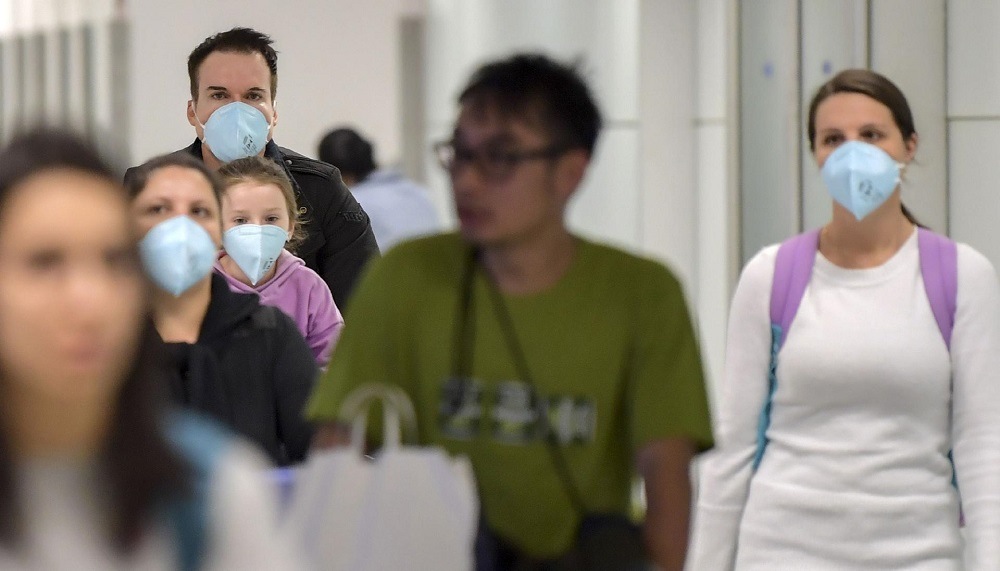
“Globally many people are afraid, angry, uncertain and lacking confidence in their national leaders,” said the Lancet. It further highlights that global leadership is not lacking and that the WHO has played a central role in coordinating the global response.
Experts explain that flattening the curve [of the spread of the virus] is possible, but it is not easy and has no visible results in just a few days, as the virus spreads faster than our ability to react.
Computational modeling specialist Domingos Alves, leader of the Health Intelligence Laboratory (LIS) at Ribeirão Preto Medical School, University of São Paulo (USP), who works with several researchers from universities in Brazil, and has developed models to monitor the evolution of the disease, says it is impossible to determine now, with scientific accuracy, whether the measures taken by Rio de Janeiro and São Paulo are yielding results:
“We will have to wait because these results are not immediate. Some calculate low, with no scientific basis and see improvement or worsening curves now, but these are normal expected fluctuations and say nothing conclusive,” he warns.
Source: O Globo
More: Brazil news in English, every day from The Rio Times.
This article was drafted with automated assistance and reviewed before publication. How we use AI · Report an error · Editorial responsibility: Matthias Camenzind, Editor-in-Chief