Brazil’s Congress Reopens Debate on Criminal Responsibility Age
By Lise Alves, Senior Contributing Reporter
SÃO PAULO, BRAZIL – After more than twenty years of discussions, the issue of reducing the onset of criminal responsibility from eighteen to sixteen years of age is once again in the forefront of Congressional debates.

On Thursday, the Senate’s Constitution, Justice and Citizenship Commission (CCJ) will hear experts on the proposal to reduce the age of criminality in Brazil in cases of heinous crimes, felony manslaughter, and bodily injury followed by death. The proposal was approved by Brazil’s Chamber of Deputies in 2015.
The CCJ debate comes two days after a group of lawmakers announced the creation of a Congressional front of both representatives and senators to put forth a Constitutional Amendment which would reduce the age of criminal responsibility. The group is made up of 194 Chamber of Deputies representatives and nine senators.
“The Joint Parliamentary Front for the Reduction of Penal Majority will be created to give voice to what most of the Brazilian population wants,” stated representative Carlos Jordy in an opinion article published in Rio “O Dia” daily newspaper on Monday, June 24th.
“We lawmakers are Brazilian citizens who fight for a more dignified country, in which everyone has the right to come and go without fear, and in the hope that we will be a much better nation if we plant today the seeds of ethics, justice, and honesty,” adds the lawmaker.
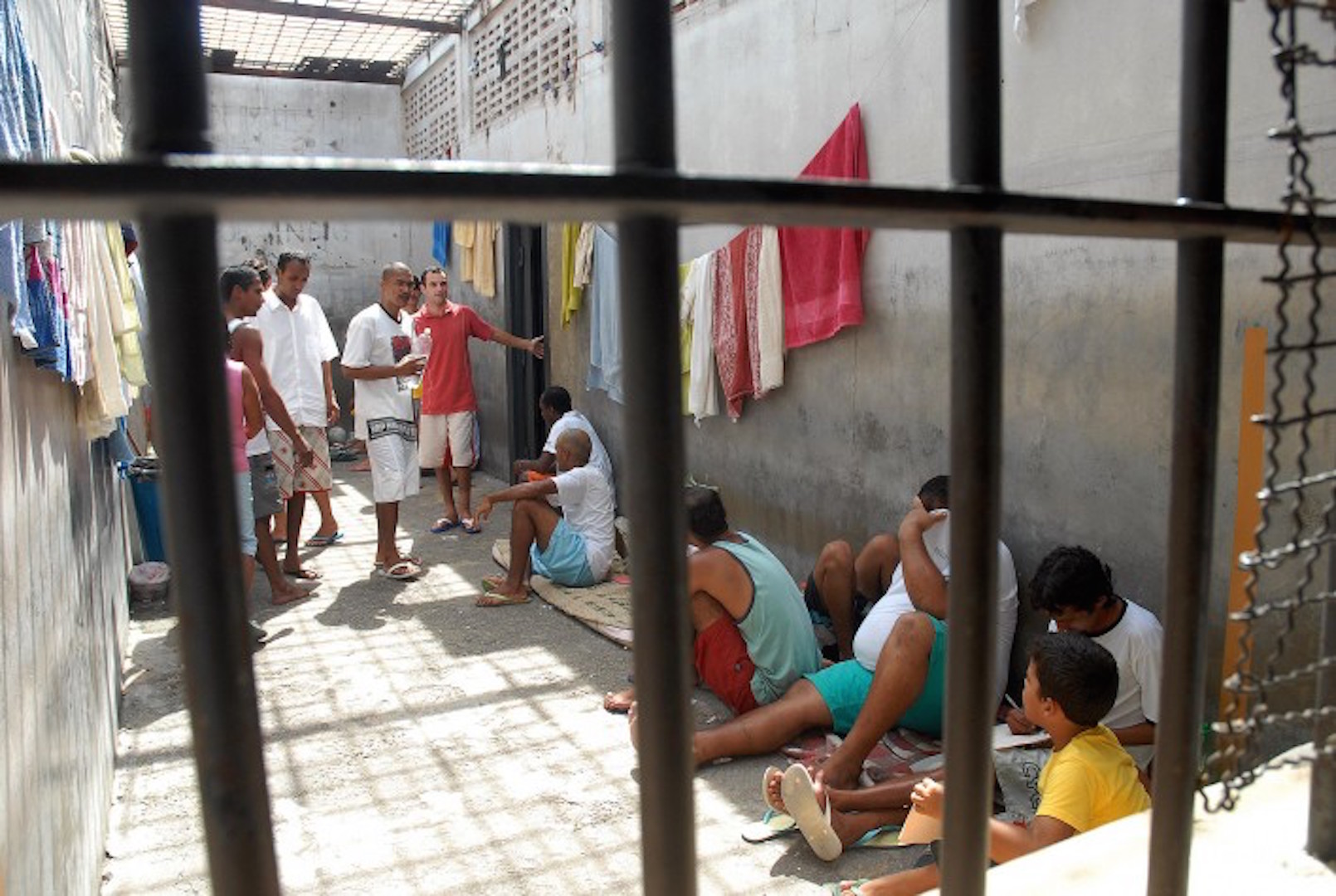
A recent study conducted by Datafolha shows that most of Brazil’s populace supports the congressman’s arguments. The study, published in January this year, shows that for 84 percent of Brazilians, the age for youths to be held accountable for criminal actions should be reduced from eighteen to sixteen.
Of those who support a reduction in the age of criminal responsibility, 33 percent say that the reduction should only apply to certain types of crimes; however, an overwhelming majority (67 percent) argue that the reduction should be applied to all types of criminal activity.
The survey also showed that at least 37 percent of Brazilians want the reduction of age to be even lower than 16, with nine percent answering that they believe that the “ideal minimum age” would be 12 years old.
Jordy notes in his op-ed that the data from the Ministry of Human Rights and IBGE (Brazil’s Statistics Bureau) show that between 1996 and 2014, the number of young people between twelve and seventeen years old arrested in Brazil for committing crimes increased almost six-fold. The data also show that from 2009 to 2015, the number of incarcerated youths increased by 58.6 percent.
“I am convinced that, at the age of 16, the young man/woman is already able to respond for any acts. Another argument in defense of the reduction of the criminal majority is the fact that it will certainly diminish the enticement of minors going into drug trafficking, considered the second biggest crime practiced by this age group in the country,” stated Jordy.
Jordy’s arguments are also supported by a recent survey conducted by Cristiano Oliveira, a researcher at the Rio Grande Federal University and an expert in Crime Economics.
In his paper “Empirical evidence of the deterrent effects of the criminal majority in Brazil”, he argues that more severe punishment can reduce by almost 20 percent the repetition of crimes committed by minors. According to Oliveira, homicides could be reduced by up to 63 percent.

The researcher, however, does not advocate the simple reduction of the age of criminal responsibility.
“Care must be taken not to generate a disproportionate punishment for crimes. I do not consider it a good idea to judge minors as adults and put them in prisons with adults because this can lessen the chance of recuperation,” Oliveira was quoted as saying in daily Gazeta do Povo.
The Instituto Terra, Trabalho e Cidadania – ITTC (Land, Work and Citizenship Institute), a human rights group which fights for the guarantee of rights of the incarcerated and combats imprisonment, is among several human rights NGOs which are likely to fight the approval of the Constitutional Amendment.
“ITTC is opposed to reducing the age of criminality and considers that it would not be effective in reducing crime rates; otherwise it would become a mechanism to reinforce the already existing criminalization of black and low-income youths, and aggravate overcrowding in prisons,” says the group on its webpage.
If the Senate’s CCJ approves the text approved by the Chamber in 2015, it will go to the floor of the Upper House to be approved and ratified. If the proposal does not pass both houses, lawmakers will have to submit another bill on the issue.
More: Brazil news in English, every day from The Rio Times.
Editorial responsibility: Matthias Camenzind, Editor-in-Chief · Editorial standards · Report an error
Brazil runoff, Sunday, October 25: Brazil runoff start time and results schedule. Latest: Brazil runoff polls, Flávio 51%, Lula 49%.