RIO DE JANEIRO, BRAZIL – “I am afraid every day,” says Luciana Martinez, 42. However, from Monday to Saturday, this nurse overcomes the fear and leaves her son, her husband and her father-in-law at home in the northern part of São Paulo and goes to work her two shifts in hospitals (one public and one private) where she devotes herself to caring for patients infected by Covid-19.
In total, she spends 12 hours a day surrounded by young, old, and sometimes whole families with coronavirus. Luciana is part of the front line in the fight against the disease, in a trench where the vast majority of soldiers are women.

According to a report by the Federal Nursing Council (COFEN) and the Oswaldo Cruz Foundation, 84.7 percent of hospital assistants and nurses are female.
“I am very proud of the women who work in health care, like myself, in the fight against Covid-19. I’m even moved when I talk about my profession because I feel that this profession chose me,” says Luciana.
From a psychological standpoint, these professionals need to be balanced at work and at home. “Were it for me, I wouldn’t even go home. In addition to my fear of contracting the disease, I am very afraid of passing it on to my family,” says Luciana.
“I come home and take off my clothes in the backyard and put a towel around me, I go straight to the shower. The clothes I was wearing go straight into the washing machine,” she explains.
To minimize the chance of something going wrong when she comes home from hospitals – particularly considering the presence of her elderly father-in-law – her family has adopted a radical version of social isolation. Each one remains in a comfortable room and with no physical contact between them.
“It deeply affects me psychologically not to be able to hug my 13-year-old son. It hurts me so much. He understands why I don’t kiss him anymore, but he’s distressed by all of this, even more so because he can’t leave the house,” she says emotionally.
Being surrounded all day by patients with an incurable disease also comes at a physical price. So far, according to a survey conducted by the COFEN and released on Monday, April 27th, 4,602 nursing professionals have been put on leave for suspected covid-19, and 57 have died from the disease or from suspected but unconfirmed cases. Of these deaths, 32 (or 56 percent) are women.
“This is only the tip of the iceberg,” says Walkírio Almeida, head of the department of the Council’s Professional Exercise Management, bearing in mind that the entity’s inspection activities have so far reached 27 percent of the total number of professionals in the area. According to him, more than 4,590 complaints have been received, most of them related to the lack of personal protection equipment (PPEs) for nursing teams.
In hospitals, the major challenge for the medical team is at the time of undressing, when removing the personal protective equipment used during work: glasses, N95 masks (that covers both mouth and nose), face masks, waterproof aprons, and gloves.
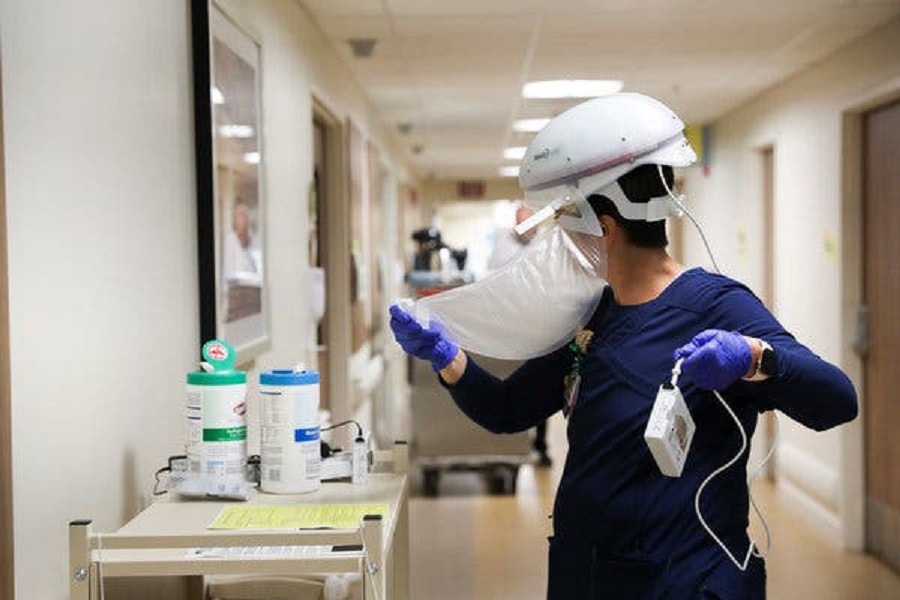
“It is very easy to be contaminated at this time if you do not follow a strict protocol, a specific order of what to take off first,” says Luciana. “The key is to remain calm and focused. But unfortunately, there are no zero risks,” she says.
Luciana’s work with Covid-19 patients also exposes her to the personal drama of infected patients’ families.
“There’s a case that touched me, that of an elderly couple in their 80s. The two came in together with symptoms and went straight to the intensive care unit. The wife got better, but he, unfortunately, passed away. In order not to destabilize her emotionally and compromise her improvement, the family did not tell her that she lost her husband. And she asks about him often, and I can’t tell her the truth,” she says.
In some cases, whole families are hospitalized. “We had a patient who was hospitalized with his parents. They both died,” she says. “We see young patients with no comorbidity who have the disease and are in very critical conditions in the ICU,” she says, demystifying the argument that Covid-19 is a disease that affects only the elderly.
Asked what it is like to work in this environment, Luciana summarizes: “I can’t stop going to work. The moment demands it. I wake up and think I’m in a movie, but I try my best to make this movie have a happy ending”. About the crowds that happen in the city even with the record number of deaths, she says that “people have no idea what is happening in hospitals”, and ends with “stay home!”.
Diapers for work and rebirth
With the scarcity of protective equipment and the risk of contamination at the time of undressing, many nurses and staff have to resort to drastic methods in order to manage to spend six straight hours without urinating or using the toilet.
“We end up wearing a diaper to be able to handle it. We are not the weaker sex, we can handle a lot more than men in many ways, also many men are working in diapers”, says Joana, who asked for her name and that of the hospital where she works to remain confidential.
She is a nurse at a well-known facility in the treatment of coronavirus in Fortaleza, Ceará, a state that ranks third in the number of confirmed cases (behind only São Paulo and Rio de Janeiro), and announced the collapse of its ICU system on April 14th.
Like Luciana, Joana is afraid of infecting her mother, who is elderly and has a heart condition. “I even thought of leaving home. Many have done that, left home so as not to infect their families, but this has a high financial cost,” she says.
She actually developed symptoms of the disease, so she was furloughed. “I was isolated for 14 days at home without leaving my room, scared to death, and to infect my mother. The test result came out on Monday: negative. “Now I’m going back into battle.”
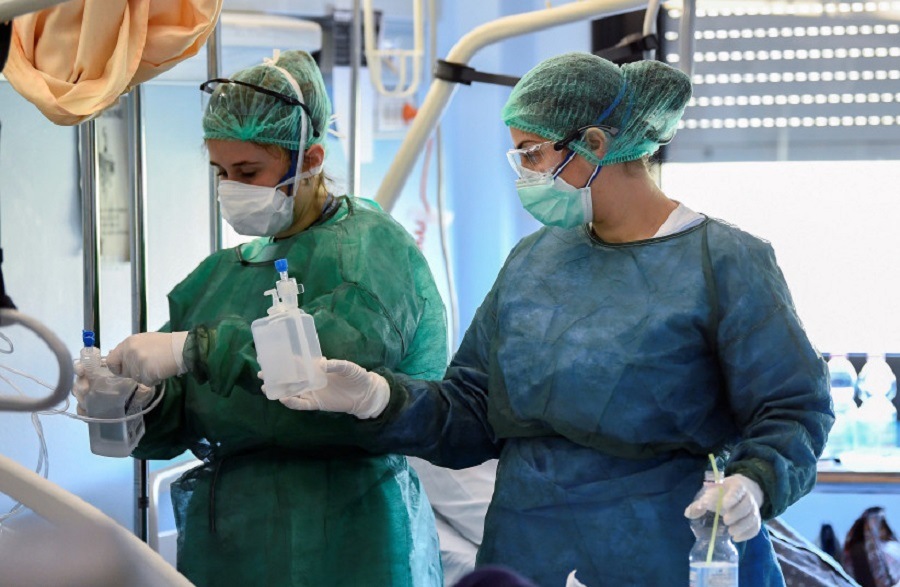
For some professionals, even distant parents are a cause for concern. “My mother, who lives in the interior of the state, didn’t want me to go to work anymore, she was afraid I would catch the disease,” says Ivanise Freitas da Silva, 29, a nurse at Leonardo Da Vinci hospital in Fortaleza.
“But I explained that I am focused, and thinking that it only depends on me not to get infected”. With more than six years in ICU, Ivanise is confident: “I have seen many patients leaving the ICU. I see rebirth too, not only death by the coronavirus, and this gives me hope to keep fighting”.
Source: El País
More: Brazil news in English, every day from The Rio Times.
This article was produced by The Rio Times’ automated newsroom system. How we use AI · Report an error · Editorial responsibility: Matthias Camenzind, Editor-in-Chief