The ‘Guedes Doctrine’ Puts out ‘For Sale’ Signs for Brazil
RIO DE JANEIRO, BRAZIL – The Brazilian government wants to sell everything. This is not a journalistic exaggeration or an attempt to capture the readers’ attention: it is the literal words of Jair Bolsonaro’s economic ‘wunderkind’, the ultra-liberal Economy Minister Paulo Guedes, and of Salim Mattar, the secretary-general of privatizations, a figure whose mere existence is a statement of intent.

Beyond the rhetoric, they have already set to work, demonstrating that they are giving it their all in a privatization plan that began at the time of Michel Temer, but that gained momentum with Bolsonaro coming to power.
The self-imposed goal of raising US$20 (R$80) billion in 2019 through the partial or total sale of stakes in state-owned companies or assets was surpassed: by the end of September the Brazilian authorities had sold stakes in companies raising more than US$19 billion, offered infrastructure for US$6 billion, and auctioned rights to exploit raw materials – mostly oil – for US$12 billion.
Despite greater obstacles than the new administration would like, in the last quarter of the year – period for which data are not yet available – the number continued to grow.
The argument for the sale of public assets in the hands of the state rests on two pillars. The first, fiscal: more revenue is needed to rebalance the public accounts and reduce a debt that is dangerously close to 80 percent of GDP.
The second one, which weighs most heavily, is purely ideological: Guedes, faithful to the Chicago School doctrine, is very much in favor of the idea that the private sector is, by definition, a better manager than the state and claims that the sale of public assets will lessen corruption.
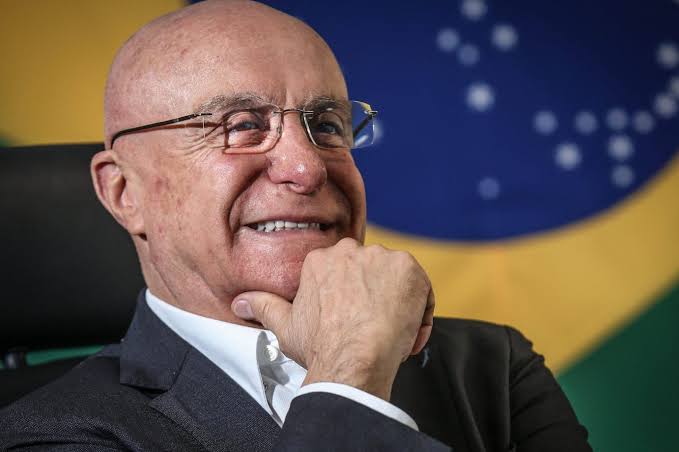
The privatist’s eagerness is born, in the words of the Minister of Economy himself, from the “dysfunctionality” of public companies, for which Luiz Inácio Lula da Silva’s Worker’s Party (PT) is to blame.
On the horizon of the right-wing representative, a goal emerges: to obtain more than US$320 billion in privatizations and infrastructure auctions – from oil wells to roads, airports, and ports – during his mandate.
In the first days of the current year, Mattar announced the government’s willingness to divest all or part of its equity interests in 120 companies, a figure that could more than double if the Senate’s approval is obtained – an approval, it must be said, that is not at all guaranteed, given the political controversy and social resistance over the sale of Eletrobras and its subsidiaries, long a fiefdom of important political figures, most from the state of Minas Gerais.
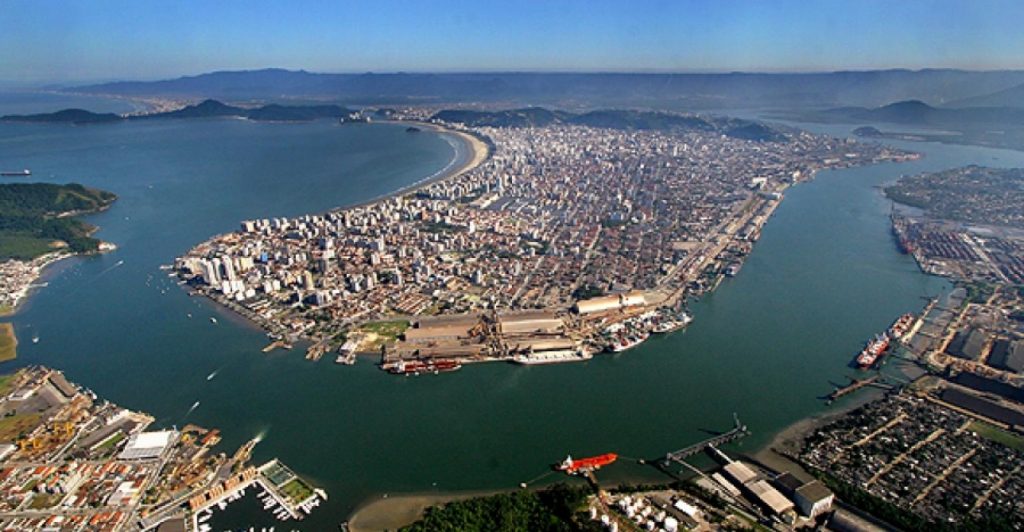
In addition to the state-owned electricity holding company, Guedes and his team took a step forward in the sale of the port of Santos (the largest in South America and the second most important in Latin America) and its shares in the telecommunications company Telebras.
The list already covered Correios (Brazil’s Postal Service) and the Mint, and the 21 percent equity in the meat giant JBS has just been added. JBS is still in the hands of the State through BNDES and which will go out to the market leveraging on its good moment in the stock market, at the peak of exports to China.
The move with JBS is very similar to what the Government wants to accomplish with Petrobras: to continue to gradually dispose of its shareholding position, still over 42 percent.
Concurrently, Congress has already moved to ease the access of private money into the water treatment sector in a country where virtually half the population, some 100 million people, still do not have access to this basic service.
These are the hallmarks of the master plan which Bolsonaro wants to present to investors at the end of January at the Davos Forum, where he will try to explore the image of a Brazil that has left the days of the recession behind and will redouble the nods to investors.
Two-thirds of Brazilians surveyed in late August by Datafolha were against the privatization plan.
If the numbers projected by Brasília are finally achieved, there will be no precedent for a privatization wave of this magnitude.
Between 1991 and 2001 the public sector transferred control of 119 companies or holdings in companies. It yielded US$68 billion and reduced its debt by US$18 billion, according to data from the InterAmerican Development Database (IDB), figures that made the operation one of the largest transfers of public assets in history.
“The crown jewels were sold there: Vale, Petrobras, Siderbras…”, highlights Musacchio. But even after that movement, the country still has 418 publicly-owned companies, according to Fundação Getulio Vargas (FGV).

Almost 140 of them are in the hands of the central government and about a hundred of these are on Bolsonaro’s privatization radar. Faithful to his hard-hitting strategy, his infrastructure minister, Tarcísio Gomes de Freitas, already said that in cases where it is impossible to sell, he will decide on liquidation and dissolution.
All to accomplish his mission: to reduce the size of the State as much as possible.
More: Brazil news in English, every day from The Rio Times.
This article was produced by The Rio Times’ automated newsroom system. How we use AI · Report an error · Editorial responsibility: Matthias Camenzind, Editor-in-Chief