The Brazilian Truth of Global Hunger for Carbon Credits
By Contributing Reporter
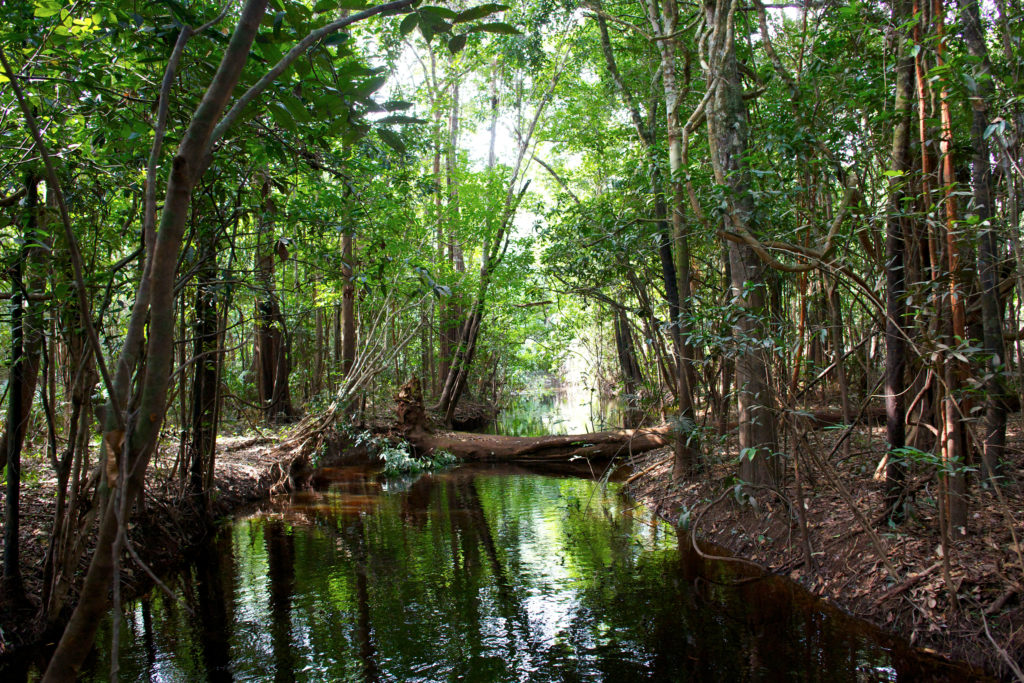
RIO DE JANEIRO, BRAZIL – The state of Acre, at the westernmost tip of Brazil, is so remote that it is jokingly said to be non-existent. However, for geochemist Foster Brown, Acre is the center of the universe, a place that could help save the world.

“This is an example of hope,” he says, while outside behind his office at the Federal University of Acre, where the Amazon rainforest surrounds its campus. Brown places his hands on the thin trunk of a tree and explains: “There is a water flow rising through this stem and sap flowing down, bringing with it carbon compounds”.
This invisible process is the key to a large flow of money to Brazil, as well as an essential opportunity for countries seeking to avoid climate change without disrupting their economies.
If the carbon in these trees could be quantified, Acre could sell its credits to polluters emitting CO2 plumes. In theory, any amount they emitted would be compensated or canceled out by the forest.
The hunger for carbon credits is global. From the aviation industry to industrialized countries that signed the Paris climate agreement, compensating emissions could be a cheaper alternative than actually reducing the use of fossil fuels.
But the desperate race for these carbon credit plans seems to be making many of its advocates turn a blind eye to growing evidence that we have not seen – and will not see – the promised benefits.
With the assistance of a satellite imaging analysis, used to learn how much of the forest cover was left after a project that began selling credits in 2013, it was determined that only half of the areas still had any forest left, four years later.
A case study had shown that carbon credits had not compensated the promised amount of pollution, or that the derived gains were quickly lost or could not even be measured.
In the end, polluters earned a free pass to continue emitting CO2, but the promised preservation of forests, that should even out the environmental balance, either never happened or did not last.
“The compensation mechanism itself is causing environmental damage,” says Larry Lohmann, who spent 20 years studying carbon credits.
“While we’re sitting here counting carbon and making calculations, more CO2 is building up in the atmosphere,” he says.
Timothy Searchinger, a researcher at Princeton University, said that carbon compensation by forests did not have a real chance of working, even after hundreds of attempts around the world.
Many projects have sold credits in the voluntary market, to companies seeking green marketing as well as to consumers with good intentions. But this did not allow them to generate enough money to achieve their goals.
California’s cap-and-trade program already allows companies to compensate for a small percentage of their carbon emissions with forest preservation projects in the United States and Canada.
But this year, California’s Air Resources Council may approve the so-called Tropical Forest Standard – a model of how carbon compensation can be achieved in intercontinental programs.
Experts say that guidelines may be adopted by other countries and are likely to be so.
Acre is considered around the world as the best place to start testing. “Acre’s program is the most advanced,” a board spokesman stated by email.
Many locals claim that they cannot survive on sustainable alternatives alone, so they need to cut down trees.
Government officials have discussed conservation, but political leaders are cutting its funding and planning to expand agribusiness.
Several representatives of the Acre government quickly recognized that their priority is obtaining international aid to protect the forest.
Those who much desire the success of the Acre program say that there would be no problem if compensation does not offset all promised carbon emissions, as long as some trees are protected and there are smaller environmental gains.
“Perfection can be the enemy of achievement,” says Brown. “There are several issues, but what’s the alternative?”
More: Brazil news in English, every day from The Rio Times.
Editorial responsibility: Matthias Camenzind, Editor-in-Chief · Editorial standards · Report an error
Brazil runoff, Sunday, October 25: Brazil runoff date. Latest: Brazil runoff polls, Flávio 51%, Lula 49%.