UN Warns of Social Consequences of Coronavirus, Seeks Suspension of Sanctions
RIO DE JANEIRO, BRAZIL – The Executive Secretary of the Economic Commission for Latin America and the Caribbean (CEPAL), Alicia Bárcena, expects that the novel coronavirus SARS-CoV-2 pandemic will have a direct negative impact on the already weakened global economy.

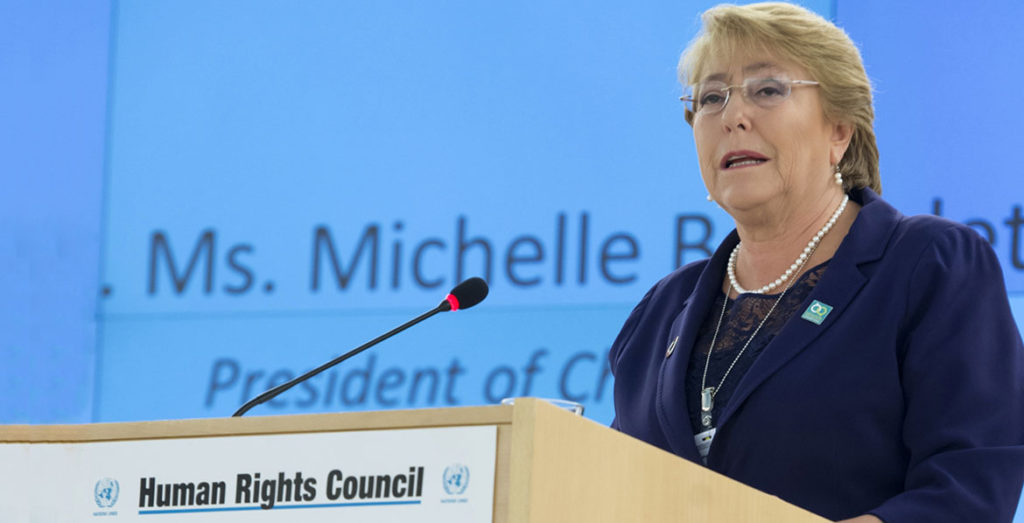
In this context, an increase in poverty in Latin America to 35 million people is to be expected. There is also an increased risk for the health systems in Latin America and the Caribbean, Bárcena said. In parallel, the UN High Commissioner for Human Rights, Michelle Bachelet, called for the suspension of sanctions against whole economic sectors of an affected country.
This had been a topic of political debate in recent days, particularly in view of the US sanctions against Iran, Cuba, and Venezuela.
The CEPAL leader sees supply and demand equally affected, “either through the suspension of production chains or through the loss of income and profitability due to increased unemployment and greater difficulty in meeting debt payment obligations”.
According to Bárcenas, the effects of the Coronavirus pandemic are “devastating for the global economy”.
The consequences would be different from those of the 2008-2009 financial crisis and could possibly be felt more intensely: “In Latin America, there could be a 1.8 percent drop in regional gross domestic product (GDP), which could lead to an increase in the unemployment rate of up to 10 percent,” she said.
According to the Mexican biologist and politician, who heads CEPAL, the economic threat to Latin America and the Caribbean is mainly due to the decline in exports to the Chinese market by up to 10.7 percent.
Added to this would be the collapse in tourism demand by up to 25 percent, the slump in raw material prices and the expected reluctance to invest.
Bárcena also pointed out the significance of the interplay between health and social policy. This is essential to control the infection rate, particularly among the most vulnerable social groups.
In addition to age, income is also an equally important factor, she said. “The more unequal a country is, the more vulnerable groups will bear the brunt of the economic impact of the pandemic and the fewer resources these people will have to fight the pandemic. Special attention should be paid to women because of their dual role as workers and carers,” she said.
Bárcena advocated global and regional coordination and cooperation on the global coronavirus pandemic. This would have to be coordinated with the World Health Organization and would require “rethinking the whole economy”.
CEPAL, a United Nations organization, is in charge of promoting the economic and social development of the Latin American region; it is primarily focused on economic research.
Comprehensive sectoral sanctions should urgently be reassessed in countries facing the coronavirus pandemic, as they may have a weakening impact on health systems and human rights, said UN High Commissioner for Human Rights Michelle Bachelet on Tuesday.
“It is vital to prevent the collapse of any country’s medical system – given the explosive impact this will have on death, suffering and wider contagion,” Bachelet said.
“At this crucial time, both for reasons of global public health and in support of the rights and lives of millions of people in these countries, sector sanctions should be relaxed or suspended,” the former Chilean president demanded.
In the context of a global pandemic, obstructing medical efforts in a country increases the risk for all.
More: Brazil news in English, every day from The Rio Times.
This article was produced by The Rio Times’ automated newsroom system. How we use AI · Report an error · Editorial responsibility: Matthias Camenzind, Editor-in-Chief