IBOV 174,041.95 ▼ 1.52% IPSA 10,950.74 ▲ 0.31% IPC MEX 66,383.68 ▲ 0.21% MERVAL 3,283,854 ▼ 1.07% COLCAP 2,274.53 ▼ 0.38% BVL PERÚ 58,287.01 — — USD/BRL5.08▼ 0.24% USD/MXN17.49▲ 0.09% USD/CLP 948.45 — 0.00% USD/COP3,218▲ 0.16% USD/PEN3.40▲ 0.13% USD/ARS1,496▲ 0.47% USD/UYU40.14▲ 1.38% USD/PYG6,022▲ 1.26% USD/BOB11.18▲ 4.51% USD/DOP57.99▼ 0.28% USD/CRC449.17▲ 1.76% USD/GTQ7.63▲ 2.33% USD/HNL26.75▲ 0.82% USD/NIO36.62▲ 0.51% USD/VES740.37▼ 0.13% USD/PAB1.00— 0.00% USD/BZD2.00— 0.00% USD/JMD157.29▲ 0.11% USD/TTD6.71▲ 0.92% EUR/BRL5.78▲ 0.08% BRENT 96.78 ▼ 3.88% WTI 89.31 ▼ 3.12% IRON ORE 161.91 — — COPPER 6.36 ▲ 0.83% GOLD 4,071 ▲ 0.60% SILVER 58.91 ▲ 1.92% SOY 1,254 ▲ 1.29% CORN 487.25 ▲ 5.01% WHEAT 678.00 ▼ 2.62% COFFEE 298.25 ▼ 3.60% SUGAR 14.76 ▲ 0.48% ORANGE JUICE 142.65 ▼ 2.83% COTTON 79.89 ▲ 0.06% COCOA 5,467 ▲ 3.13% BEEF 222.50 ▼ 1.29% CATTLE 341.45 ▼ 0.68% LITHIUM 67.81 ▼ 1.75% PETR4 42.21 ▼ 1.72% VALE3 75.24 ▼ 0.58% ITUB4 42.10 ▼ 1.08% BBDC4 18.48 ▼ 1.28% ABEV3 15.64 ▼ 1.76% BBAS3 20.35 ▼ 2.77% B3SA3 15.44 ▼ 1.34% WEGE3 45.99 ▲ 0.70% PRIO3 58.82 ▼ 2.84% SUZB3 41.84 ▼ 1.39% RENT3 36.89 ▼ 0.67% AZZA3 16.65 ▼ 2.35% CSAN3 3.80 ▼ 2.56% RAIZ4 0.26 ▼ 3.70% PCAR3 2.79 ▼ 2.79% GMAT3 3.79 ▼ 2.07% PSSA3 54.78 ▼ 0.72% CVCB3 1.34 ▲ 2.29% POSI3 3.55 ▼ 3.27% SLCE3 13.64 ▼ 0.94% NATU3 8.38 ▼ 2.10% BRKM5 6.10 ▼ 1.13% RANI3 7.95 ▲ 0.25% CSNA3 5.36 ▲ 1.13% CMIN3 5.69 ▼ 2.40% USIM5 8.48 ▼ 0.12% GGBR4 24.26 ▲ 0.83% ENEV3 24.90 ▼ 3.11% CPFE3 45.09 ▼ 2.44% CMIG4 10.98 ▼ 1.88% EQTL3 38.34 ▼ 1.74% LREN3 13.27 ▼ 0.75% VIVT3 35.47 ▲ 2.22% RAIL3 13.57 ▼ 2.79% KLABIN 17.52 ▼ 0.79% RAIA DROGASIL 17.98 ▼ 1.15% RDOR3 33.38 ▼ 0.86% HAPV3 9.92 ▼ 5.25% FLRY3 16.26 ▼ 1.93% SMTO3 15.05 ▼ 4.20% UGPA3 32.71 ▼ 2.04% VBBR3 35.10 ▼ 1.40% BBSE3 41.49 ▼ 2.15% BPAC11 54.67 ▼ 2.90% CURY3 29.35 ▼ 0.91% AERI3 2.04 ▲ 0.99% VIVARA 21.42 ▼ 0.14% COMPASS 24.76 ▼ 1.28% VAMOS 3.15 ▼ 1.87% SANB11 26.34 ▼ 1.09% ASAI3 7.85 ▼ 2.12% SBSP3 28.38 ▼ 1.29% WALMEX 48.00 ▲ 1.39% GMEXICO 207.28 ▼ 0.94% FEMSA 221.92 ▼ 0.19% CEMEX 21.18 ▼ 1.40% GFNORTE 193.04 ▲ 2.00% BIMBO 58.26 ▼ 1.39% TELEVISA 9.73 ▼ 0.61% AMX 22.80 ▲ 0.18% GAP 377.44 ▲ 0.26% ASUR 267.99 ▼ 0.69% OMA 226.14 ▼ 0.51% KOF 179.29 ▼ 0.23% GRUMA 268.70 ▼ 0.09% KIMBER 39.70 ▲ 1.10% SQM-B 65,350 ▼ 0.23% COPEC 6,330 ▲ 1.12% BSANTANDER 79.32 ▼ 0.85% FALABELLA 5,990 ▼ 1.12% ENELAM 85.49 ▲ 0.58% CENCOSUD 1,958 ▼ 0.51% CMPC 1,025 ▼ 2.47% BANCO CHILE 193.10 ▲ 1.25% LATAM AIR 23.88 ▲ 1.62% YPF 82,000 ▼ 0.58% GGAL 7,890 ▼ 0.69% PAMPA 5,515 ▼ 2.04% TXAR 675.00 ▼ 0.74% ALUAR 972.00 ▼ 1.07% TGS 9,765 ▼ 2.30% CEPU 2,365 ▼ 2.27% MIRGOR 16,525 ▼ 1.20% COME 42.41 ▼ 0.28% LOMA NEGRA 3,623 ▼ 3.78% BYMA 299.75 ▲ 2.48% TELECOM ARG 4,380 ▲ 1.27% ECOPETROL 16.01 ▼ 1.96% BANCOLOMBIA 86.01 ▼ 0.90% GRUPO AVAL 4.78 — 0.00% CREDICORP 388.77 ▲ 0.29% SOUTHERN COPPER 179.29 ▼ 1.61% BUENAVENTURA 30.91 ▼ 1.31% MERCADOLIBRE 1,801 ▲ 0.15% NUBANK 14.09 ▼ 0.70% XP 16.69 ▼ 0.83% PAGSEGURO 9.20 ▼ 2.75% STONE 10.76 ▼ 2.00% GLOBANT 31.30 — 0.00% TECNOGLASS 45.30 ▲ 3.57% GAP AIRPORT 216.28 ▲ 0.39% ASUR 267.99 ▼ 0.69% OMA AIRPORT 103.43 ▼ 0.68% AMX ADR 26.01 ▲ 0.23% FEMSA ADR 127.12 ▲ 0.03% CEMEX ADR 12.06 — 0.00% PETROBRAS ADR 18.77 ▼ 1.21% VALE ADR 14.79 ▼ 0.27% ITAU ADR 8.28 ▼ 0.84% SANTANDER BR 5.30 ▼ 1.21% AMBEV ADR 3.06 ▼ 0.97% CSN 1.08 ▲ 1.89% GERDAU 4.81 ▲ 0.84% LATAM ADR 50.15 ▲ 0.62% BTC 64,403 ▲ 0.48% ETH 1,877 ▲ 0.89% SOL 74.71 ▲ 1.12% XRP 1.10 ▲ 0.67% BNB 569.43 ▲ 0.90% ADA 0.16 ▲ 0.60% DOGE 0.07 ▲ 4.07% AVAX 6.78 ▲ 7.67% LINK 8.39 ▲ 0.69% DOT 0.82 ▲ 0.95% LTC 46.68 ▲ 0.77% BCH 209.17 ▼ 0.67% TRX 0.33 ▲ 0.15% XLM 0.18 ▼ 0.43% HBAR 0.07 ▼ 0.69% NEAR 1.79 ▼ 0.93% ATOM 1.38 ▼ 0.68% AAVE 92.31 ▼ 0.79% SELIC 14.25% EMBRAER 82.50 ▼ 1.08% EMBRAER ADR 64.93 ▼ 0.82% JBS 12.28 ▲ 1.24% JBS BDR 62.04 ▲ 0.36% MBRF3 14.84 ▼ 4.81% MBRFY 2.94 ▼ 0.34% INTER 5.29 ▼ 3.11% IBOV 174,041.95 ▼ 1.52% IPSA 10,950.74 ▲ 0.31% IPC MEX 66,383.68 ▲ 0.21% MERVAL 3,283,854 ▼ 1.07% COLCAP 2,274.53 ▼ 0.38% BVL PERÚ 58,287.01 — — USD/BRL 5.08 ▼ 0.24% USD/MXN 17.49 ▲ 0.09% USD/CLP 948.45 — 0.00% USD/COP 3,218 ▲ 0.16% USD/PEN 3.40 ▲ 0.13% USD/ARS 1,496 ▲ 0.47% USD/UYU 40.14 ▲ 1.38% USD/PYG 6,022 ▲ 1.26% USD/BOB 11.18 ▲ 4.51% USD/DOP 57.99 ▼ 0.28% USD/CRC 449.17 ▲ 1.76% USD/GTQ 7.63 ▲ 2.33% USD/HNL 26.75 ▲ 0.82% USD/NIO 36.62 ▲ 0.51% USD/VES 740.37 ▼ 0.13% USD/PAB 1.00 — 0.00% USD/BZD 2.00 — 0.00% USD/JMD 157.29 ▲ 0.08% USD/TTD 6.71 ▲ 0.68% EUR/BRL 5.78 ▲ 0.08% BRENT 96.78 ▼ 3.88% WTI 89.31 ▼ 3.12% IRON ORE 161.91 — — COPPER 6.36 ▲ 0.83% GOLD 4,071 ▲ 0.60% SILVER 58.91 ▲ 1.92% SOY 1,254 ▲ 1.29% CORN 487.25 ▲ 5.01% WHEAT 678.00 ▼ 2.62% COFFEE 298.25 ▼ 3.60% SUGAR 14.76 ▲ 0.48% ORANGE JUICE 142.65 ▼ 2.83% COTTON 79.89 ▲ 0.06% COCOA 5,467 ▲ 3.13% BEEF 222.50 ▼ 1.29% CATTLE 341.45 ▼ 0.68% LITHIUM 67.81 ▼ 1.75% PETR4 42.21 ▼ 1.72% VALE3 75.24 ▼ 0.58% ITUB4 42.10 ▼ 1.08% BBDC4 18.48 ▼ 1.28% ABEV3 15.64 ▼ 1.76% BBAS3 20.35 ▼ 2.77% B3SA3 15.44 ▼ 1.34% WEGE3 45.99 ▲ 0.70% PRIO3 58.82 ▼ 2.84% SUZB3 41.84 ▼ 1.39% RENT3 36.89 ▼ 0.67% AZZA3 16.65 ▼ 2.35% CSAN3 3.80 ▼ 2.56% RAIZ4 0.26 ▼ 3.70% PCAR3 2.79 ▼ 2.79% GMAT3 3.79 ▼ 2.07% PSSA3 54.78 ▼ 0.72% CVCB3 1.34 ▲ 2.29% POSI3 3.55 ▼ 3.27% SLCE3 13.64 ▼ 0.94% NATU3 8.38 ▼ 2.10% BRKM5 6.10 ▼ 1.13% RANI3 7.95 ▲ 0.25% CSNA3 5.36 ▲ 1.13% CMIN3 5.69 ▼ 2.40% USIM5 8.48 ▼ 0.12% GGBR4 24.26 ▲ 0.83% ENEV3 24.90 ▼ 3.11% CPFE3 45.09 ▼ 2.44% CMIG4 10.98 ▼ 1.88% EQTL3 38.34 ▼ 1.74% LREN3 13.27 ▼ 0.75% VIVT3 35.47 ▲ 2.22% RAIL3 13.57 ▼ 2.79% KLABIN 17.52 ▼ 0.79% RAIA DROGASIL 17.98 ▼ 1.15% RDOR3 33.38 ▼ 0.86% HAPV3 9.92 ▼ 5.25% FLRY3 16.26 ▼ 1.93% SMTO3 15.05 ▼ 4.20% UGPA3 32.71 ▼ 2.04% VBBR3 35.10 ▼ 1.40% BBSE3 41.49 ▼ 2.15% BPAC11 54.67 ▼ 2.90% CURY3 29.35 ▼ 0.91% AERI3 2.04 ▲ 0.99% VIVARA 21.42 ▼ 0.14% COMPASS 24.76 ▼ 1.28% VAMOS 3.15 ▼ 1.87% SANB11 26.34 ▼ 1.09% ASAI3 7.85 ▼ 2.12% SBSP3 28.38 ▼ 1.29% WALMEX 48.00 ▲ 1.39% GMEXICO 207.28 ▼ 0.94% FEMSA 221.92 ▼ 0.19% CEMEX 21.18 ▼ 1.40% GFNORTE 193.04 ▲ 2.00% BIMBO 58.26 ▼ 1.39% TELEVISA 9.73 ▼ 0.61% AMX 22.80 ▲ 0.18% GAP 377.44 ▲ 0.26% ASUR 267.99 ▼ 0.69% OMA 226.14 ▼ 0.51% KOF 179.29 ▼ 0.23% GRUMA 268.70 ▼ 0.09% KIMBER 39.70 ▲ 1.10% SQM-B 65,350 ▼ 0.23% COPEC 6,330 ▲ 1.12% BSANTANDER 79.32 ▼ 0.85% FALABELLA 5,990 ▼ 1.12% ENELAM 85.49 ▲ 0.58% CENCOSUD 1,958 ▼ 0.51% CMPC 1,025 ▼ 2.47% BANCO CHILE 193.10 ▲ 1.25% LATAM AIR 23.88 ▲ 1.62% YPF 82,000 ▼ 0.58% GGAL 7,890 ▼ 0.69% PAMPA 5,515 ▼ 2.04% TXAR 675.00 ▼ 0.74% ALUAR 972.00 ▼ 1.07% TGS 9,765 ▼ 2.30% CEPU 2,365 ▼ 2.27% MIRGOR 16,525 ▼ 1.20% COME 42.41 ▼ 0.28% LOMA NEGRA 3,623 ▼ 3.78% BYMA 299.75 ▲ 2.48% TELECOM ARG 4,380 ▲ 1.27% ECOPETROL 16.01 ▼ 1.96% BANCOLOMBIA 86.01 ▼ 0.90% GRUPO AVAL 4.78 — 0.00% CREDICORP 388.77 ▲ 0.29% SOUTHERN COPPER 179.29 ▼ 1.61% BUENAVENTURA 30.91 ▼ 1.31% MERCADOLIBRE 1,801 ▲ 0.15% NUBANK 14.09 ▼ 0.70% XP 16.69 ▼ 0.83% PAGSEGURO 9.20 ▼ 2.75% STONE 10.76 ▼ 2.00% GLOBANT 31.30 — 0.00% TECNOGLASS 45.30 ▲ 3.57% GAP AIRPORT 216.28 ▲ 0.39% ASUR 267.99 ▼ 0.69% OMA AIRPORT 103.43 ▼ 0.68% AMX ADR 26.01 ▲ 0.23% FEMSA ADR 127.12 ▲ 0.03% CEMEX ADR 12.06 — 0.00% PETROBRAS ADR 18.77 ▼ 1.21% VALE ADR 14.79 ▼ 0.27% ITAU ADR 8.28 ▼ 0.84% SANTANDER BR 5.30 ▼ 1.21% AMBEV ADR 3.06 ▼ 0.97% CSN 1.08 ▲ 1.89% GERDAU 4.81 ▲ 0.84% LATAM ADR 50.15 ▲ 0.62% BTC 64,403 ▲ 0.48% ETH 1,877 ▲ 0.89% SOL 74.71 ▲ 1.12% XRP 1.10 ▲ 0.67% BNB 569.43 ▲ 0.90% ADA 0.16 ▲ 0.60% DOGE 0.07 ▲ 4.07% AVAX 6.78 ▲ 7.67% LINK 8.39 ▲ 0.69% DOT 0.82 ▲ 0.95% LTC 46.68 ▲ 0.77% BCH 209.17 ▼ 0.67% TRX 0.33 ▲ 0.15% XLM 0.18 ▼ 0.43% HBAR 0.07 ▼ 0.69% NEAR 1.79 ▼ 0.93% ATOM 1.38 ▼ 0.68% AAVE 92.31 ▼ 0.79% SELIC 14.25% EMBRAER 82.50 ▼ 1.08% EMBRAER ADR 64.93 ▼ 0.82% JBS 12.28 ▲ 1.24% JBS BDR 62.04 ▲ 0.36% MBRF3 14.84 ▼ 4.81% MBRFY 2.94 ▼ 0.34% INTER 5.29 ▼ 3.11%
since 2009
Sunday, July 26, 2026

Brazil Business - Brazil

With Super Crop in 2020, Brazil Reclaims World Soybean Throne

By · April 10, 2020 · 6 min read

Daily Brief

The morning intel from across Latin America. Free.

By subscribing you agree to our privacy policy. We never share your email.

RIO DE JANEIRO, BRAZIL – The Brazilian countryside is stepping on the gas. Soy, the country’s main export product, is experiencing a boom with a harvest that is about to reach a record level.

More than 126 million tons of the grain will have been harvested in Brazil by the end of the 2019-2020 season (which ends in August), 7.6 percent more than the previous harvest, according to estimates by the United States Department of Agriculture (USDA).

Soy has become the grain of the century. Demand has not ceased to increase since the start of the millennium and its growth rate exceeds that of other seeds.
Soy has become the grain of the century. Demand has not ceased to increase since the start of the millennium and its growth rate exceeds that of other seeds. (Photo internet reproduction)
One-stop reference
Company Intelligence
Every listed company in Latin America — financials, ownership and structure for 1,450+ companies across 26 exchanges, in one place.
Browse the directory →
RT
Ask Rio Times
Latin American markets, currencies and companies.
Open the full Ask Rio Times →

As a result, the country will reach first place in the ranking among the world’s leading producers, replacing the United States, whose farmers reduced their crops because of the trade war with China – the main consumer of the legume, with 30 percent of world demand – and the intense rainfall recorded last year.

“We will be a world leader for many years,” says Bartolomeu Braz, president of the Brazilian Association of Soybean Producers (APROSOJA). It’s not the first time that Brazilian soybeans have achieved this mark. The South American giant’s harvest exceeded that of the United States in the 2017-2018 season, according to data from the USDA, which has been collecting information since 1963.

But at the time, the difference was minimal: 1.6 percent more. Now, the distance between first place (Brazil) and second (US) is 30 percent. In addition, the country is positioned as the leading exporter of grains on the planet, a title earned in the 2012-2013 season. The rise was no accident.

Soy has become the grain of the century. Demand has not ceased to increase since the start of the millennium and its growth rate exceeds that of other seeds. The product’s versatility has been the key to its success. The whole pod can be eaten with vegetables or incorporated into tofu.

Milk, sauces, flour and cooking oils are produced with the legume. But above all, it is used in the production of food for poultry and livestock. For instance, 87 percent of soy imported into the European Union goes into animal feed production, according to Greenpeace.

But in this story the great facilitator could not be another: China, which, given the current fragility of the Brazilian real in relation to the dollar and the global uncertainty, is now anticipating purchases.

So far this year, the real has depreciated more than 24 percent against the US currency. Meanwhile, Brazilian farmers have already sold (by March this year) between 60 and 65 percent of this season’s crop, according to a USDA analysis.

In that context, the food futures market was plunged into a roller coaster by the coronavirus. “A good harvest combined with competitive prices is a relief for the Brazilian countryside at this time … This will help the country navigate troubled waters,” says Daniele Siqueira, an expert in raw materials from the AgRural consultancy.

Soy exports, as well as being a major source of foreign exchange, have a domino effect on several economic sectors, say experts from the National Supply Company (CONAB), an organization linked to Brazil’s Ministry of Agriculture.

But not everything is a bed of roses. “So far we are exporting at a normal rate; however, if the coronavirus pandemic worsens, we are not sure what will happen in the coming months,” Siqueira says. The AgRural estimates that foreign sales will reach 70 million tons this season (of which almost 80 percent would go to China), while last season they were 74 million.

The reduction is due to global uncertainty and the fact that the Asian giant has granted some tariff exemptions to several imports (including soybeans) from the United States, after the two countries reached a trade agreement late last year.

China has been concerned about food security challenges that may be caused by the coronavirus pandemic.
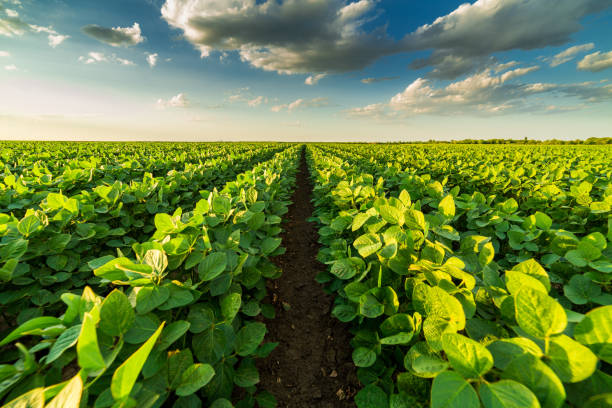
The Brazilian countryside is stepping on the gas. Soy, the country’s main export product, is experiencing a boom with a harvest that is about to reach a record level. (Photo internet reproduction)

According to Wei Baigang, director of the Planning and Development Department at the Ministry of Agriculture and Rural Affairs, at a conference last Saturday, the country will closely monitor the logistical situation in Brazil, Argentina and the US to mitigate potential interruptions in shipments of agricultural products due to the crisis, reported Bloomberg.

Recently, the country urged its citizens not to accumulate grain, after a recent ban on new rice exports by Vietnam triggered concerns over global supplies. Wei said China has enough rice and wheat stocks for one year’s consumption, while grain imports are only about two percent of domestic use.

“Market supplies are extensive and there is no need to accumulate,” the director said. He also stressed that Brazilian soybean exports to China remain regular with an increase in shipments in March.

Wei also highlighted the increase in soy imports from the United States this year, as part of the first stage of the trade pact signed between the two countries, at a delicate moment for Brazil, which is experiencing a diplomatic crisis with the Chinese government.

Education Minister Abraham Weintraub implied on social media that the Asian giant could benefit from the Covid-19 pandemic. He deleted the post, but the Chinese Embassy in Brazil is asking for an apology.

Trade Pacts

In the first stage of the US pact, China, which is Brazil’s main trading partner, has committed to increasing its purchases of US agricultural products by US$32 billion (R$170 billion) over the next two years.

Among the food products benefited are soybeans, meat and other major products on the Brazilian agenda. The United States intends to recover the ground lost after the setback caused by the trade conflict. In 2019, China imported only 16.9 million tons of soybeans from the United States, two percent more than in the previous year, but almost half of what it bought in 2017, according to data collected by the Reuters agency.

The agreement between the two powers will marginally increase global exports of US oilseeds and, in contrast, depress the growth of Brazil’s, according to an analysis by the University of Missouri’s Research Institute for Agricultural and Food Policy (FAPRI).

“I am skeptical about this approach,” argues Joseph Glauber, a researcher at the International Food Policy Research Institute. “China has maintained that the agreement would not adversely affect other suppliers, including Brazil,” he says.

But if that happens, he says, Brazil could lodge a complaint with the World Trade Organization. Nevertheless, production will not stop. “We explore several markets, such as India, Indonesia and Vietnam, to diversify our sales,” concludes Braz, from the APROSOJA.
China is Brazil's main trading partner.
China is Brazil’s main trading partner. (Photo internet reproduction)

Impact on the environment

Brazilian grain production will grow 27 percent over the next decade, according to the Brazilian Ministry of Agriculture. The boost will come from the soybean and corn harvests. Meeting that expectation could result in environmental damage, several organizations caution. According to Greenpeace, the soy industry now focuses on converting enormous expanses of savanna and scrubland into cultivable land, a very environmentally rich area that is 1,000 km from the Amazon.

This biome has lost half of its original extent due to the expansion of agriculture and is undergoing one of the worst deforestation crises, according to the World Wildlife Fund. The Brazilian government reported in December that the loss of vegetation cover in the savanna between August 2018 and July 2019 was 648,400 hectares, which continues the alarming levels of recent years.

The Gran Chaco – the second largest forest in South America, which extends through Argentina (the world’s third-largest soy producer), Bolivia and Paraguay – is suffering high rates of destruction. The South American soil is a key player. This year, 57 percent of the soy the world will consume will be produced there.

Read More from The Rio Times

The Rio Times · Power Map
See who really holds power in Latin America
Click to open the Power Map

Rotate for Best Experience

This report is optimized for landscape viewing. Rotate your phone for the full experience.