After Worst Q2 in 40 Years, Brazil Will Take Time to Recover Losses
RIO DE JANEIRO, BRAZIL – It will take time for Brazil to recover what it has lost with the crisis caused by the coronavirus pandemic.
The country has experienced its worst second quarter in the past 40 years, according to estimates by the Getúlio Vargas Foundation’s Brazilian Economics Institute (IBRE/FGV). The data point to a 9.8 percent drop in Gross Domestic Product (GDP) between April and June 2020, when compared to the first quarter.

The record drop in only one quarter is higher than the cumulative loss in each of the nine contraction periods Brazil has experienced over the past four decades. And this time it will be more difficult to recover from the crisis caused by Covid-19, according to an article published on Friday, June 26th, by economists Juliana Trece and Luana Miranda.
The sharpest decline that the Brazilian economy had recorded from one quarter to the next occurred in the last period of 1990, when the indicator measuring the amount of wealth in the country contracted by 4.7 percent.
In March that year, the newly elected government of then-President Fernando Collor announced the confiscation of bank deposits and savings. Over the past few years, Brazil’s economy has suffered from economic distress compounded by unsuccessful plans to tackle hyperinflation. The recession extended from the third quarter of 1989 to the first quarter of 1992, when Collor underwent an impeachment process and left office.
Despite all this political and economic turmoil, the country took nine quarters to recoup the 8.2 percent lost, the economists say. After the recession ended in 1992, the economy experienced a period of expansion that lasted 12 quarters, during which it grew 19.4 percent. In the recent period, 12 quarters after the end of the last recession, the country would still need to grow 3.4 percent to return to its activity level of the first quarter of 2014.
Currently, one of the aggravating factors is that the origin of the crisis is sanitary, that is, the definitive solution does not depend on economists or political scientists. The pandemic has forced the shutdown of various economic activities, which mainly impacts the service sector and household consumption, two drivers for the country’s GDP which historically tend to be more resilient during crisis periods, economists also say.
Slower recovery
In times of Covid-19, the economic crisis was widespread. All countries lost. But the depth of the scars left by the pandemic will depend, among other things, on the economic and social conditions before the crisis. In this regard, Brazil has great disadvantages.
“This scenario of a deep drop in GDP and slow rebound is unprecedented among the short recessions already experienced by the country since the 1980s. In the 1995, 2001, 2003, and 2008 recessions, which lasted between two and three quarters, the economy took an average of three quarters to recover to the pre-crisis level. In the current recession, we estimate it will take more than six quarters to return to the pre-crisis level,” the economists say.
It was the first time the country entered a recession without having overcome the losses of the preceding one. When the disease began to spread here in March, the economy had recovered only 5.3 percent of the 8.1 percent lost during the last major recession it experienced between 2014 and 2016, caused by worsening fiscal conditions during President Dilma Rousseff’s administration.
According to IBRE and IBGE estimates, the second quarter should represent the bottom of the crisis, and a slow recovery process may be seen in the second half of the year. Regarding the 2020 GDP, IBRE expects a drop of 6.4 percent, with an estimated growth of 2.5 percent for 2021.
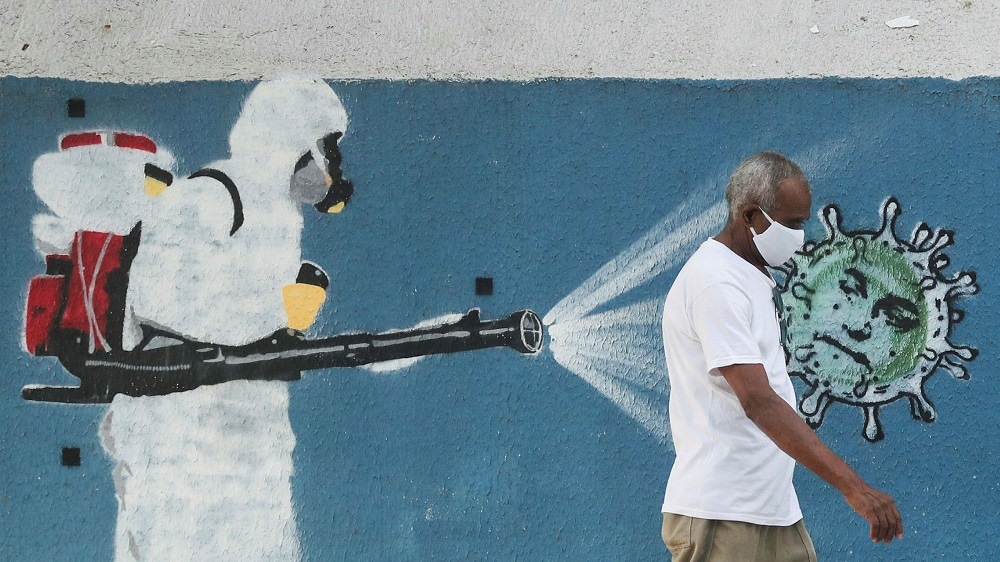
“Undoubtedly, the current recession will leave behind traces of destruction in both economic and social terms. To date, over 51,000 people have lost their lives to Covid-19 in Brazil. We estimate devastating impacts on the labor market, with a strong increase in the unemployment rate (18.7 percent in the average for the year) and the collapse of the expanded income mass (nine percent contraction), now considering all the policies implemented to mitigate the drop in family income.”
“This acute worsening in economic activity coupled with the intense increase in public spending adds to the likelihood of a scenario of severe fiscal crisis, given the difficult task of reversing the impressive increase in the primary deficit. Our problems do not end with the emergence of a vaccine, we still have a painful period of economic adjustment ahead,” they say.
Source: Exame
More: Brazil news in English, every day from The Rio Times.
This article was drafted with automated assistance and reviewed before publication. How we use AI · Report an error · Editorial responsibility: Matthias Camenzind, Editor-in-Chief