Analysis: Gender Parity Driving New Constitution in Chile
RIO DE JANEIRO, BRAZIL – The new Chilean Constitution, in addition to being the firstborn in democracy, will be written jointly by men and women. In a plebiscite on October 25th, citizens decided by an overwhelming majority -78% x 21%- to replace the fundamental Charter in force, a text dating from 1980, adopted during the Pinochet dictatorship.
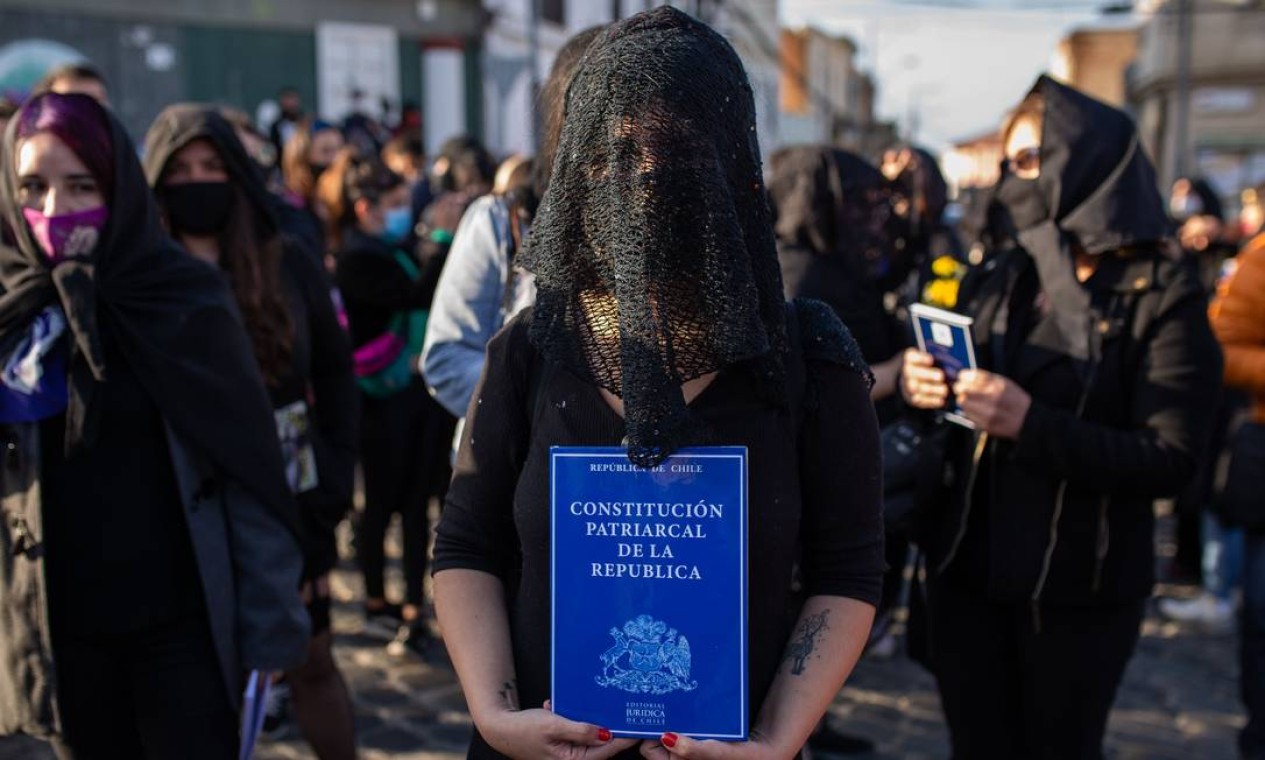
The Chilean feminist movement, the instigator of the social protests that began in October 2019, pressured the political class and found allies in left and right-wing experts and leaders. Thus, on April 11th next year, the 155 constituents who will have the historical opportunity to write a Constitution with a gender perspective will be elected in a country that only in 2017 decriminalized abortion, illegal until then in all cases.
The Constituent Assembly (elected with this exclusive task) will have up to one year to draft the text, to be passed in a new and binding referendum. The experts estimate that the new Chilean Magna Carta will come into force by the end of 2022.

“Many aspects of the process are extraordinary. But undoubtedly the most exceptional thing for Chile and the world is that the constituent body responsible for creating the new Constitution will be equal, that is, it will ensure that between 45 and 55 percent of its members will be women,” explains Miriam Henríquez, professor of constitutional law at Alberto Hurtado University.
“Other countries have made tremendous efforts, such as Ecuador and Tunisia, which have incorporated parity into their electoral lists and achieved results close to 30 percent. All of this places Chile at the forefront of the ways in which a new social pact is created,” the academic analyzes.
Massive protests and violence erupted in Chile in October 2019, jeopardizing democracy in the country. In mid-November, virtually all political forces and Sebastián Piñera’s right-wing government bet on an institutional way out of the crisis: a referendum to decide if citizens wanted to replace the current Constitution, which, although it has been reformed on 53 occasions over the past four decades, has never united Chileans or enjoyed legitimacy – in part due to its origins.
In March, Congress passed a bill establishing gender parity for the constituent assembly that would draft the new Charter. A few days later, on March 8th, Chileans again showed their power in the streets during the celebration of International Women’s Day.
“The social, cultural and political climate produced by the October 2019 protest -and before that, with the women’s and feminist movement- is pushing the proposal of parity, which permeates different sectors of women in the political world and in Parliament,” said Adriana Muñoz, president of the Senate, a historic center-left feminist.
“We began to find ourselves in a kind of cross-party group of deputies and senators from different political parties. It was an unprecedented process,” says Muñoz, who has been in Congress since the resumption of democracy in 1990 and was the author of the laws on divorce, parentage (which ended the differences between legitimate and illegitimate children), intra-family violence, femicide, and the reform of the Civil Code, which formerly prejudiced women in cases of marital infidelity.
Political scientist Pamela Figueroa was one of the experts who, in late 2019, led the debate on parity at the technical committee that negotiated the conditions and rules for the referendum and the Constituent Assembly, anticipating the prospect that the population would decide to replace the current Charter. “For the convention to have greater legitimacy, it needed to be inclusive,” she recalls.
The University of Santiago academic explains that there were two crucial elements that preceded the agreement. First, the Quotas Act promoted in Michelle Bachelet’s second government (2014-2018), which forced political parties to submit a minimum quota of 40 percent of women among their candidates. “It debuted in the 2017 parliamentary election, and the presence of women in Congress increased from 16 to 23 percent. Nevertheless, Chile is one of the countries with the least female representation in its parliament,”
Figueroa says.
A second precedent was last year’s parity vote in the College of Attorneys. The technical formula used for the constitutional convention is inspired by the organization’s internal vote. The 155 constituents will be elected under the same rules as the Chamber of Deputies, that is, through a proportional system. But the so-called “zebra” lists will be adopted, alternating women and men, always headed by a woman. At the end of the process, “a correction similar to that conducted in the College of Attorneys is applied,” points out the academic.
There were many difficulties, because “there are many prejudices against parity, by affecting the chances of men, who are the majority elected,” says Figueroa. She points out that, unless there is 100 percent proportionality “all electoral systems are tools for turning votes into vacancies,” and that “comparative studies show that if there is no positive action, it is very difficult to achieve a full incorporation of women, when in countries like Chile they are 52 percent of the population.”
That the convention is made up of the same number of women and men does not necessarily mean that the Constitution will have a feminist slant, that is, that it will establish a “commitment to the protection of women’s equality in the exercise of their rights and that it will recognize that they are moral agents of their own development, and that they should not be replaced by others in decision-making,” as maintains Yanira Zúñiga, an academic at the School of Legal and Social Sciences of the Austral University of Chile and an expert in gender issues.
“But the evidence gathered regarding the impact of an increase in the presence of women in the procedures for producing legal norms -particularly in parliaments- shows that the potential for building gender agendas is growing,” emphasizes Dr. Zúñiga.
Structural subordination
Chilean constitutionalist Claudia Sarmento notes that the gender perspective should go through the different constitutional discussions, even regarding the government system: “Chile has a hyper-presidentialist system, where many powers are centered in the same hand. Does it or does it not favor the condition of women?” the attorney asks.
“A constitution protects the most important interests and the way power is distributed. If a certain status quo has been maintained up to now with regard to the structural subordination that affects women, it is important to keep in mind how the fundamental Charter could or could not be an engine for mobilizing equality. In other words, what kind of State we will need for equity to be relevant in Chile,” reflects Sarmento.
She lists issues that are not in the current Chilean Constitution, such as sexual and reproductive independence and the rules to fight violence against women. Sarmento states that there are no examples of a feminist constitution in the world, although the French one “has a principle that refers to parity,” but it is not strange that it should be so: “Women have historically been relegated from the political process. And their absence ensures that their gaze is not included in public policies,” she comments.
Source: El País
More: Latin America news in English, every day from The Rio Times.
This article was produced by The Rio Times’ automated newsroom system. How we use AI · Report an error · Editorial responsibility: Matthias Camenzind, Editor-in-Chief