IBOV 171,031.73 ▲ 1.85% IPSA 11,338.38 ▲ 0.89% IPC MEX 65,729.18 ▲ 2.14% MERVAL 2,913,184 ▲ 1.30% COLCAP 2,459.23 ▲ 0.61% BVL PERÚ 58,698.13 ▲ 2.60% USD/BRL5.14▲ 0.02% USD/MXN16.92▲ 0.07% USD/CLP914.28— 0.00% USD/COP3,043— 0.00% USD/PEN3.36▲ 0.05% USD/ARS1,499▼ 0.03% USD/UYU40.20— 0.00% USD/PYG5,996— 0.00% USD/BOB11.43— 0.00% USD/DOP58.61▼ 0.07% USD/CRC450.05— 0.00% USD/GTQ7.62— 0.00% USD/HNL26.81▲ 1.55% USD/NIO36.62— 0.00% USD/VES782.70▲ 0.48% USD/PAB1.00— 0.00% USD/BZD2.00— 0.00% USD/JMD 157.28 — 0.00% USD/TTD6.71— 0.00% EUR/BRL6.00▼ 0.03% BRENT 88.88 ▼ 0.03% WTI 83.11 ▼ 0.11% IRON ORE 161.91 — — COPPER 6.61 ▲ 0.03% GOLD 4,461 ▲ 1.78% SILVER 65.59 ▲ 1.26% SOY 1,184 ▲ 3.20% CORN 480.50 ▲ 10.02% WHEAT 655.00 ▲ 3.93% COFFEE 317.25 ▼ 5.51% SUGAR 16.43 ▼ 1.79% ORANGE JUICE 138.55 ▼ 0.47% COTTON 85.03 ▲ 2.33% COCOA 5,719 ▲ 3.18% BEEF 223.60 ▼ 3.93% CATTLE 339.10 ▼ 3.16% LITHIUM 75.20 ▲ 1.47% PETR4 41.64 ▼ 0.05% VALE3 72.97 ▲ 0.83% ITUB4 38.60 ▼ 1.03% BBDC4 16.85 ▲ 0.36% ABEV3 14.89 ▼ 0.80% BBAS3 19.37 ▲ 0.47% B3SA3 14.26 ▼ 0.21% WEGE3 47.59 ▲ 0.49% PRIO3 59.14 ▼ 0.19% SUZB3 41.33 ▲ 2.35% RENT3 34.68 ▼ 0.09% AZZA3 15.89 ▼ 2.63% CSAN3 3.22 ▼ 1.83% RAIZ4 0.25 — 0.00% PCAR3 2.75 ▼ 0.36% GMAT3 3.65 ▼ 1.08% PSSA3 48.13 ▼ 0.54% CVCB3 1.33 ▼ 2.92% POSI3 3.36 ▲ 2.44% SLCE3 13.34 ▲ 0.30% NATU3 8.14 ▼ 0.73% IBOV 171,031.73 ▲ 1.85% IPSA 11,338.38 ▲ 0.89% IPC MEX 65,729.18 ▲ 2.14% MERVAL 2,913,184 ▲ 1.30% COLCAP 2,459.23 ▲ 0.61% BVL PERÚ 58,698.13 ▲ 2.60% USD/BRL 5.16 ▲ 0.01% USD/MXN 17.06 ▼ 0.24% USD/CLP 913.98 ▲ 0.04% USD/COP 3,140 ▲ 0.03% USD/PEN 3.36 ▼ 0.66% USD/ARS 1,493 ▲ 0.10% USD/UYU 40.27 ▲ 1.24% USD/PYG 5,939 ▲ 1.68% USD/BOB 11.64 ▼ 0.76% USD/DOP 58.34 ▲ 1.25% USD/CRC 445.92 ▲ 0.89% USD/GTQ 7.62 ▲ 2.21% USD/HNL 26.79 ▲ 1.57% USD/NIO 36.62 ▲ 0.69% USD/VES 762.44 ▼ 0.13% USD/PAB 1.00 — 0.00% USD/BZD 2.00 — 0.00% USD/JMD 157.28 — 0.00% USD/TTD 6.70 ▲ 0.61% EUR/BRL 5.95 ▲ 1.01% BRENT 88.88 ▼ 0.03% WTI 83.11 ▼ 0.11% IRON ORE 161.91 — — COPPER 6.61 ▲ 0.03% GOLD 4,461 ▲ 1.78% SILVER 65.59 ▲ 1.26% SOY 1,184 ▲ 3.20% CORN 480.50 ▲ 10.02% WHEAT 655.00 ▲ 3.93% COFFEE 317.25 ▼ 5.51% SUGAR 16.43 ▼ 1.79% ORANGE JUICE 138.55 ▼ 0.47% COTTON 85.03 ▲ 2.33% COCOA 5,719 ▲ 3.18% BEEF 223.60 ▼ 3.93% CATTLE 339.10 ▼ 3.16% LITHIUM 75.20 ▲ 1.47% PETR4 41.64 ▼ 0.05% VALE3 72.97 ▲ 0.83% ITUB4 38.60 ▼ 1.03% BBDC4 16.85 ▲ 0.36% ABEV3 14.89 ▼ 0.80% BBAS3 19.37 ▲ 0.47% B3SA3 14.26 ▼ 0.21% WEGE3 47.59 ▲ 0.49% PRIO3 59.14 ▼ 0.19% SUZB3 41.33 ▲ 2.35% RENT3 34.68 ▼ 0.09% AZZA3 15.89 ▼ 2.63% CSAN3 3.22 ▼ 1.83% RAIZ4 0.25 — 0.00% PCAR3 2.75 ▼ 0.36% GMAT3 3.65 ▼ 1.08% PSSA3 48.13 ▼ 0.54% CVCB3 1.33 ▼ 2.92% POSI3 3.36 ▲ 2.44% SLCE3 13.34 ▲ 0.30% NATU3 8.14 ▼ 0.73%
since 2009
Monday, August 24, 2026

Argentina and IMF Agree on new Debt Relief Program

By · March 1, 2020 · 3 min read

Daily Brief

The morning intel from across Latin America. Free.

By subscribing you agree to our privacy policy. We never share your email.

RIO DE JANEIRO, BRAZIL – Kristalina Georgieva, Director of the International Monetary Fund (IMF), and Argentina’s Economy Minister Martín Guzmán agreed on the sidelines of the G-20 Summit in Saudi Arabia last Saturday to renegotiate the South American country’s debt agreement.

Both sides are willing to work together to find a solution to Argentina’s debt crisis, which the IMF considers “unsustainable” under current credit terms. The aim is to reduce the debt to a level that is compatible with a “manageable” financing and a “satisfactory” growth level.

Kristalina Georgieva, Director of the International Monetary Fund (IMF), and Argentina's Economy Minister Martín Guzmán agreed on the sidelines of the G-20 Summit in Saudi Arabia last Saturday to renegotiate the South American country's debt agreement.
Kristalina Georgieva, Director of the International Monetary Fund (IMF), and Argentina’s Economy Minister Martín Guzmán agreed on the sidelines of the G-20 Summit in Saudi Arabia last Saturday to renegotiate the South American country’s debt agreement. (Photo internet reproduction)
One-stop reference
Company Intelligence
Every listed company in Latin America — financials, ownership and structure for 1,450+ companies across 26 exchanges, in one place.
Browse the directory →
RT
Ask Rio Times
17 years of Latin America reporting, on demand.
Open the full Ask Rio Times →

To this end, private creditors were asked to make “significant” debt cuts – a major relief for the current government of Alberto Fernández. The lack of demands for budget cuts by the IMF, which according to Guzmán were not even planned by the government until the next presidential elections in 2023, is surprising.

The renegotiation includes a reassessment of the accounts of the Argentine economy, as provided for in Article IV of the IMF’s founding agreement.

This includes an examination of the exchange rate policy that former Presidents Néstor and Cristina Kirchner (2007-2015) opposed and which was only conducted under the mandate of the neoliberal government headed by Mauricio Macri.

The Argentine government is expected to submit specific proposals to private creditors in the second week of March.

Last Tuesday, Guzmán met with US banks and investment funds in New York, where the majority of private creditors are based. The latter called for the subsequently agreed revision according to Article IV.

Augusto Salvatto, a researcher at the Center for International Studies of the Catholic University of Buenos Aires (UCA), stated that the relationship between the IMF and Argentina has been conflict-ridden for decades: “The trigger for this was the revision of the IMF’s lending policy following Argentina’s severe economic crisis in 2001”.

The IMF director’s current stance of introducing a change in the advice given to developing and emerging countries and placing a greater focus on social consequences is therefore all the more surprising. However, according to Salvatto, this could be politically motivated, as “60 percent of the IMF’s current loans to Argentina were granted”.
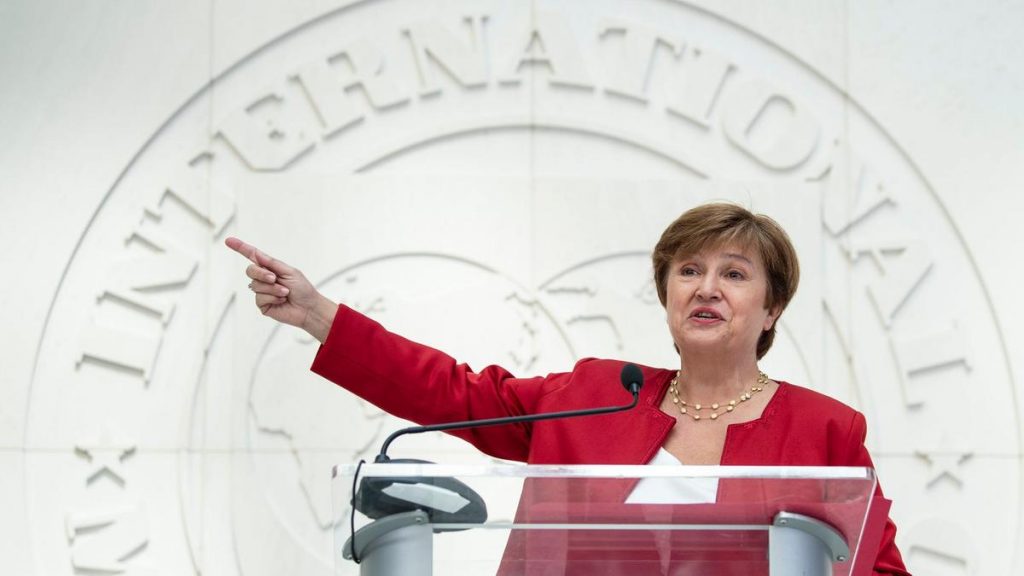
Under the leadership of Kristalina Georgieva, the IMF has a much friendlier tone than before. This is a stroke of luck for Argentina.
Under the leadership of Kristalina Georgieva, the IMF has a much friendlier tone than before. This is a stroke of luck for Argentina. (Photo internet reproduction)

Argentina’s debt to the IMF currently stands at approximately US$44 billion, part of which is due to a US$56 billion loan from the IMF to Macri’s government in 2018. This is the largest loan in the Fund’s history to date. The country’s total debt in mid-2019 amounted to more than US$311 billion, equivalent to more than 90 percent of GDP (Gross Domestic Product).

In addition to one of the highest annual inflation rates in the world at around 50 percent, the poverty rate among the population rose to some 40 percent and the national currency has severely depreciated.

The last audit in December 2017 projected that the Argentine economy would stabilize by 2020, despite warnings from experts about inconsistencies within the various economic policy measures. In April 2018, the balance of payments ultimately shot up the exchange rate against the dollar, whereupon the Macri government chose to take out the aforementioned loans.

This article was produced by The Rio Times’ automated newsroom system. How we use AI · Report an error

Read More from The Rio Times

The Rio Times · Power Map
See who really holds power in Latin America
Click to open the Power Map

Rotate for Best Experience

This report is optimized for landscape viewing. Rotate your phone for the full experience.