RIO DE JANEIRO, BRAZIL – The Argentinean meat market is facing an ambivalent situation: Chinese demand has doubled meat production in the past year – more than 830,000 tons were loaded into containers and exported – while concurrently more and more people in Argentina can no longer afford domestic meat due to rising prices.
The People’s Republic of China had significantly increased its demand as a result of the rampant swine fever in 2019. According to the Institute for the Promotion of Argentinean Beef Production (IPCVA), 75 percent of Argentina’s meat exports were shipped to the East Asian state. Totaling 374,500 tonnes, China was thus well ahead of other major customers such as Chile (27,500 tonnes) and Germany (23,400 tonnes).

In terms of total exports of poultry products and red meat from beef and pork, Argentina has long since passed the million-ton mark. “Compared to the 430,000 tons in 2016, the figures have virtually tripled,” writes economist Ramiro Farías.
The exploding demand and the resulting investments in cattle breeding were in line with the policy of former president Mauricio Macri. The neo-liberal politician had announced even before taking office in 2015 that he intended to bring Argentina back to the top of the export world champions by opening up the market.
This should earn the country foreign exchange and strengthen the crisis-ridden economy. To this end, Macri cut taxes on beef sales for three years, a measure which his predecessor and now renewed Vice President Cristina Fernández de Kirchner had once introduced.
In September 2018, shortly before the presidential elections, he re-introduced some of these levies by decree faced with a worsening crisis.
In the meantime, the new government of Alberto Fernández has set the tax on exports of meat and other important agricultural products for the food market at nine percent.
The current economic crisis is also reflected in Argentina’s meat consumption. The country continues to be one of the world’s leaders in beef consumption, albeit fewer and fewer people can now afford the “asado”, the traditional weekend barbecue.
While record exports were registered, people in Argentina bought around ten percent less beef in 2019 than in the previous year, according to data from the Chamber of Industry and Commerce for Meat and Meat Products (CICCRA).
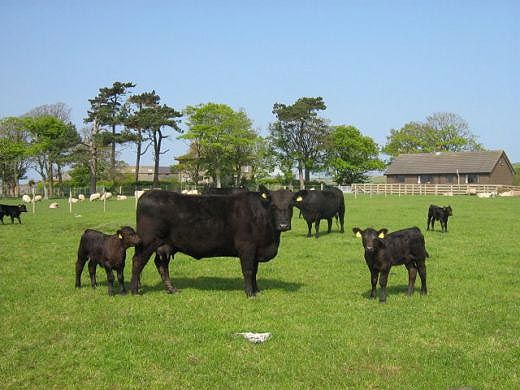
While some observers explain this with a sudden change in culture and argue that more people are eating vegetarian or vegan food, the simultaneous increase in sales of chicken meat shows that rising prices play an important role in this development.
Over the past 30 years, the consumption of chicken in Argentina increased by 30 kilos per person, while the same figure for beef fell by 25 kilos. “There is only one reason for this event and that is the loss of purchasing power,” said Miguel Schiariti, president of CICCRA.
With more than 560,000 food ration cards and the “Argentina against Hunger” program, the new government plans to provide discounted food to more than two million people this year. The first cards have recently been distributed in the suburbs of the capital Buenos Aires.
The government continues to negotiate with meat industry representatives in order to also secure a reduced meat price.
Meanwhile, the industry is closely monitoring developments in China. After the price hike from 6,000 to up to 7,500 US dollars per ton of exported beef last year, Chinese importers are now paying up to 35 percent less, it was said a few days after Argentinean media made headlines about export records.
This new development is likely linked to the opening of the Chinese market to India, Hong Kong, and Vietnam, and more export licences from Brazil have also been conceded. “This situation has triggered downward price pressure, which we are suffering from today,” CICCRA President Schiariti told the industry portal ‘Supercampo’.
The focus is now also on Australia. After the forest fires in the country and its devastating effects on people and nature, the Argentinean industry is hoping for new markets should Australia fail to provide its supplies of beef from grazing cattle as it has done in the past.
More: Latin America news in English, every day from The Rio Times.
This article was produced by The Rio Times’ automated newsroom system. How we use AI · Report an error · Editorial responsibility: Matthias Camenzind, Editor-in-Chief