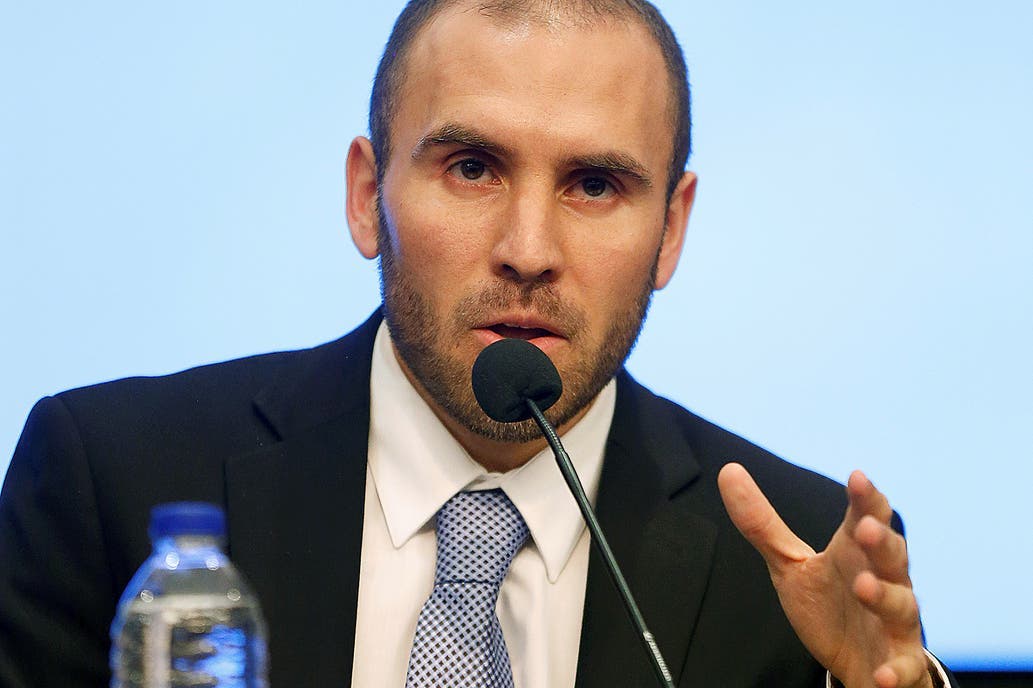
RIO DE JANEIRO, BRAZIL – Argentina’s history is repeating itself. Just like five years ago, the issue is loans that Argentina cannot – or does not want to – repay. Once again, the economist Axel Kicillof is at the center of the action. And once again the left-wing star economist is pushing creditors ahead of him with his self-confident demeanor – now as governor, five years ago as economics minister in the government of Cristina Fernández de Kirchner. Without a doubt: the now 48-year-old with the blue eyes and the sturdy sideburns clearly enjoys once again playing poker with the banks, funds, and investors.

The clock is ticking
For six weeks he has been governor of the province of Buenos Aires. This is one of the most significant government offices in Argentina’s politics. One-third of all Argentinians live in the province around the capital and about 60 percent of the national industry is located there. Kicillof has won big there. From this position of power, he took the floor last week for the first time on the subject of debt. Since January 26th, interest payments on US$250 million worth of bonds are due. He would like to postpone the date to May 1st, he told creditors. Then Argentina’s debt negotiations would presumably already be under way and the province’s debt issues would be easier to solve. As the required 75 percent of creditors have not agreed to the proposal, he extended the deadline for a consensus to the end of January.
However, it is unlikely that creditors will agree to the deal. Why should they? According to an assessment by Argentina’s financial services company Invecq, the province’s budget was balanced at the end of 2019 after a strict austerity plan by Kicillof’s predecessor. “It’s hard to demand goodwill from creditors if you don’t do it yourself as a debtor,” says economist Fausto Spotorno. Kicillof has left creditors in the dark about what he intends to do after May 1st.
But now the clock is ticking: the governor may still order payment until February 5th, without triggering a default, i.e. a new payment freeze on the debt. As the province has already failed to repay some bonds in pesos, Fitch and Standard & Poor’s rating agencies have downgraded the seal of approval for the province of Buenos Aires to “selective default”.
Government under pressure
The Argentine government of Alberto Fernández is exerting a great deal of pressure on Kicillof’s solo efforts. When the president took office on December 10th after a clear victory over his economic liberal predecessor Mauricio Macri, it was clear that the debt issue would determine his policy for the next few months, possibly even years. His predecessor Macri had incurred debts of around US$ 100 billion during his term in office. With a debt of US$ 44 billion, Argentina is on the hook with the International Monetary Fund (IMF).

In mid-2018, the IMF had rescued Argentina from an impending payment crisis with the largest loan in its history. Investors suddenly classified Argentina as a shaky candidate because of its high budget deficit, and pulled their money out. The Argentinians themselves also exchanged their pesos for dollars. Argentina, which was on its way to growth again under Macri at that time, crashed and could only be saved with the loan from Washington.
But how Alberto Fernández intends to solve the debt issue remains open. During the election campaign, he declared that the economy must first grow before Argentina is able to repay its debts. “We want to pay,” Fernández stressed, “but later.”
But this will not be an easy task: For nine years now, the Argentine economy has been stagnating or shrinking. Inflation stands at 55 percent. The peso has lost around two-thirds of its value against the dollar over the past year. However, most of the foreign debt is fixed in dollars. Because the economy is shrinking and debt in pesos is rising, Argentina’s debt has grown to 93 percent of GDP. Considering dollar-denominated foreign debt, influential observer Joaquín Solá estimates that it is only around 50 percent of GDP, so it is not alarmingly high.
Consolidation will continue
However, investors are not particularly convinced of Argentina’s solvency or willingness to pay: most of Argentina’s bonds are worth less than half of their face value in the secondary markets. The risk premiums on Argentine loans are 20 percentage points above the interest rates that investors charge for US bonds.
Nevertheless, the situation is not completely hopeless: Alberto Fernández has continued the fiscal consolidation course Macri had agreed with the IMF. While Macri cut spending, Fernández has now increased revenues. Argentina’s agricultural exports (mainly soybeans, corn, and wheat) are taxed at up to 30 percent. Rates for electricity, gas, transport, and pensions have been frozen. The government could thus reduce the budget deficit by around one percentage point. Investment bank JP Morgan thus expects that Argentina will soon be able to present a balanced primary budget.
A positive primary budget is the decisive indicator for creditors as to whether Argentina will remain solvent. Only if a country like Argentina earns more in its national budget (excluding debt payments) than it spends, is there a chance that it will be able to repay its debts at some point. “It is surprising and positive that Fernández has continued the budget consolidation course,” says Daniel Artana, chief economist at the economic research institute Fiel. “The crucial factor now is that he credibly explains how he will maintain the primary surplus.”
However, this is precisely the issue. The new Minister of Economy, Martín Guzmán, is an expert in debt negotiations – yet an academic who has studied in the US for a long time. His professor there was the renowned US economist Joseph E. Stiglitz. Stiglitz assisted his former student by demanding a significant discount on interest and repayment of Argentina’s debt in Davos. “Anything else would be pure fiction.”
Close confidant of Kirchner
So far Guzmán has not hinted at how he intends to restructure the debt; time is running out. The first major interest payments by the republic are due in March, followed by further substantial repayments in May. By March 31st, the government intends to have negotiated a debt restructuring with creditors in order to prevent the country from becoming insolvent once again.
In Buenos Aires, assessments that Argentina is aiming for a one-year payment freeze, a 20 percent discount on the debt and a reduction of interest rates by half are deemed plausible. In a global low-interest environment, the roughly ten percent interest that creditors earn each year on bonds issued by the province of Buenos Aires seems very high. The government, therefore, hopes that it can push through a 50 percent reduction in interest rates, estimates Solá.
But now Kicillof’s demands in the province are thwarting the negotiations Guzmán is conducting with private and public creditors such as the IMF. Should the province stop payments, it will also become more difficult for Argentina as a whole to avoid a default, according to Invecq.
There may also be a political conflict behind this: Kicillof is said to be a close confidant of Cristina Fernández de Kirchner, elected Vice President. She bases her power above all on La Cámpora, the Peronist left-wing youth organization, which is led by her son, but where Kicillof is also politically based. An aggressive line towards creditors is popular not only with the young left-wing Peronists but also with many Argentinians. Bur recall what happened five years ago.
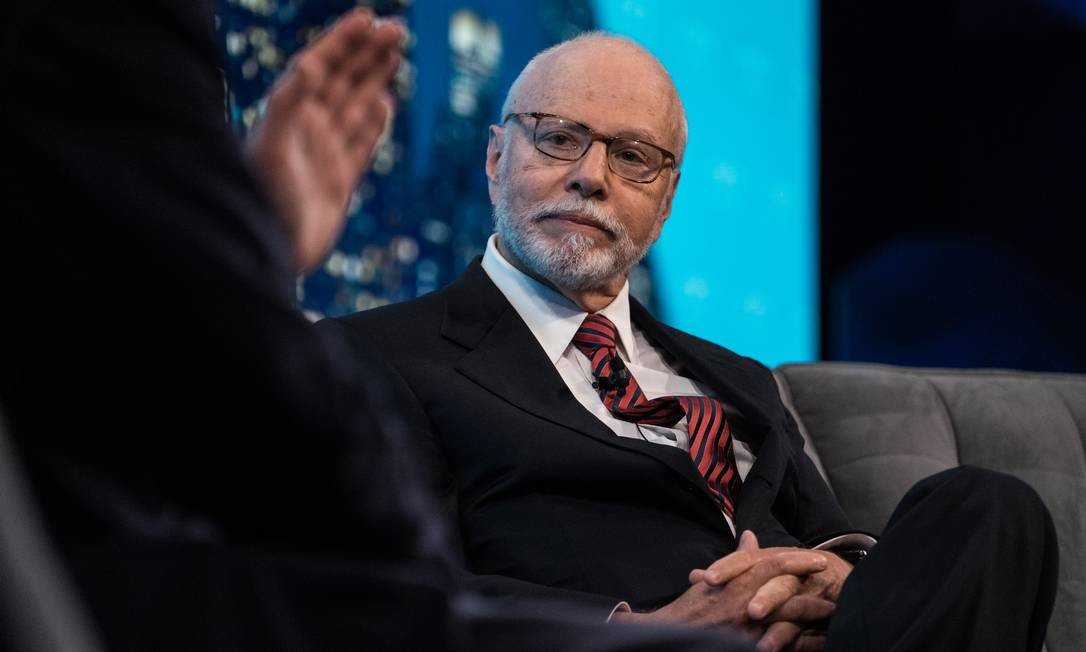
At the time Kicillof robbed the North American hedge funds of their last remaining edge with his cat-and-mouse game. His main opponents were hard-boiled investors like Paul Elliott Singer and his hedge fund NML Capital Limited. Singer can cause sleepless nights for company heads around the world when he calls on them as shareholders to change their strategy.
Singer had lodged a lawsuit against Argentina in the highest court of US justice and was successful. He had bought Argentine debt securities cheaply on the secondary market years earlier and wanted to be compensated in full – unlike most creditors, who 15 years ago agreed to Argentina’s first debt rescheduling after the great financial crisis of the 2000s and accepted discounts of up to 70 percent. Singer and Co. were branded as “vultures” in Argentina.
A new test of strength
While Brazil was hosting the World Cup, Kicillof and his young team were constantly jetting back and forth between New York and Buenos Aires. Until the very last moment, Kicillof left it open as to whether he would pay off the debts. When Argentina finally failed to pay, once again became insolvent and, isolated from the financial markets, slid into a severe economic crisis, Kicillof and his then-boss, President Cristina Fernández de Kirchner, were voted out of office.
Singer and other funds were fully compensated by the economically liberal successor Mauricio Macri just a few months after taking office. Argentina was even forced to pay the high legal fees. But Kicillof, like Cristina Fernández de Kirchner, was not personally hurt by this. They were elected in October 2019 and are now ready for a new round of tug-of-war with creditors.
More: Latin America news in English, every day from The Rio Times.
This article was produced by The Rio Times’ automated newsroom system. How we use AI · Report an error · Editorial responsibility: Matthias Camenzind, Editor-in-Chief
In depth