Argentina’s Chamber of Deputies Passes Debt Restructuring Bill
RIO DE JANEIRO, BRAZIL – Argentina’s Chamber of Deputies has passed a bill to allow the government to renegotiate the country’s foreign debt. The bill was approved by a large majority and now only needs to be ratified by the Senate, in which the government party has the majority. The aim is to avert another national insolvency caused by the over-indebtedness left behind by Mauricio Macri’s government.

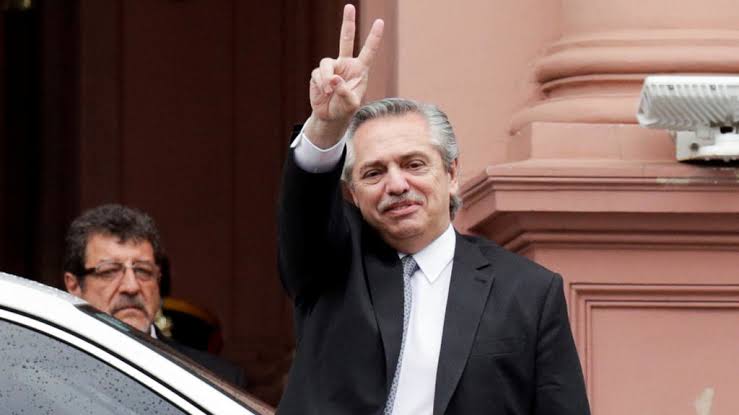
His successor in office, President Alberto Fernández, is currently on his first trip to Europe, where he is seeking support for this plan. On Saturday he met with President Sergio Matarella and Prime Minister Giuseppe Conte in Rome, as well as with Pope Francis. A meeting in Berlin with Chancellor Angela Merkel has been announced for today, February 3rd.
On Tuesday he is scheduled to meet with Prime Minister Pedro Sánchez in Madrid and on Wednesday in Paris with President Emmanuel Macron. Economy Minister Martín Guzman will join him in Berlin and will meet the new director of the International Monetary Fund (IMF), Kristalina Georgieva, in Paris on Wednesday.
The financial situation in which the new government took office on December 15th could hardly be worse: A number of maturities are due in coming months, requiring monthly spending averaging around US$3.75 billion, with less than one billion in revenues and very low foreign exchange reserves.
Public debt is again reaching a level comparable to that at the beginning of the century when foreign debt accounted for 129 percent of GDP.
During the Kirchner government (2003-2015) this figure dropped to 52 percent. Under Macri it climbed again to 92 percent of GDP by 2019. Macri took office with the pledge to restore the country’s confidence in the international financial markets. This was to lead to an “investment boom for the country”. In order to achieve this, the last of the old debts of the holding companies were paid and all foreign exchange, financial transaction and import restrictions were lifted. As a result, new debts were taken on at a record pace, three times as high as during the military dictatorship.
However, investments failed to materialize or came only in the form of speculative capital, which benefited from the extremely high-interest rates (over 70 percent) paid on short-term bonds in pesos (Lebacs and Lelics). This financial tool was intended to curb inflation by “drying up” the market of pesos but had no significant effect. The profits from these speculative transactions were converted back into dollars and shipped out of the country. A large part of the foreign exchange borrowed by the state thus flowed out again without any benefit to the economy.
In parallel, the neo-liberal policy had a negative effect on the state’s revenues: export duties on agricultural products were reduced and the requirement to repatriate the revenues from exports within a certain period of time was abolished. The sudden opening of imports caused the collapse of domestic industry, increased unemployment, and decreases in trade, which also led to a significant drop in tax revenues. In four years, some 20,000 companies in the country closed down their activities.
In 2018, Macri again asked for assistance from the IMF – to which President Nestor Kirchner paid off all outstanding debts in 2006. Macri was successful: the highest loan ever granted by the IMF was awarded to Argenina: US$ 57 billion.
The agreement on this “aid”, which was not approved by Parliament, allegedly violated both IMF guidelines and national laws, leading to a lawsuit against Macri and several officials.
However, even this massive sum was only a drop in the ocean compared to the accumulated commitments, which ultimately only served to buy the government time until the elections, which it then lost.
More: Latin America news in English, every day from The Rio Times.
This article was produced by The Rio Times’ automated newsroom system. How we use AI · Report an error · Editorial responsibility: Matthias Camenzind, Editor-in-Chief
In depth