Argentina’s President Advocates Fraternity Over “Personal Differences”
RIO DE JANEIRO, BRAZIL – President Alberto Fernández took office on Tuesday, December 10th, with a dramatic description of the situation in Argentina. He said he was taking over the government of a country “virtually in moratorium” and “with 40 percent of its population living in poverty,” and in reference to the debt, he conveyed a straightforward message: “The country is willing to pay, but has no resources for it”.

The bluntness used to describe the economic crisis contrasted with the conciliatory tone of his inaugural speech. Before the two Houses of Congress and numerous foreign guests, Fernandez made an appeal to fraternity and to “overcome the wall of rancor and hatred” in politics.
“I want to be the president who listens, the president of dialogue.” Specifically regarding Brazil, he said, still in a conciliatory tone, that he wants to build an agenda “ambitious, innovative and creative on issues of technology, production, and strategy, that is supported by the historical fraternity of our peoples that is more important than any personal difference of its rulers”. Brazilian President Jair Bolsonaro did not attend the inauguration and sent his vice president, Hamilton Mourão.
The inauguration of the new Argentinian president reflected a significant fact: unlike other Latin American countries, and despite the economic and social drama, Argentina enjoys a healthy institutional normalcy. Alberto Fernández entered the plenary session, where deputies and senators met, pushing the wheelchair of Gabriela Michetti, the paraplegic vice president at the end of her term.
It was a simple gesture, but it conferred a humane nature to the ceremony. Then Mauricio Macri, handing over the presidential scepter and banner, had to endure the new majority singing the Peronist March, and his old rival, Vice President Cristina Fernández de Kirchner, greeting him coldly. The now ex-president knew how to say goodbye elegantly. In these times, that means a lot.
Fernández recalled, by his tone and his words, Raúl Alfonsín, the president who insisted on receiving the baton of command (usurped until then by an atrocious military dictatorship) on December 10th, the International Day of Human Rights. Fernández, a Peronist, began his political career in the administration of Alfonsín, a member of the Radical Civic Union, for whom he has felt a great affection ever since.
The new president resorted to a well-known phrase of Alfonsín, “with democracy one eats, heals and educates”, to express his desire that dialogue should define his mandate. “If I ever deviate from the commitment I made, go out to the street to remind me of it,” he said. He also frequently used the formula “never again”, which has been widely quoted since prosecutor Julio Strassera used it to close the trials of the dictatorship’s military commissions.
The burden of debt
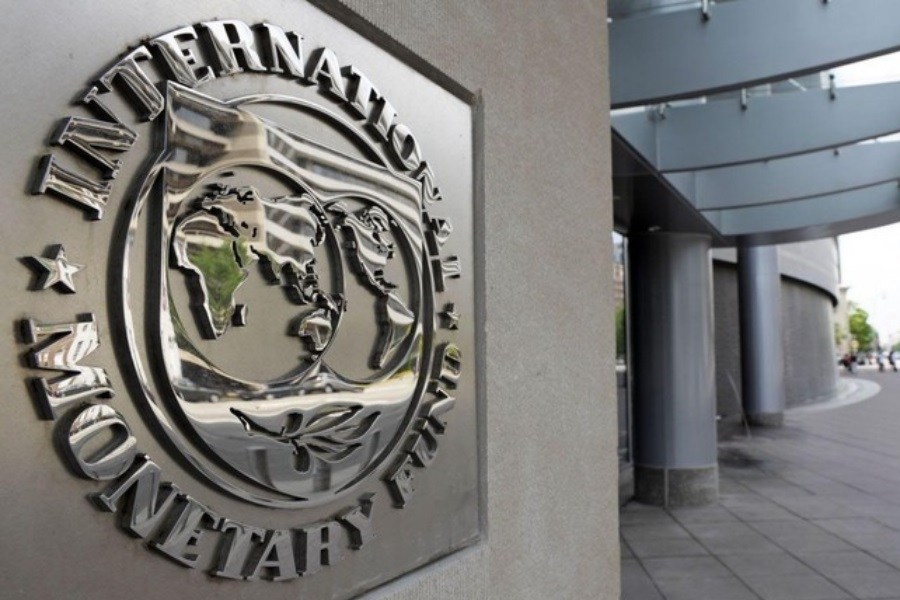
As a first step, Fernández tossed the budget drafted by his predecessor in the garbage. He explained that it was not possible to make economic projections without first solving the debt issue, which would be urgently renegotiated with the International Monetary Fund and with private creditors. This is a monumental problem. Under current conditions, in 2020 Argentina will face maturities of over US$58 billion (R$232 billion), US$36 billion in 2021, and almost US$50 billion in 2022, adding the debt in dollars and pesos.
“The country is willing to pay, but it does not have the resources to do so,” he admitted. “In order to be able to pay, we must first grow.” The Peronist government’s project focuses on getting the IMF to postpone the repayment of the principal and interest on the debt for two years, in order to commit these 24 months to recovering some stability and relaunching an economy that has not grown since 2010.
Fernández proclaimed that in parallel with the debt renegotiation, his priority would be the most underprivileged, 40 percent of the population living in poverty, with 12 percent plunged into destitution; he also warned that those most comfortable should make “a greater contribution” in the form of taxes. “Seriousness in the assessment and responsibility in the commitments made so that the most vulnerable will no longer suffer: under these premises, we will confront the entire negotiation of our debt,” he said.
As a tool to regulate the operation of the economy, with long-term goals and state policies, he announced the creation of an Economic and Social Council. He also declared a “health emergency” to address the public health crisis: under Macri’s mandate, the health budget was cut by 45 percent. He also pledged to direct the resources of public works “with absolute transparency” (there was very little transparency in this area during the term of office of his current vice-president).
A Peronist president is compelled to offer an inaugural gesture of good populism, and Fernández was applauded when he announced an intervention in the Federal Investigation Agency, whose recent history is sinister, and the complete suppression of its reserved resources – this money will be earmarked for the plan against hunger: “No more secret state, no more holds in democracy!”, he exclaimed.
Political espionage has contributed to the discrediting of the Argentinian justice system in recent years, and in this area, the president is facing a minefield. He wants to promote an “integral reform” of the federal justice system in order to put an end to “undue persecution”, “contaminated reports” by the secret services and “media lynchings”. “Never again will there be a Justice that persecutes according to the political winds,” he said – but he will have to do so without conveying the feeling that his goal is limited to saving his vice-president, who has been charged with corruption in numerous lawsuits.
The ex-president has adopted a discreet stance in working with the new vice-president. Alberto Fernández, who recognized Kirchner’s “strategic vision” by giving up his own divisive candidacy and handing over the head of the plaque that was firmly imposed on Mauricio Macri/Miguel Pichetto in the November elections, took the lead.
Alberto Fernández dedicated the final part of his speech to pledging that he would fight to “eradicate violence against women” (surprisingly, he did not mention his electoral commitment to legalize abortion) and end discrimination based on race, gender, sexuality or any other pretext. In the front rows, he applauded his son Estanislao, 24, a designer, administrative employee of an insurance company and a cross-dresser. “Let’s win back the trust for one another,” he said, before recalling that at the end of his term Argentina’s democracy will celebrate its 40th anniversary.
“I want us to be remembered for having managed to reunite the family table, for having been able to overcome the scourge of hunger, for having overcome the perverse logic of an economy that revolves around productive disorganization, greed, and speculation,” he desired.
Alberto Fernández closed his speech with an allusion to his parents and tears in his eyes. After many greetings and hugs, he traveled in his private vehicle to the Rosada House, where he swore in his ministers and waved from the balcony at the crowd that, under scorching heat, filled the Plaza de Mayo.
Source: El País
More: Brazil news in English, every day from The Rio Times.
This article was produced by The Rio Times’ automated newsroom system. How we use AI · Report an error · Editorial responsibility: Matthias Camenzind, Editor-in-Chief