Argentina’s President-elect Proposes Encouraging Consumption, Easing Credit
RIO DE JANEIRO, BRAZIL – After the political twist, an economic turnabout beckons. Argentina’s President-elect Alberto Fernández intends to govern very differently from Mauricio Macri, the current center-right head of government.
And the Central Bank is starting to adjust: on Tuesday, it announced that, as of November 1st, it will promote a reduction in interest rates and put an end to the high yield of Liquidity Bills (Leliq), with which it was trying to contain inflation and the depreciation of the peso.

The new strategy seeks to encourage domestic consumption and credit, but may further accelerate the rise in prices. “Very difficult years will come”, warned the Peronist.
Fernández announced in Tucumán, where Governor Juan Manzur took office, that he would fight hunger, favor education, public health and workers’ rights.
“We need to recover our dignity,” he said. He added that Argentina would be “a country governed by a president and 24 governors” and that it would build “a genuine federal Argentina”. He also anticipated that he would fight for the legalization of abortion.
It was Fernández’s first formal speech after last Sunday’s electoral victory. He stressed that on December 10th he will inherit a country “with many problems beyond debt,” and that the coming years will be “very difficult”.
The trip to Tucumán was a sign of collaboration with Peronist governors, a generally moderate and pragmatic force, with which he intends to offset the leftward pressures of Kirchnerism, represented by his running mate Cristina Fernández de Kirchner, as well as the ideological activism of La Cámpora, an organization founded by Máximo Kirchner, which has Axel Kiciloff, governor-elect of Buenos Aires Province, as one of its leading figures.
Argentina’s recession will soon complete two full years. The country only uses 60 percent of its industrial potential, consumption is constantly decreasing, and the official unemployment rate of 10.5 percent hides a vast quantity of underemployment. Some 35 percent of Argentinians live in poverty.
The new government needs a shock that will revive economic activity. Fernández hopes to achieve this through a path that has remained closed during Mauricio Macri’s term: a reduction in interest rates that will allow companies to have access to affordable bank credit again.
During the campaign, Fernández always had the same answer when asked what resources he would offer to reactivate economic growth: “what we would save on Leliq interest rates”, he said.
Today, these bonds provide banks with an annual return of 68 percent on seven-day operations. They were the tool with which the Macri government, following the instructions of the International Monetary Fund, drained pesos from the market (to stop inflation) and prevented the money held in bank accounts from being diverted to the purchase of dollars, with the resulting depreciation of the peso.
This policy did not work. The interim annual inflation rate stands at 53.5 percent and the peso has suffered massive devaluations, while bank interest rates above 70 percent render credit inaccessible.
With the restriction adopted since Monday, which prohibits the purchase of more than US$200 per month and in practice has closed the foreign exchange market, the official exchange rate has been frozen at close to 60 pesos per dollar (the black market, called “blue”, has different rates), so continually burning currency reserves in a fruitless battle is not necessary.
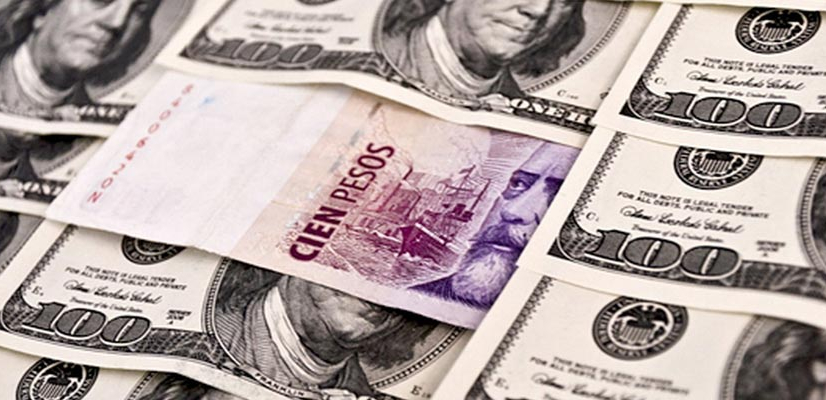
Fernández’s concept is based on real interest rates dropping below inflation and entering negative territory, discouraging the economy and encouraging consumption.
Cristina Fernández de Kirchner used a similar policy in her second term. The theory is that inflation was caused by devaluations, not by issuing pesos, and that the risk of hyperinflation is very low.
In fact, real annual inflation in the last Kirchnerist government did not reach 30 percent, while under Mauricio Macri, despite raising interest rates and halting currency issuance, it almost doubled.
Source: El Pais
More: Latin America news in English, every day from The Rio Times.
In depth
This article was produced by The Rio Times’ automated AI newsroom. Editorial responsibility: Matthias Camenzind, Publisher and Editor-in-Chief. The Rio Times also runs Ask Rio Times, which answers from 100,000+ of our own articles, the daily Latin America Power Map, and prediction-market odds on elections and markets.. How we use AI · Report an error