Bolivia Bars Ex-President Morales from Running for Senate Seat
RIO DE JANEIRO, BRAZIL – Bolivia’s Supreme Electoral Court (TSE) decided not to authorize Evo Morales to run for the Senate in the May 3rd elections. The main argument is that the ex-president does not meet the requirement of having a permanent residence in Cochabamba, the Bolivian region he intended to represent. Morales is in exile in Argentina, while his political rivals on Bolivian soil are pursuing him on multiple charges.
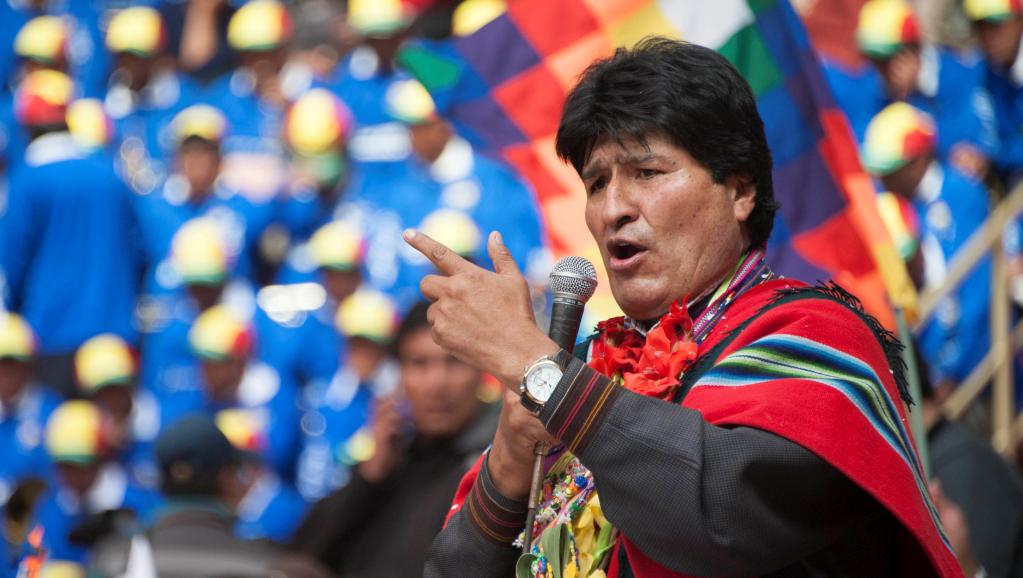
The Movement Towards Socialism (MAS), the ex-president’s party, had already anticipated that the electoral judges would disqualify its leader, and had also announced that it would appeal the sentence before international courts.
The Bolivian electoral authority, meanwhile, will allow Luis Arce to run for president under the MAS banner. According to Salvador Romero, the president of the electoral court, Arce, a former economy minister in Morales’ government, “meets all the requirements” to dispute the election. The TSE announced its decision on Thursday night, amid the Carnival atmosphere, which is a very important festival in Bolivia.
If the MAS has declared itself “in an emergency” anticipating that the ruling would be adverse, the Pro-Santa Cruz Civic Committee, contrary to the socialist leader, had threatened to declare an open-ended strike if the electoral judges authorized him to dispute a seat in the Senate.
The fear of the sectors opposed to MAS was due to the strength that this party showed in the pre-election polls, which pointed to the chance of this leftist party forming a majority in the Senate and controlling it. The likelihood that Morales himself – who resigned in November under pressure from international observers and the military – would end up as president of the Senate seemed intolerable to the opposition groups that helped bring him down.
Bolivian electoral regulations require Congressional candidates to prove that they have lived for at least two years in the constituency for which they are running on the date of the election. This disenfranchises politicians who, despite working in the country’s administrative headquarters, La Paz, seek to represent the population of other departments.
This restriction has led to several political conflicts in the past. In 2015, a deputy was prevented from disputing her home city’s mayor’s office; she subsequently filed an appeal with the United Nations Human Rights Committee and won the right to compensation from the Bolivian state.
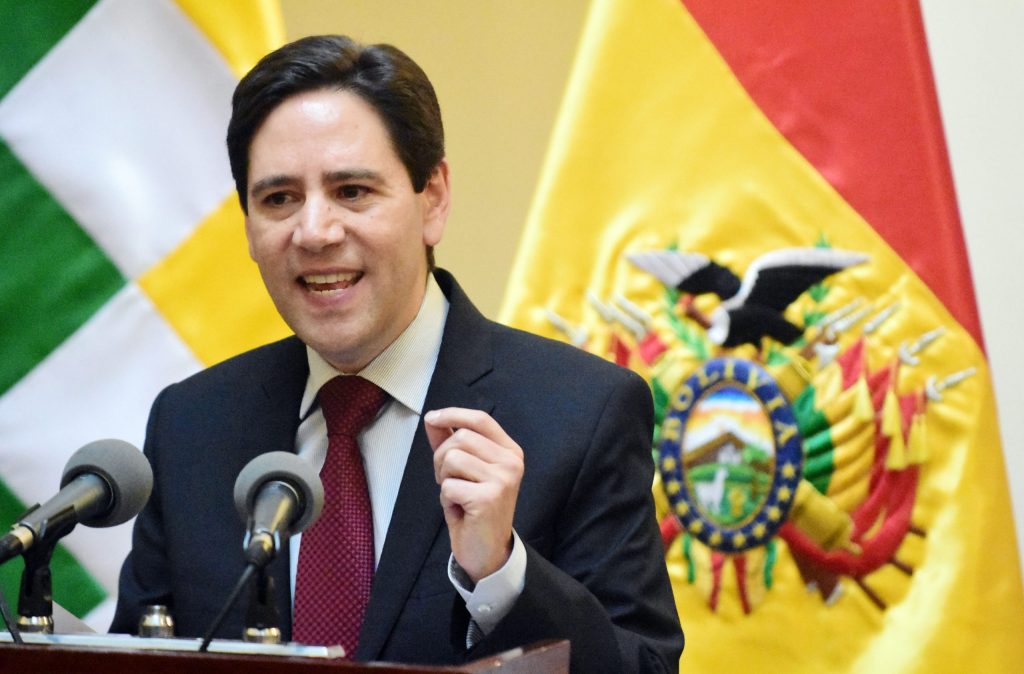
According to the TSE ruling in reference to Morales, the judges were concerned with “defining the concept of ‘permanent residence’ in electoral matters (…). Permanent residence is defined as a combination of three main factors. First, it considers the domicile or habitual residence recorded and declared by the citizen in the electoral register; then, this place must be where the candidate carries out his or her ”life project”. Finally, in its application of the principle of ‘material truth,’ an effective residence in this district is required.
The president of the Electoral Court of Bolivia, Salvador Romero, did not wish to clarify which part of this definition specifically applied to the ex-president and other candidates in a similar situation, among them Diego Pary, former Morales’ chancellor, who intended to become Senator for Potosí, and Mario Cossío, a right-wing politician who was in exile in Paraguay and therefore did not spend the last few years living in Tarija, his native region.
Morales had said he intended to be a senator to protect himself from the attacks he is suffering and which, he said, are instigated by the United States. However, the 2009 Bolivian Constitution removed parliamentary immunity. Morales is being prosecuted for “rebellion and terrorism” for his alleged role in the roadblocks that followed his resignation.
The Prosecutor’s Office is also investigating him for alleged electoral fraud in the October 20th presidential election, which was overturned because of a denunciation by candidate Carlos Mesa. In both cases, the proceedings take place in ordinary courts, regardless of the right of former Bolivian presidents to a special trial. Mesa and other candidates opposed to Morales celebrated the veto of the ex-president’s candidacy.
The first poll of voter intention after the official registration of candidates showed the MAS candidate as the country’s strongest political force, with 31 percent, followed by Mesa, with 17 percent, and interim president Jeanine Áñez, with 16 percent. Former civic leader Luis Fernando Camacho came in fourth place with nine percent. These results have raised concerns in right-wing sectors of Bolivian politics.
Camacho said that under these circumstances, there was a risk that “MAS would return,” so it would be necessary to organize a single front comprising all groups that oppose it. He suggested that he could give up his candidacy, on the condition that others do the same. So far, none of the other parties have formally replied to Camacho and all have confirmed that they will continue in the race.
Source: El País
More: Latin America news in English, every day from The Rio Times.
This article was produced by The Rio Times’ automated newsroom system. How we use AI · Report an error · Editorial responsibility: Matthias Camenzind, Editor-in-Chief