In-depth: Bolivia suffers from more than a century of political and social instability
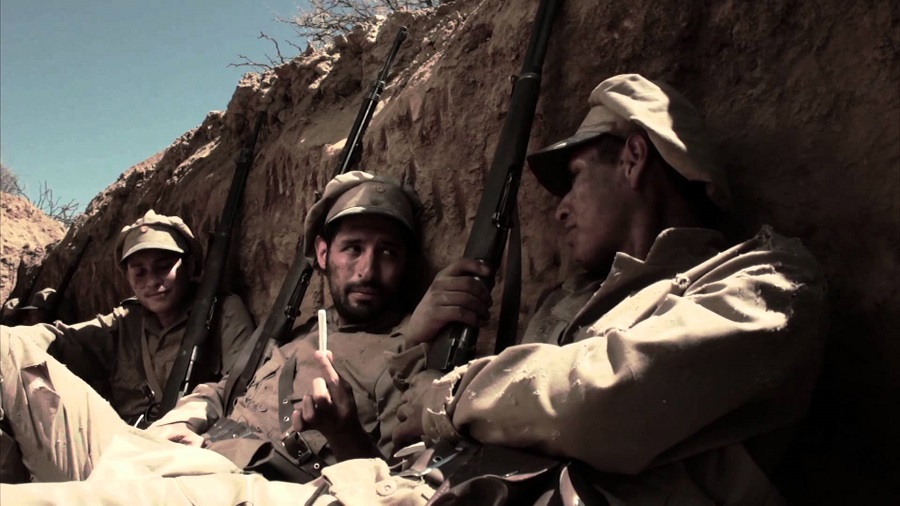
RIO DE JANEIRO, BRAZIL – Bolivia began the 20th century with the defeat of several wars that ended with the loss of much of its territory – and its access to the sea – to Brazil and Chile. Between 1932 and 1935, in the Chaco War, Paraguay stripped Bolivia of another 450,000 square kilometers approximately.
As a result of the continental encirclement, the disastrous outcome of the confrontation with Paraguay and the semi-feudal conditions for the peasants and workers in the tin mines, the country’s main product after the silver of colonial times, the Bolivian people were discontented. Political instability was on the rise.

The convulsive panorama was a breeding ground for the hero of the Chaco War, the military man Germán Busch, to carry out a coup d’état in 1935. Busch became dictator in 1938 and ruled Bolivia until 1952.
After 17 years of authoritarian rule, Bolivia was shaken in 1952 with the outbreak of its National Revolution, led by the Nationalist Revolutionary Movement, a movement with support from the middle class, mining and indigenous-peasant sectors.
The Nationalist Revolutionary Movement led Bolivia into a period of social progress and political modernization after so many lost battles and decades of instability. Under popular pressure, the state – led by four-time president Víctor Paz Estenssoro – introduced universal suffrage and nationalized the tin mines. It also launched an agrarian reform that expropriated semi-feudal landowners, distributed land more fairly among indigenous people and peasants, and promoted rural education.
Read: Coup or fraud: Bolivia, more polarized than ever
In the mid-1960s, Bolivia began a cycle of military dictatorships.
In 1964 another coup d’état put an end to the revolutionary period. Bolivia entered a new stage of military dictatorships, divided into intermittent governments of René Barrientos and Alfredo Ovando.
This new period of dictatorships attracted foreign investment to privatize the mining sector, which boosted the development of the economy, thanks in large part to the high prices of tin in international markets. A new coup d’état occurred in 1971, led by Colonel Hugo Banzer. In his seven years at the helm, Banzer was much more repressive than his predecessors, to the point of suppressing the workers’ movement, stripping it of its civil rights and militarizing the country’s mines.
Banzer resigned in 1978, pressured by a long hunger strike of women miners and by the opposition that accused him of corruption, repression and of having contracted an enormous foreign debt.
He was replaced by a military junta that remained in power for four years before being overthrown in 1982. In that year, Bolivia began a series of democratic governments in the midst of a severe economic crisis. It should be recalled that by 1984, Bolivia was suffering from hyperinflation of over 20,000 % per year, largely due to deep international indebtedness. This crisis led in 1985 to the reelection of former President Victor Paz Estenssoro, who in a matter of months reversed the inflationary rise with drastic neoliberal reforms.
Paz Estenssoro’s free-market reforms brought with them very serious side effects. Unemployment rose from 20 to 30 %, led to the dismissal of 23,000 state miners and wages fell by 40 % in a span of two years.
Read: Bolivia repeats subnational voting in more than 100 polling stations in five regions
By the end of the 1990s, the quality of life of most Bolivians was bordering on misery. Social discontent erupted into violent popular uprisings, such as the one in Cochabamba in 2000 over the privatization of the drinking water supply. The president was once again the ex-dictator Hugo Banzer, in a Bolivia with strikes, roadblocks and clashes between the army and indigenous and peasant communities.
Counting Banzer, who resigned in 2001, there were a total of five presidents in just four years.
The crisis that spurred the indigenous movement and the inauguration of Evo Morales in 2006
Political instability, the resignations of ministers who did not know how to put the economy back on track, taxes on salaries and controversies over the export of natural gas exacerbated the insurrectionary sentiment of the indigenous communities.
By the 2006 elections, the growing indigenous movement had won a victory. Faced with the weariness of two decades of neoliberal political parties, the election – by an absolute majority of 60% – of coca growers’ union leader Evo Morales took effect. He was the first indigenous person to govern the country and did so under the banner of his party, the Movement Towards Socialism (MAS). Morales quickly nationalized the hydrocarbons industry and was fortunate to receive increased revenues from gas exports, due to a rise in the international price.
Evo Morales’ policies halted the expansion of poverty and gave the country a 5% growth in Gross Domestic Product in his first years in office.
Another aspect for which Evo Morales was massively supported during his first two presidential terms was the prominence he gave to the Bolivian indigenous people. The way he did this was by granting them greater civil and labor rights, which were stipulated in the 2009 Constituent Assembly, and by which he renamed the country the Plurinational State of Bolivia.
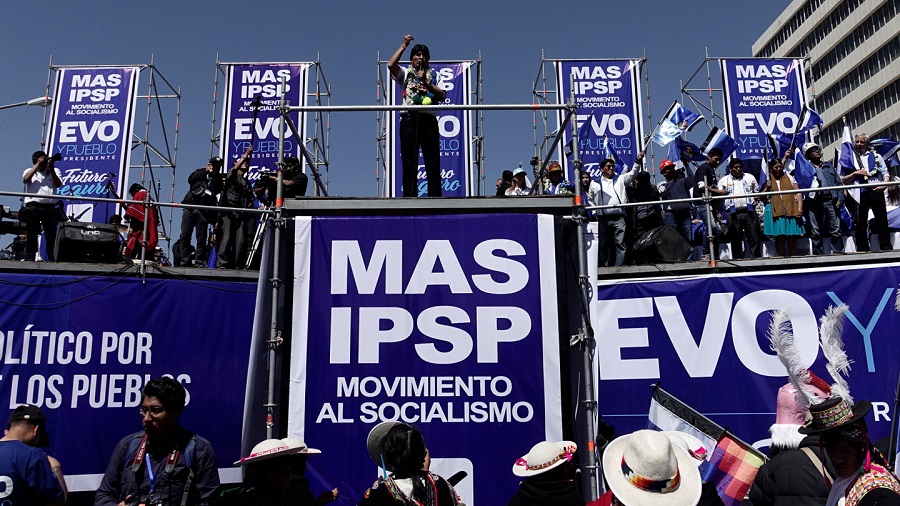
Morales was re-elected by large majorities on three occasions but, after insisting on running for a fourth term and allegations of electoral fraud in the October 2019 general elections, he lost the support of the military and was forced to resign and take refuge in Argentina.
During his exile, Bolivia was led by the interim government of Jeanine Áñez, who throughout the 2020 coronavirus pandemic year, postponed the holding of new electoral elections while the justice system opened proceedings against Evo and several of his officials.
Read: Bolivia arrests its former interim president. Is it a witch hunt?
Finally, the elections were held on October 18, 2020, with Luis Arce, Morales’ former Minister of Economy and MAS candidate, emerging as the winner. Evo was able to return to the country on November 9. Former president Jeanine Áñez was arrested on March 13, accused of “sedition and terrorism” for allegedly plotting a coup d’état to overthrow Evo.
In the meantime, Bolivia remains divided between supporters of Arce, Evo and his political party MAS; and supporters of the opposition who demand the release of Áñez. Thus, the country is heading towards the second round of its gubernatorial elections on April 11.
With information from AFP/EFE/AP/F24
More: Bolivia news in English, every day from The Rio Times.
This article was produced by The Rio Times’ automated newsroom system. How we use AI · Report an error · Editorial responsibility: Matthias Camenzind, Editor-in-Chief