Bolivian Government Repeals Decree Allowing Military to Suppress Protests
RIO DE JANEIRO, BRAZIL – Bolivian president Jeanine Áñez annulled on Thursday the decree that exempted the military from criminal liability in repressing the protests that have rocked the country in recent weeks.
The Armed Forces called for a law to back up their intervention in the demonstrations following the elections on October 20th.

But 14 days after its adoption, the agreements reached in negotiations between the executive and demonstrators led to its repeal. The opposition, which took to the streets of Bolivian cities for several weeks, began by calling for the resignation of the president and eventually agreed to demobilize in exchange for the suspension of the decree.
They also called for economic compensation for the 35 deaths and hundreds of wounded caused by military repression and the clashes between the two sides into which the country was divided after Evo Morales resigned from power.
Under the protection of the decree that has just been overturned, the security forces have fiercely repressed demonstrators. On November 15th, a group of coca growers attempting to travel from Sacaba to Cochabamba, a few kilometers away, were arrested by members of the police and the army.
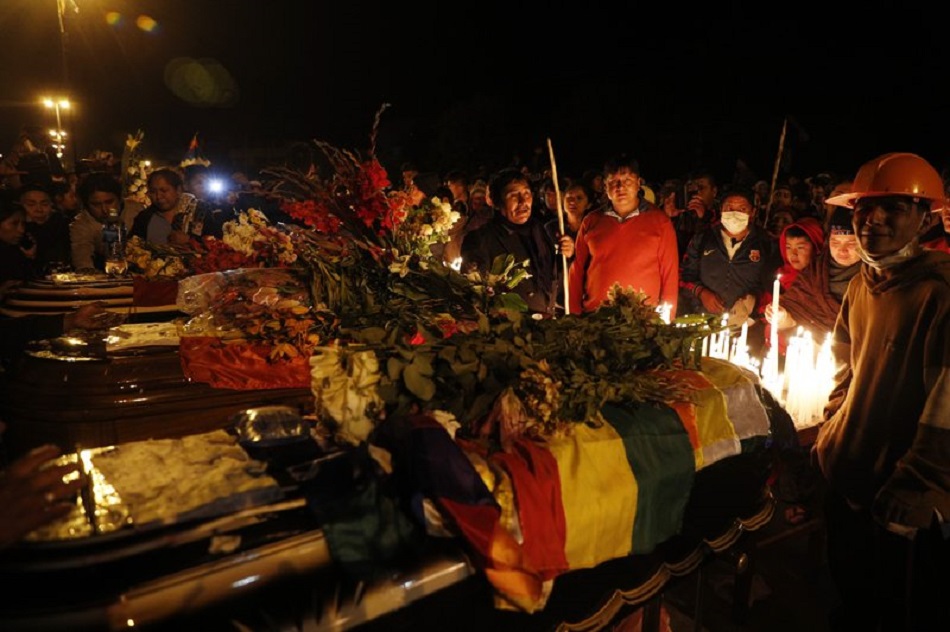
Nine farmers died and dozens were wounded by gunshots. On November 19th, ten protesters were shot dead after knocking down the wall of the Senkata refinery located in El Alto, which they had previously blocked after facing the security forces.
After the incident, Áñez thanked the Armed Forces for preventing an attack on the refinery. “El Alto experienced days of terror when the lives of more than 250,000 city residents were put at risk. The tragedy would have reached devastating dimensions,” the president said. Earlier, the defense minister said the soldiers had not fired “a single shot” at the population.
Interviewed by EL PAÍS, Senkata’s demonstrators deny having used dynamite in the protest, as the government claims. “They want to make us seem like beasts, they say we wanted to blow up the refinery as if we didn’t know it would kill us all,” said one of the participants in the demonstration.
No blocks
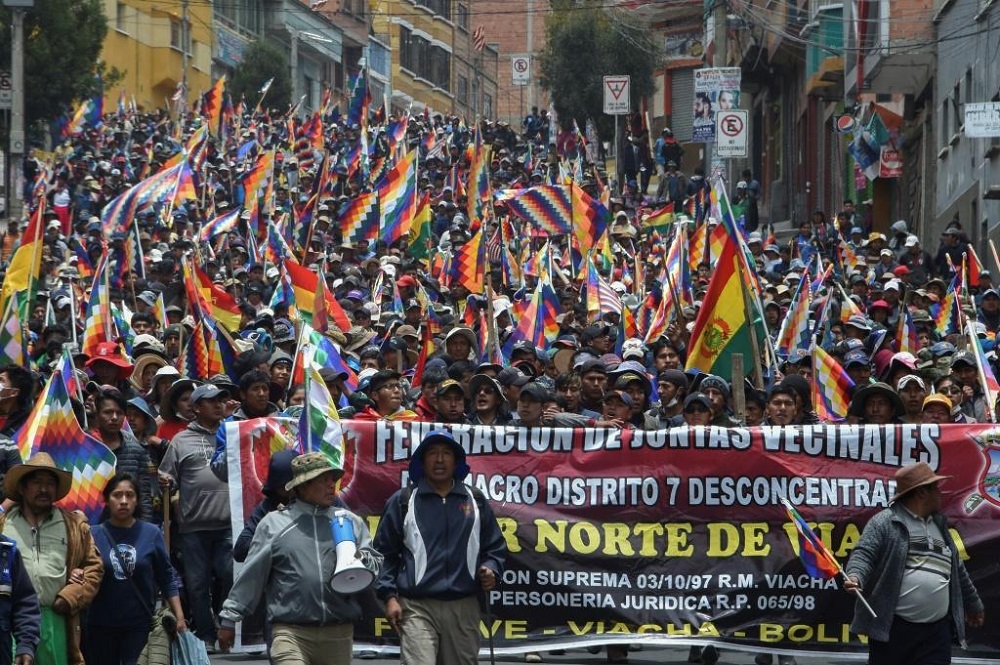
The government’s negotiation with the demonstrators has resulted in the removal of roadblocks from all parts of the territory, almost three weeks after Morales’ forced resignation.
“Thank God and the understanding of all sectors we have achieved peace in the country,” said Áñez. In El Alto, the only city that resisted the new executive, the leaders who asked for the struggle to continue failed to convince the desperate residents to return to work after almost a month of protests and blockades.
Although Evo Morales said that only he could stop the social demonstrations, the protests ended without the ex-president’s intervention. In fact, former vice-president Álvaro García Linera foresaw that there would be an “indigenous uprising” due to the downfall of the Movement to Socialism (MAS).
While its main representatives are under arrest, under judicial investigation and “detained” at the Mexican Embassy in La Paz, the MAS has lost control of many of El Alto’s organizations and several unions. The coca growers of Chapare continue to recognize their union leader, Evo Morales, as president of the country, but they have also ended the blockades due to accumulated fatigue.
In parliament, now without leading MAS representatives, Evo Morales’ party has joined several government initiatives, which has enabled unanimous vote in favor of the law to call elections in April or May next year. Morales has not commented on this.
The government of Áñez is investigating several of Morales’ former ministers and associates who are in exile at the Mexican embassy for terrorism and sedition, so that they will not be allowed to leave the country. Government media outlets linked this behavior to that of the Morales cabinet in 2012 and opposition senator Roger Pinto, held in prison for 15 months at the Brazilian Embassy, from where he ultimately left the country illegally.
Morales himself is being investigated for terrorism and sedition, for allegedly organizing from his asylum in Mexico the roadblocks that have now been suspended. The former president said this week that Interpol had issued a blue notice against him, an order that seeks information about a person’s whereabouts and activities. But the Bolivian prosecutor’s office denied it on Thursday.
Against this backdrop, Government Minister Arturo Murillo threatened on Friday an Argentinian activist committee that traveled to Bolivia to monitor the political situation closely and called the event a “coup d’état”.
“Tread carefully, we are watching you, we are following you,” he said. The committee was also verbally attacked during its flight stopover in Santa Cruz.
On the other hand, the Telesur and Rusia Today broadcasts were removed from the country’s cable TV networks. The government has opened investigations into alleged irregularities by the previous administration in numerous public bodies.
Source: El Pais
More: Latin America news in English, every day from The Rio Times.
This article was produced by The Rio Times’ automated newsroom system. How we use AI · Report an error · Editorial responsibility: Matthias Camenzind, Editor-in-Chief