Catholic Church in Argentina Has Lost 13 Percent of Followers Over Last Decade
RIO DE JANEIRO, BRAZIL – The Second National Survey of Religious Beliefs and Practices in Argentina, conducted by Conicet, showed that over the past decade the Catholic Church has lost 13 percent of its followers, while evangelicals grew slightly and those classed as “non-religious” grew from 11 to 19 percent.

Although they remain the majority, many Argentinians no longer identify with the Catholic religion. In 2008, 76.5 percent of respondents declared themselves to be Catholics, but this year the figure dropped to 62.9 percent.
The survey was conducted by sociologist Fortunaro Mallmaci and was based on 2,421 cases nationwide with a plus-or-minus margin of error of two percent and a level of reliability of 95 percent.
Since the INDEC (National Institute of Statistics) discontinued consultation of religious affiliation in its national censuses in 1960, this study became the main reference for the country’s religious map.
According to the findings of the survey, the Autonomous City of Buenos Aires and Greater Buenos Aires is the region where Catholicism decreased the most (from 69 percent in 2008 to 56 percent in 2019); followed by the Northeast (from 85 percent to 67 percent).
Evangelical Christianity increased mainly in northeastern and northwestern Argentina, which in 2008 represented the area with the highest proportion of Catholics in the country (from 91 to 76 percent), and in Patagonia.
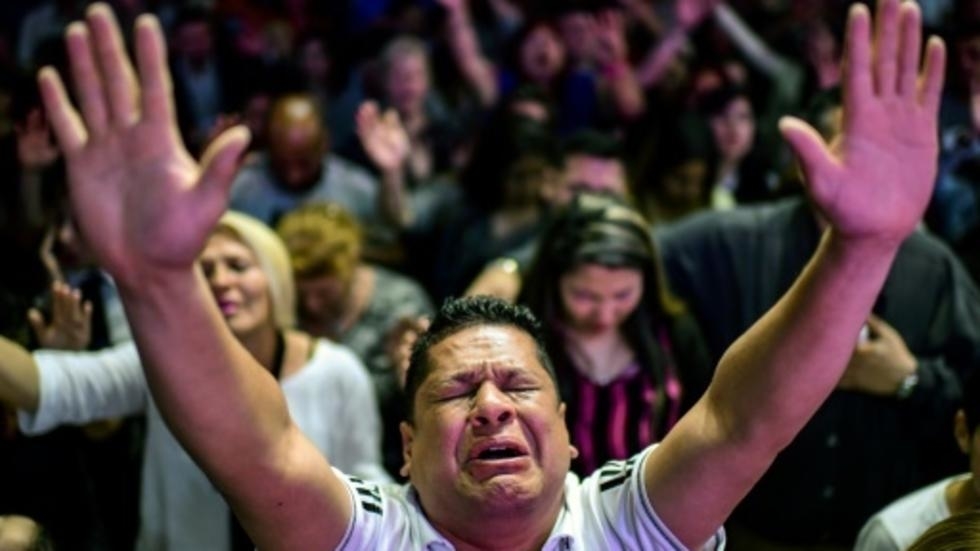
With respect to the 19 percent who claimed to be “without religion”, the majority reside in the City of Buenos Aires, Greater Buenos Aires, and Patagonia.
A curious fact disclosed by this survey relates to weekly worship attendance. Only 30 percent of respondents admitted to relating to God in places such as temples or churches, and there was an increase in religious practice in the private environment: 60 percent of respondents said they relate “to their God on their own.”
With regard to the level of education in relation to the chosen cult, it was found that people with higher education identify more with those “without religion” while those with no education or only elementary school identify with the evangelical faith.
Decreased reliance on institutions
During the Second National Survey of Religious Beliefs and Practices, respondents were asked to rank institutions from 1 to 10, from the highest level of mistrust to full trust. The universities ranked first, with 7.8 points. Two institutions with the same score (5.4) followed: the Catholic Church and the Armed Forces. In fourth place was Pope Francis (5.3). Finally, the media (5.0), the Police (4.2), Congress (4.8), the Judiciary (4.4), evangelical churches (4.0), trade unions (3.4), political parties (2.9) and picket unions (2.6).
A separate point from the survey had to do with the election of Cardinal Jorge Bergoglio as Pope and his impact on the religious life of Argentinians. Along these lines, 82 percent of respondents said their faith remained the same after this event; 8 percent said it increased; 7 percent said it decreased; 2 percent said they did not know.
Source: TN
More: Latin America news in English, every day from The Rio Times.
This article was produced by The Rio Times’ automated newsroom system. How we use AI · Report an error · Editorial responsibility: Matthias Camenzind, Editor-in-Chief