Puerto Rico company turns sargassum into vegan leather and cosmetics
RIO DE JANEIRO, BRAZIL – To have a cleaner and less polluted environment, the U.S. company C-Combinator, with a laboratory in Puerto Rico, converts the sargassum (gulfweed) that reaches the east southeast coast of the island into vegan leather and cosmetics.
Venezuelan Taili Thula is one of the leading researchers working at C-Combinator with the collected sargassum and processing it to create vegan leather for the fashion and textile industry and a moisturizer for the vegan cosmetics industry that seeks to decrease toxic elements in its products.
Read also: Check out our coverage on Puerto Rico
“This is 100% natural, nothing synthetic or chemical. Everything is processed here,” Thula, materials, alginate, and encapsulation scientist at C-Combinator, located in Cataño, on the north coast of Puerto Rico, told Efe.
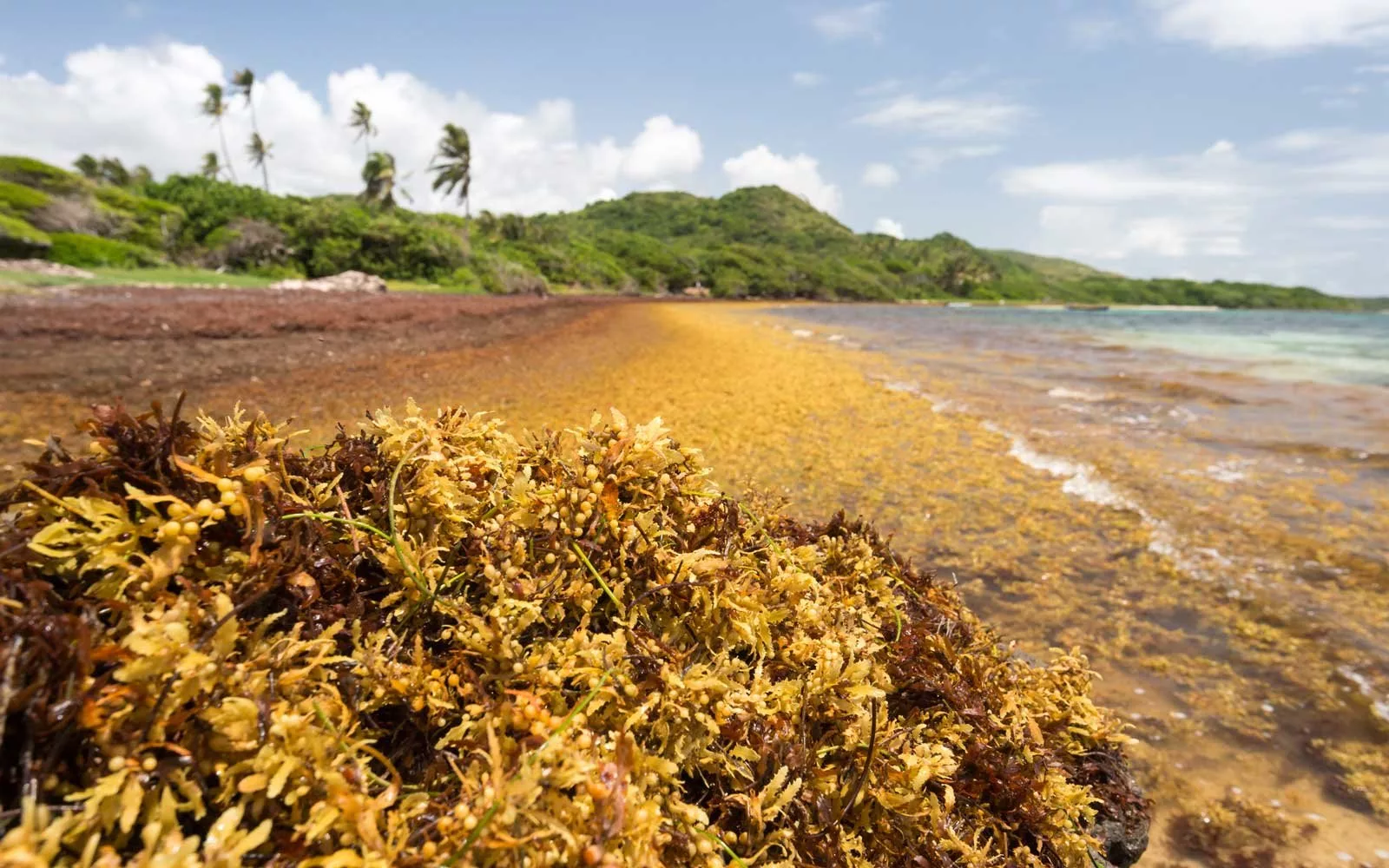
“The sargassum is collected, put to dry, and when it dries, it is brought to the laboratory, where it is processed with all natural ingredients. By processing it, we obtain biopolymers, which apparently is mineral oil, and with that, we use it to make 100% vegan products,” she explained.
Their purpose, said Thula, is “to help the environment; they are fossil-free and eco-friendly.”
As for textiles, nonwovens, and packaging, C-Combinator’s production of sustainable raw materials supports biodegradable and carbon-neutral innovation in the design of clothing, interiors, and packaging.
From leather and down to plastics and foams, the company offers healthy alternatives for the entire planet.
TOXIC-FREE COSMETIC PRODUCTS
On cosmetics, biomedicine, and skin engineering, the bioactive extracts collected by researchers at C-Combinator generate a range of opportunities for beauty, health, and personal care products that want to be toxic-free, petrochemical-free, and gentler on the body and the environment.
“We are testing different formulations and selling them as emulsifiers for cosmetic houses to use in their recipes and products,” Thula said.
“It’s non-irritating. It feels moisturizing to the skin, leaves no residue, and is not greasy,” he added, mentioning that he has worked on formulas to make shampoos, hair conditioners, sunscreens, and facial creams.
According to C-Combinator’s website, “our products help reduce and replace emissions from fossil fuels and traditional plastics while minimizing waste.”
ALGAE, THE MOST REGENERATIVE PLANT RESOURCE
Algae, the company adds, is the world’s most regenerative and adaptable natural plant resource.
“Our patented process converts it into materials that restore soils and oceans, eliminate microplastic waste and contribute to carbon neutrality,” it highlights.
C-Combinator’s vision is to adapt this new sargassum concept to favor the blue economy, which has not been adopted by many governments and institutions in the Caribbean. Among its objectives is to use the oceans and their resources as a form of sustainable economic development.
“This is the only company dedicated to this in Puerto Rico. Other companies use other products or other types of seaweed, but not with sargassum to work with the problem,” Thula said.
The sargassum, which arrives in Puerto Rico from March to September from Brazil and Africa, is moved by ocean currents until it reaches different areas of the island, mostly Fajardo (east) and Yabucoa (southeast).
SARGASSUM IS RICH IN PROTEIN
At a biochemical level, sargassum is rich in proteins and has many amino acids that are good for the nutritional part of animals and humans.
“By creating value-added products from sargassum, we are helping communities to deal with the crisis that this alga represents,” Puerto Rican Jorge Vega Matos, the company’s vice-president of Public Affairs, added to Efe.
Vega Matos emphasized that by collecting the sargassum, “we can reduce the damage that comes from it accumulating on the beach and rotting”.
It could also reduce the impact on the tourism sector in Puerto Rico and Mexico (around 14% of Mexico’s tourism revenue comes from the Yucatan Peninsula) and eventually restore ecosystems with products that reduce the need for fertilizers and plastics that end up in the sea.
More: Brazil news in English, every day from The Rio Times.
Editorial responsibility: Matthias Camenzind, Editor-in-Chief · Editorial standards · Report an error