RIO DE JANEIRO, BRAZIL – Chilean President Sebastián Piñera announced that he will send Congress a bill with changes to the pension system, which will benefit more than one million citizens, particularly women, the middle class and the severely dependent elderly.
The announcement was made on Wednesday, January 15th, in a speech on national radio and television networks.

According to Piñera, the reform increases employers’ contributions by six percent, and the resources will be administered by independent public institutions.
The reform is based on three pillars. The first is the Solidarity Pillar, financed by the state. The second, the Individual Savings Pillar, is funded by both workers and employers. And the third, the Collective and Solidarity Savings Pillar, is funded by employers, with an initial contribution from the State.
Piñera said that since December, a change in the Solidarity Pillar already includes 1.6 million retirees, who have seen their pensions increased by 50 percent.
Should the new reform be approved, and in addition to the change made since December of last year, over two million retirees will benefit – representing 85 percent of the total Chilean retirees.
In the new proposal, the increases will be an additional and gradual three percent to be borne by employers, which is added to the current 10 percent contribution and complements pensions. According to Piñera, this represents a 30 percent increase in pensions.
Secondly, the Collective Savings Plan will include an additional three percent, also to be paid by employers, with an initial contribution from the State.

The immediate benefits, according to the Chilean president, will be 56,000 Chilean pesos for men, which means some US$75 (R$305) per month to more than 500,000 retirees, with a 20 percent increase.
For women, it would be 70,000 Chilean pesos (US$90 or R$365) monthly, benefiting over 350,000 retirees, with a 32 percent increase.
The severely dependent elderly, who are more numerous every day, will also see an additional increase to their pensions, “because they have to face higher expenses,” Piñera said.
“Before, old age was a sort of an antechamber to the end of life and many awaited it with fear. Today it represents a new stage in our lives that we must look at with hope and that we can continue to develop our capabilities and, above all, reap what we sow during our lives,” the president said during the speech.
In his opinion, the reform will grant citizens two fundamental guarantees: that no pensioner will live below the poverty line, which is 168,000 Chilean pesos (about US$220 or R$900); and that those who have contributed for more than 30 years will always receive at least 301,000 pesos (about US$390 or R$1,600), which is the current minimum wage.
The new reform will also open the administration of pension funds (AFP’s) to new players, such as non-profit companies, financial cooperatives, and others, in order to strengthen the sector’s competitiveness, improve the quality of services, reduce commissions charged and allow affiliates to participate in the creation of new administrators, in addition to the possibility of participating more actively in affiliate committees.
Piñera said the change will have a high cost for the state, but did not disclose the figures. “Both reforms have a very significant cost and will require a great contribution and tremendous effort from the State; we have to face public finances responsibly”.
He added that, in addition to other initiatives that he has been approving, the reforms are crucial to bringing greater peace and dignity to Chileans.
Along these lines, he mentioned the bill to harden penalties for crimes committed by people with concealed faces and which allows Armed Forces personnel to be deployed to safeguard basic service infrastructure without the need for a state of emergency.
Piñera also recalled the health reform, which aims to increase access to care and examinations, lower medicine prices and reduce waiting times for consultations.
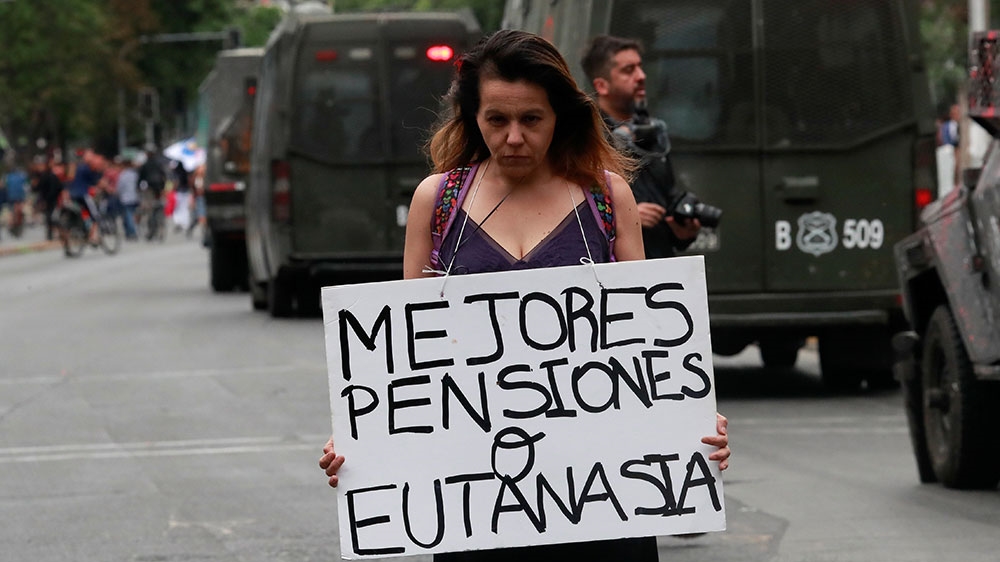
Since October last year, Chile has been taken by protests against inequalities, low pensions and the high cost of health care in the country.
Piñera said he has been humbly and attentively listening to the demands of the people and the opposition.
More: Latin America news in English, every day from The Rio Times.
This article was produced by The Rio Times’ automated newsroom system. How we use AI · Report an error · Editorial responsibility: Matthias Camenzind, Editor-in-Chief