RIO DE JANEIRO, BRAZIL – Cuba’s government has announced new measures to expand the sale in foreign currency of products in great demand. In future, private cars will only be available in US dollars, euros, and other hard currencies. Simultaneously, the range of products in new stores is to be significantly improved. With the partial dollarization of the retail trade, the country is trying to acquire urgently needed foreign currency.

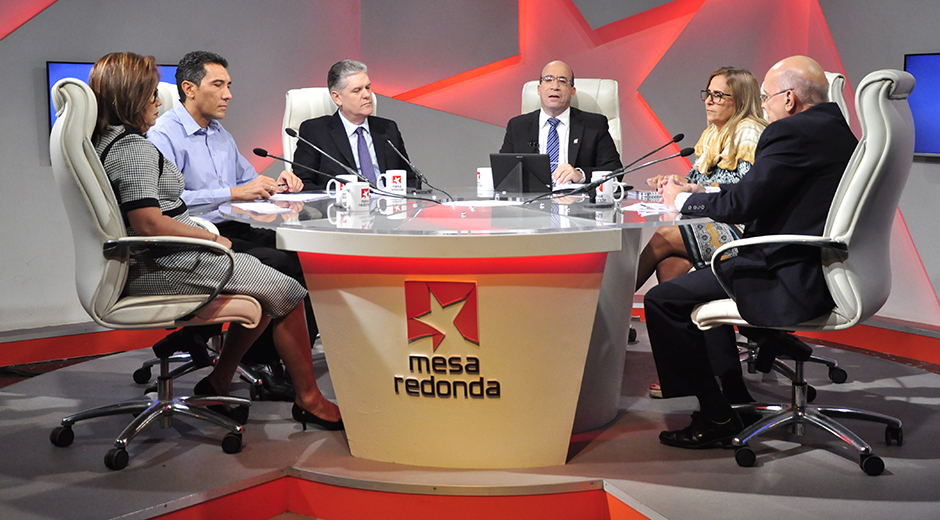
Once again the “Mesa Redonda” (“Round Table”) invited high-ranking government representatives to a special broadcast. In addition to the Minister of Economy Alejandro Gil, the Vice President of the state retail chain CIMEX, Iset Maritza Vázquez, also attended to present the plans. Since October, 80 new foreign currency stores have opened in Cuba, where mainly household appliances and car parts can be purchased in foreign currency.
The most popular products so far have been freezers, air conditioners, and electric scooters. Now laptops, cars, catering and DIY supplies such as paints and varnishes, and computers are to be added. State-owned industrial companies will soon be allowed to sell some of their products in foreign currency, which should recapitalize the companies.
While many products privately imported from third countries will now be available at competitive prices in state stores, there will be little change in the pricing policy for motor vehicles: These are to be sold at only ten percent less than before, but will still cost up to 400 percent more than abroad. However, a new option has been added: specific models can now also be imported on demand. As in the past, 85 percent of revenues will flow into a fund that will be used to extend public transport. The private purchase of new cars was first introduced in Cuba in 2014. The new regulations are to come into force on February 24th.
With the continued dollarization of the retail trade, the state intends to improve supply while attracting urgently needed foreign currency, which currently often ends up abroad: What is not available in Cuba is often brought into the country through special buyers in Panama and elsewhere. The money then remains abroad.
This is a situation that the island can no longer afford. Since the repeated tightening of US sanctions last year and the ongoing crisis in Venezuela, its most important trading partner, Cuba’s economy is in crisis. Contracts with suppliers have had to be deferred on several occasions and a large number of imports have been canceled. The supply shortage situation remains strained.
Until now, most imported products have been sold in convertible pesos (CUC), which replaced the temporarily introduced US dollar in 2004. However, their money supply exceeds current purchasing power. The official exchange rate of 1:1 to the US dollar is also unrealistic. While the stores absorb CUC, the state is forced to buy its products with “hard currency” abroad. As a result, the state is effectively losing out on imports that are not sold in foreign currency.
In the course of the upcoming currency reform, Cuba’s government intends to gradually eliminate the convertible peso so that only the Cuban peso will circulate as the only national currency. By contrast, stores selling products in currencies such as the US dollar and the euro only accept debit cards linked to a relevant account in foreign currency. The ten percent punitive tax on the use of the US dollar will continue to apply, but not to other foreign currencies such as the euro or Mexican peso, which can also be used for payment in the new stores.
More: Latin America news in English, every day from The Rio Times.
This article was produced by The Rio Times’ automated newsroom system. How we use AI · Report an error · Editorial responsibility: Matthias Camenzind, Editor-in-Chief
Cuba and the United States
- What Is Going On Between Cuba and the United States?
- What Is Going On Between Cuba and the United States?
- Can Americans Still Travel to Cuba in 2026?
- Who Runs Cuba in 2026? Raúl Castro and the US Murder Charge