RIO DE JANEIRO, BRAZIL – According to several reliable reports, the government of the Netherlands has deployed soldiers on the Dutch Antilles island of Curaçao. As a result of the coronavirus pandemic, the island has experienced severe social upheavals.
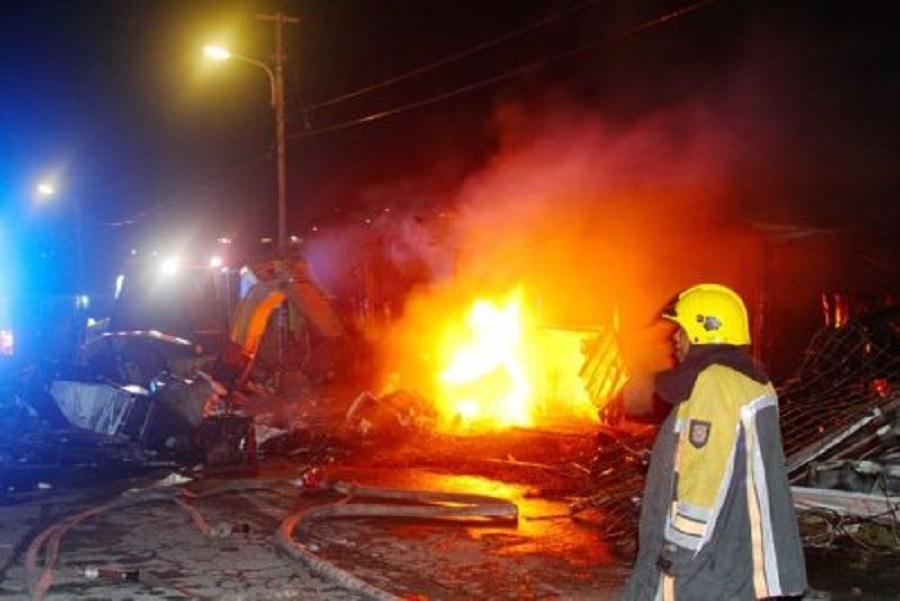
Last week there were two consecutive days of social protests, which escalated into an uprising. In particular, youths and waste collectors protested against announced social cuts. Protesters set up barricades, started fires, and raided the government palace.

Curaçao, located 75 kilometers off the Venezuelan coast and part of the Kingdom of the Netherlands with local autonomy, is suffering heavily from the impact of the coronavirus pandemic and also from the economic strain caused by the financial and institutional crisis in neighboring Venezuela.
The Caribbean island has been severely affected by its collapse in oil export revenues. In addition, tourism, the most significant economic sector, has been adversely affected. To add to the problem, several thousand refugees have fled Venezuela to Curaçao. Currently, 80,000 people living in Curaçao, about half its population, rely on food stamps.
Drastic cuts in Curaçao’s government spending were planned in order to secure more funds from the central government in The Hague. Politicians, civil servants, and employees of state-owned companies will be forced to accept reduced salaries. In the case of waste collectors, the cuts would amount to 12.5 percent in fringe benefits such as weekend bonuses.
Hundreds of people opposed these plans. The largest union on the island, the Algemene Bond van Overheidspersoneel (General Union of Government Employees, ABVO), called for discussions of the federal measures during working hours.
The protest is also targeted at the Netherlands, which is imposing strict terms and conditions on loans to support the island’s rapidly contracting economy and tackle its soaring unemployment.
On Wednesday last week, groups of protesting youths met at Post 5, where a historic uprising by sections of the Shell oil company’s workforce began back in 1969. The youths were joined by hundreds of refuse collectors.
The protesters demanded the resignation of Eugene Rhuggenaath, the Prime Minister of Curaçao, who belongs to the liberal Partij voor Geherstructureerde Antillen (Party for the Restructured Antilles, PAR).
Employees of the local oil refinery and electricity companies joined the demonstrators. The protests turned violent, with stores looted and some set on fire. A parked police car was torched.
The authorities imposed a night-time curfew and the police used tear gas to disperse the crowds. Dozens of demonstrators were arrested. The army was mobilized to protect government buildings.
The representative for Curaçao in The Hague expressed his agreement with the deployment of Dutch soldiers to restore order but warned the Dutch government, which is demanding social cuts, to show greater empathy. He said that there were unions, employment contracts, and general labor agreements that could not simply be violated. On Friday, The Hague was to decide on further aid for Curaçao.
The former colony of Curaçao ceased to be included in the United Nations list of non-independent territories since 1951. Since then, the Lesser Antilles island has enjoyed far-reaching powers of self-government. However, military and defense matters have been left to the Netherlands to this day.
Between 1954 and 2010, Curaçao belonged to the Netherlands Antilles, along with Aruba, Bonaire, and other Lesser Antilles islands, which at that time formed a member state of the Kingdom of the Netherlands.
After negotiations in the 2000s, the constituent state of the Dutch Antilles was dissolved and Curaçao was granted its own comprehensive autonomy statute within the Kingdom of the Netherlands in 2010. The island is an EU external territory and is eligible for European Union funding.
More: Latin America news in English, every day from The Rio Times.
This article was produced by The Rio Times’ automated newsroom system. How we use AI · Report an error · Editorial responsibility: Matthias Camenzind, Editor-in-Chief