Global Crisis Drives Several Latin American Central Banks into Uncharted Territory
RIO DE JANEIRO, BRAZIL – Two letters – QE, short for Quantitative Easing – that saved the United States and Europe from total stagnation in the great financial crisis of a decade ago, are starting to be uttered in recent days in some Latin American capitals.

The advancing economic crisis that is expected to be particularly intense in emerging countries is forcing several of the region’s foreign exchange issuers to rehearse a formula unprecedented in these latitudes: the injection of liquidity, through public or private debt purchases to ensure the efficient operation of markets and reduce financing costs for governments and companies.
Among the major countries in the region, Colombia and Chile were the first to break the ice – the former buying public and private bonds, and the latter only buying private securities -, opening an uncharted path in the region.
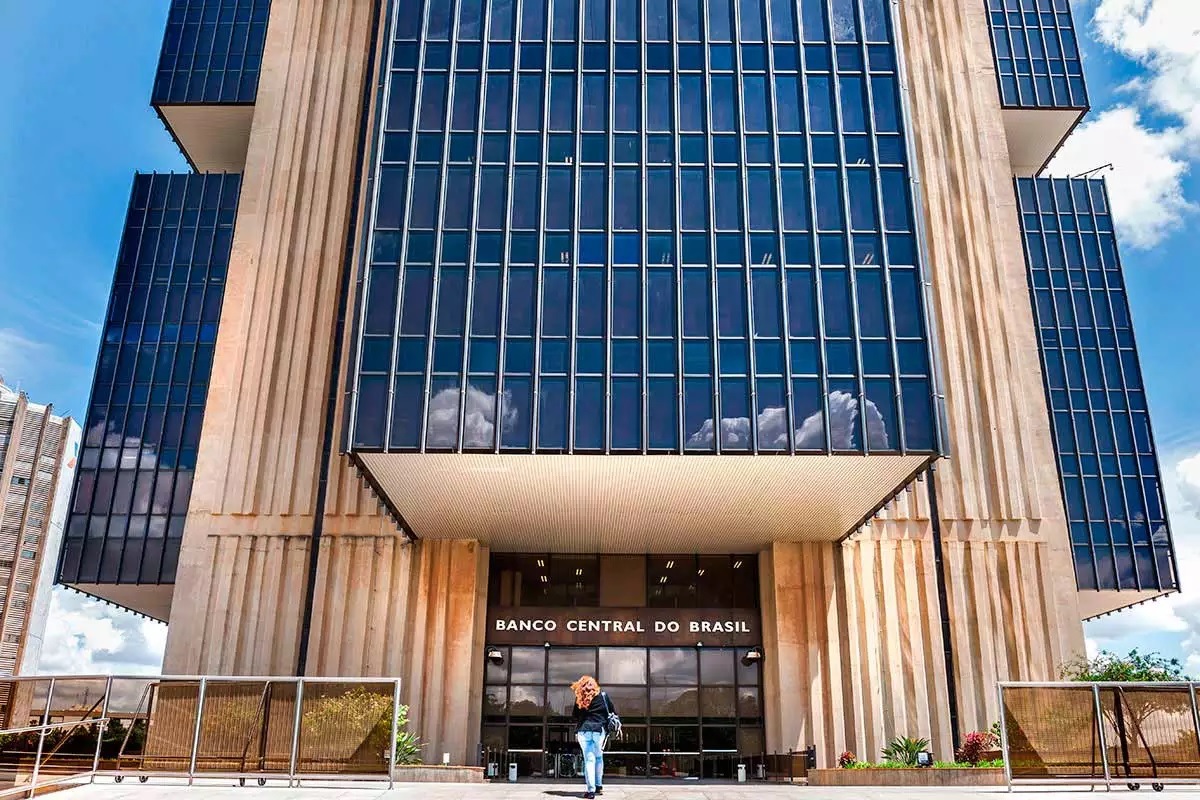
Nothing suggests they will be the only ones: the Brazilian Central Bank (BC) has already been granted approval by Congress to follow the same path. The PEC (Proposed Constitutional Amendment) of the so-called “war budget” authorized the Central Bank to buy and sell National Treasury bonds, as well as debt securities of private companies (such as debentures) in the secondary market, which are already part of fund and brokerage portfolios, for instance.
Until then, the Central Bank could not acquire private securities. The goal is to ensure liquidity to the capital market, in the quantitative easing (QE) policy model, which has been used for years in other countries. But the measure may leave the bank exposed to high-risk default securities.
Latin America sets off from a difficult position to face the crisis, with a much narrower fiscal margin than the wealthy bloc and with markets on the prowl. Without the protection of a strong currency (like the US, which, with the dollar bulwark, could issue virtually all its debt if it wanted to), the umbrella of a reliable central bank (like Spain and Italy) or the backing of national creditors (Japan), the region’s countries are struggling to launch ambitious programs to contain the damage with public money when the crucial stimulus stage of reactivation is not even here.
Mexico’s Finance Minister Arturo Herrera recently addressed the issue head-on: “Mexico cannot have a fiscal stimulus program the scale of Germany or Canada.”
In one way or another, all central banks in the region have taken a step forward. Some, like Mexico, with a severe cut in interest rates, still have room to continue to drop. But others, like the Colombian, the Chilean, and the Costa Rican, have taken a reminiscent path, albeit with a few variations, of what the advanced economies experienced a decade ago.
“It’s a shock of unprecedented magnitude, and the power of economic policy, both fiscal and conventional monetary, is not enough to mitigate the risks,” notes Martín Castellano, head of analysis for Latin America at the Institute of International Studies (IIF, the world’s global association of the finance industry).
“The pandemic has brought with it a new reality that requires extraordinary measures, and these are just that,” says Alberto Ramos, chief economist of Goldman Sachs for the subcontinent. Not only is Latin America gradually embarking on the train of quantitative easing programs, or QE: other emerging countries, like Turkey, South Africa, and Poland, have also bet on this emergency path against the paralysis caused by the health crisis.
Ramos adds that the moves in Colombia, Chile, and Costa Rica are primarily aimed at ensuring that some segments of the private debt markets “do not freeze or stall.”
“But of course, as you inject liquidity, you also benefit the public sector with its financing needs, shifting to the public debt market investors who were in the private bond market. Although it’s not explicitly the primary objective, it’s an important side effect,” adds the US investment bank economist.
Concurrently, some central banks in the region – some of them involved in QE, like the Chileans – knocked on the doors of the International Monetary Fund (IMF) to secure the required liquidity in these strange times when cash is once again king.
The debt purchases made so far by the region’s central banks are small, but the signal they send to this ethereal body called the market is significant. “By injecting liquidity, they stabilize public and private sector financing rates,” points out Esteban Pérez, a technician with the Economic Commission for Latin America and the Caribbean (ECLAC) and author of a recent study on potential ways to reactivate the region’s economy.
Unlike the US, Europe, and Japan, among others, the region reached this point before exhausting all monetary policy tools at its disposal and with interest rates still well above zero in all countries in the region. But the need for extraordinary measures of this kind, Pérez points out, is directly linked to the massive capital flight from Latin American financial markets to safer markets in the bloc of wealthy countries.
Will it work? “It is possible, but it depends on the expectation of demand: quantitative expansion policies only work if there is an expectation of demand,” stresses the technician at ECLAC, the United Nations’ development arm for the region. “It’s the fastest way to provide liquidity and support economic activity. It’s a valid option, and there’s a margin for inflation, with all the caution that the region’s inflationary past requires,” adds Castellano.
This flank today seems to worry little: these countries also have, in the words of the IIF technician, “more feasible” inflation targets, a very low general price level, and, in most of them, very restrictive legal frameworks for the purchase of public debt. If there was a time to take the step, it is this.
Source: El País
More: Brazil news in English, every day from The Rio Times.
This article was produced by The Rio Times’ automated newsroom system. How we use AI · Report an error · Editorial responsibility: Matthias Camenzind, Editor-in-Chief