IBOV 166,783.57 ▼ 0.09% IPSA 11,148.13 ▲ 0.96% IPC MEX 64,152.21 ▼ 0.38% MERVAL 2,947,349 ▼ 1.77% COLCAP 2,452.46 — 0.00% BVL PERÚ 58,334.31 ▲ 0.12% USD/BRL5.21▲ 0.10% USD/MXN17.05▲ 0.08% USD/CLP915.68▲ 0.07% USD/COP3,132▲ 0.06% USD/PEN3.37▲ 0.02% USD/ARS1,488▼ 0.02% USD/UYU40.33▲ 0.01% USD/PYG5,997▲ 0.22% USD/BOB11.50▼ 0.35% USD/DOP58.55▲ 0.17% USD/CRC446.12— 0.00% USD/GTQ7.62▼ 0.05% USD/HNL26.79— 0.00% USD/NIO36.62▲ 0.81% USD/VES771.38▼ 0.03% USD/PAB1.00— 0.00% USD/BZD2.00— 0.00% USD/JMD 157.28 — 0.00% USD/TTD6.73▲ 0.41% EUR/BRL6.01▼ 0.52% BRENT 88.88 ▼ 0.03% WTI 83.11 ▼ 0.11% IRON ORE 161.91 — — COPPER 6.61 ▲ 0.03% GOLD 4,461 ▲ 1.78% SILVER 65.59 ▲ 1.26% SOY 1,184 ▲ 3.20% CORN 480.50 ▲ 10.02% WHEAT 655.00 ▲ 3.93% COFFEE 317.25 ▼ 5.51% SUGAR 16.43 ▼ 1.79% ORANGE JUICE 138.55 ▼ 0.47% COTTON 85.03 ▲ 2.33% COCOA 5,719 ▲ 3.18% BEEF 223.60 ▼ 3.93% CATTLE 339.10 ▼ 3.16% LITHIUM 75.20 ▲ 1.47% PETR4 41.64 ▼ 0.05% VALE3 72.97 ▲ 0.83% ITUB4 38.60 ▼ 1.03% BBDC4 16.85 ▲ 0.36% ABEV3 14.89 ▼ 0.80% BBAS3 19.37 ▲ 0.47% B3SA3 14.26 ▼ 0.21% WEGE3 47.59 ▲ 0.49% PRIO3 59.14 ▼ 0.19% SUZB3 41.33 ▲ 2.35% RENT3 34.68 ▼ 0.09% AZZA3 15.89 ▼ 2.63% CSAN3 3.22 ▼ 1.83% RAIZ4 0.25 — 0.00% PCAR3 2.75 ▼ 0.36% GMAT3 3.65 ▼ 1.08% PSSA3 48.13 ▼ 0.54% CVCB3 1.33 ▼ 2.92% POSI3 3.36 ▲ 2.44% SLCE3 13.34 ▲ 0.30% NATU3 8.14 ▼ 0.73% IBOV 166,783.57 ▼ 0.09% IPSA 11,148.13 ▲ 0.96% IPC MEX 64,152.21 ▼ 0.38% MERVAL 2,947,349 ▼ 1.77% COLCAP 2,452.46 — 0.00% BVL PERÚ 58,334.31 ▲ 0.12% USD/BRL 5.16 ▲ 0.01% USD/MXN 17.06 ▼ 0.24% USD/CLP 913.98 ▲ 0.04% USD/COP 3,140 ▲ 0.03% USD/PEN 3.36 ▼ 0.66% USD/ARS 1,493 ▲ 0.10% USD/UYU 40.27 ▲ 1.24% USD/PYG 5,939 ▲ 1.68% USD/BOB 11.64 ▼ 0.76% USD/DOP 58.34 ▲ 1.25% USD/CRC 445.92 ▲ 0.89% USD/GTQ 7.62 ▲ 2.21% USD/HNL 26.79 ▲ 1.57% USD/NIO 36.62 ▲ 0.69% USD/VES 762.44 ▼ 0.13% USD/PAB 1.00 — 0.00% USD/BZD 2.00 — 0.00% USD/JMD 157.28 — 0.00% USD/TTD 6.70 ▲ 0.61% EUR/BRL 5.95 ▲ 1.01% BRENT 88.88 ▼ 0.03% WTI 83.11 ▼ 0.11% IRON ORE 161.91 — — COPPER 6.61 ▲ 0.03% GOLD 4,461 ▲ 1.78% SILVER 65.59 ▲ 1.26% SOY 1,184 ▲ 3.20% CORN 480.50 ▲ 10.02% WHEAT 655.00 ▲ 3.93% COFFEE 317.25 ▼ 5.51% SUGAR 16.43 ▼ 1.79% ORANGE JUICE 138.55 ▼ 0.47% COTTON 85.03 ▲ 2.33% COCOA 5,719 ▲ 3.18% BEEF 223.60 ▼ 3.93% CATTLE 339.10 ▼ 3.16% LITHIUM 75.20 ▲ 1.47% PETR4 41.64 ▼ 0.05% VALE3 72.97 ▲ 0.83% ITUB4 38.60 ▼ 1.03% BBDC4 16.85 ▲ 0.36% ABEV3 14.89 ▼ 0.80% BBAS3 19.37 ▲ 0.47% B3SA3 14.26 ▼ 0.21% WEGE3 47.59 ▲ 0.49% PRIO3 59.14 ▼ 0.19% SUZB3 41.33 ▲ 2.35% RENT3 34.68 ▼ 0.09% AZZA3 15.89 ▼ 2.63% CSAN3 3.22 ▼ 1.83% RAIZ4 0.25 — 0.00% PCAR3 2.75 ▼ 0.36% GMAT3 3.65 ▼ 1.08% PSSA3 48.13 ▼ 0.54% CVCB3 1.33 ▼ 2.92% POSI3 3.36 ▲ 2.44% SLCE3 13.34 ▲ 0.30% NATU3 8.14 ▼ 0.73%
since 2009
Tuesday, August 18, 2026

In the Sights of Bolivia’s New Leaders: Community Radio Stations

By · December 26, 2019 · 3 min read

Daily Brief

The morning intel from across Latin America. Free.

By subscribing you agree to our privacy policy. We never share your email.

RIO DE JANEIRO, BRAZIL – In the course of the changeover, the four state media institutions (ABI news agency, Cambio daily newspaper, Radio Red Patria Nuevo and Bolivia TV) were immediately taken over, and now the community radios are threatened with closure.

The indigenous radio stations “Red de Radios de los Pueblos Originarios” (“Original Peoples Radio Network”) have been the target of attacks since the opposition’s protests against President Evo Morales began following the October 20th election.

Since taking power, the interim government in Bolivia has continued to intensify censorship. (Photo: Internet Reproduction)
One-stop reference
Company Intelligence
Every listed company in Latin America — financials, ownership and structure for 1,450+ companies across 26 exchanges, in one place.
Browse the directory →
RT
Ask Rio Times
17 years of Latin America reporting, on demand.
Open the full Ask Rio Times →

This has increased since the changeover, and some radios have been completely destroyed by police, soldiers, and supporters of the new government, and employees have been threatened. Since then, none of the radios have broadcast any more news.

Some are only allowed to play music, others have completely stopped operating, reports Rodolfo Machaca, a spokesman for the peasant movement. They are currently in the process of reviewing the shutdowns, destruction, and looting and securing the equipment that is still intact.

In Santa Cruz, the transmitter of the farmers’ union was looted, as was intercultural radio. In La Paz, the radio station of the small farmers’ association was destroyed, and an attempt was made to take over the women’s broadcaster Bartolina Sisa.

The coca farmer’s station was burned down in Cochabamba, and similar attacks occurred in other departments, Machaca said, who met President Morales in Argentina last week.

Now operators fear a general ban on existing municipal radio stations. Roxana Lizárraga, appointed by interim President Jeanine Añez as Minister of Information, presented last week a draft for a “Decree to regain freedom of expression in Bolivia”, which was drawn up together with representatives of private media.

One of the seven articles states that it is now a matter of “reassigning the radio stations to indigenous peoples in order to expand the right of access to information”.

The Secretary-General of the Bolivian Workers’ Center, Juan Carlos Huarachi, also voiced concern over the decree, stressing that these radio stations report on sectoral and regional issues. A transitional government is not entitled to affect the existing standards because it should only convene elections.

“It cannot direct the radio stations to stop working,” said Huarachi.

A total of 53 radio stations operated by indigenous communities or social organizations have been set up in Bolivia since 2006. The Telecommunications Act passed by Parliament in 2011 provides that the state has 33 percent of the sector, indigenous communities 17 percent, social organizations and unions also 17 percent.
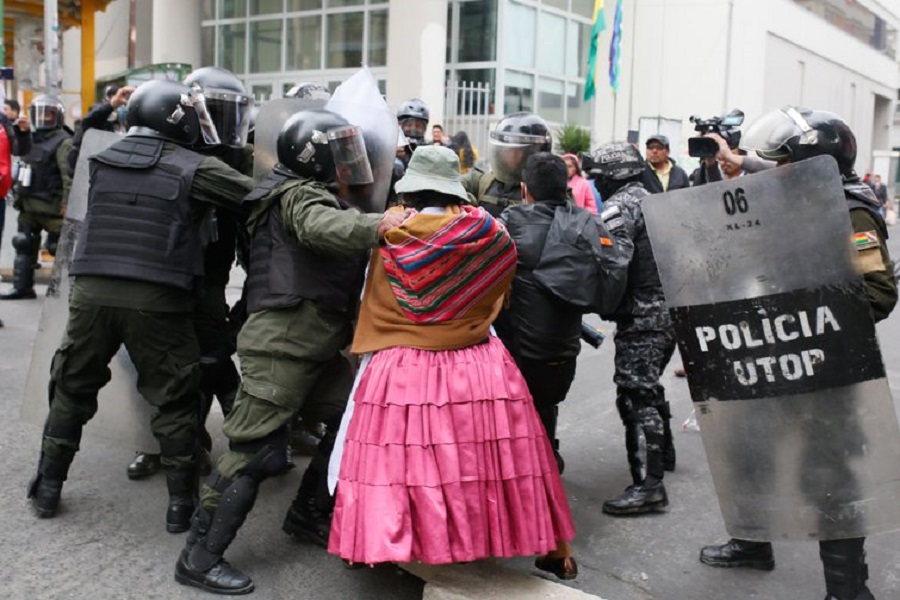
The indigenous radio stations have been the target of attacks since the opposition’s protests against President Evo Morales began following the October 20th election. (Photo: Internet Reproduction)

The private sector, which previously held over 90 percent, was allocated 33. The new 2009 constitution stipulates that the media “must neither form monopolies or oligopolies directly or indirectly” and that “the state supports the creation of community media with the same conditions and opportunities”.

Attacks on the press have been repeatedly reported since the downfall of President Morales. Journalists complain of attacks and political persecution. Media officials are threatened to sue them for “rioting”, cartoonists are censored.

The international television channels Telesur and Russia Today Spanish have been switched off.


This article was produced by The Rio Times’ automated newsroom system. How we use AI · Report an error

Read More from The Rio Times

The Rio Times · Power Map
See who really holds power in Latin America
Click to open the Power Map

Rotate for Best Experience

This report is optimized for landscape viewing. Rotate your phone for the full experience.