IBOV 177,999.00 ▲ 0.47% IPSA 11,016.85 ▼ 0.13% IPC MEX 66,935.53 ▼ 0.58% MERVAL 3,291,323 ▼ 0.41% COLCAP 2,392.10 ▲ 2.12% BVL PERÚ 57,890.85 — — USD/BRL5.07▼ 0.01% USD/MXN17.33▼ 0.13% USD/CLP930.47▼ 0.07% USD/COP3,203▲ 1.65% USD/PEN3.39▼ 0.07% USD/ARS1,485▼ 0.03% USD/UYU40.20▲ 1.31% USD/PYG5,931▲ 1.14% USD/BOB12.10▲ 4.29% USD/DOP57.99▲ 0.24% USD/CRC448.40▲ 1.33% USD/GTQ7.62▲ 2.25% USD/HNL26.76▲ 1.53% USD/NIO 36.62 — 0.00% USD/VES744.76▼ 0.41% USD/PAB1.00— 0.00% USD/BZD2.00— 0.00% USD/JMD157.19▲ 0.37% USD/TTD6.72▲ 0.86% EUR/BRL5.86▲ 0.21% BRENT 90.12 ▲ 1.22% WTI 84.67 ▲ 1.29% IRON ORE 161.91 — — COPPER 6.47 ▲ 0.33% GOLD 4,107 ▲ 0.17% SILVER 57.79 ▼ 1.75% SOY 1,188 ▲ 0.87% CORN 464.00 ▲ 4.09% WHEAT 639.25 ▼ 3.65% COFFEE 313.55 ▼ 2.94% SUGAR 14.65 ▲ 1.52% ORANGE JUICE 153.35 ▲ 5.03% COTTON 81.20 ▲ 2.25% COCOA 5,537 ▲ 8.31% BEEF 227.25 ▼ 1.72% CATTLE 343.78 ▼ 0.78% LITHIUM 69.22 ▼ 0.85% PETR4 43.42 ▲ 1.35% VALE3 76.28 ▲ 0.25% ITUB4 42.89 ▲ 0.35% BBDC4 18.43 ▲ 0.22% ABEV3 15.99 ▲ 0.19% BBAS3 21.35 ▲ 0.76% B3SA3 15.73 ▲ 0.64% WEGE3 47.20 ▲ 0.81% PRIO3 60.85 ▲ 1.48% SUZB3 43.32 ▲ 1.38% RENT3 37.61 ▼ 1.62% AZZA3 16.42 ▲ 3.53% CSAN3 4.07 ▲ 2.01% RAIZ4 0.26 — 0.00% PCAR3 2.59 ▼ 5.47% GMAT3 4.03 ▲ 1.26% PSSA3 54.70 ▲ 0.64% CVCB3 1.31 ▲ 0.77% POSI3 3.55 ▲ 0.85% SLCE3 13.38 ▲ 0.91% NATU3 8.38 ▲ 0.60% BRKM5 5.97 ▲ 0.67% RANI3 8.11 ▲ 1.00% CSNA3 4.84 ▼ 2.22% CMIN3 5.71 ▼ 0.17% USIM5 7.36 ▼ 2.52% GGBR4 24.98 — 0.00% ENEV3 26.31 ▲ 0.61% CPFE3 46.14 ▲ 0.11% CMIG4 11.34 ▲ 0.98% EQTL3 38.66 — 0.00% LREN3 13.60 ▲ 0.59% VIVT3 32.63 — 0.00% RAIL3 14.44 ▲ 1.12% KLABIN 18.25 ▲ 1.11% RAIA DROGASIL 18.48 ▲ 1.26% RDOR3 34.64 ▲ 0.64% HAPV3 11.28 ▲ 2.45% FLRY3 17.14 ▲ 1.00% SMTO3 14.52 ▲ 0.83% UGPA3 33.05 ▲ 0.39% VBBR3 36.05 ▲ 1.18% BBSE3 41.26 ▲ 0.98% BPAC11 56.80 ▲ 0.32% CURY3 30.09 ▼ 1.02% AERI3 2.15 ▲ 0.94% VIVARA 22.18 ▲ 0.09% COMPASS 24.84 — 0.00% VAMOS 3.34 ▼ 2.34% SANB11 28.62 ▲ 13.35% ASAI3 8.50 ▲ 1.07% SBSP3 27.70 ▲ 1.06% WALMEX 50.36 ▲ 0.34% GMEXICO 208.29 ▼ 2.20% FEMSA 221.95 ▲ 1.19% CEMEX 20.54 ▼ 0.73% GFNORTE 199.64 ▼ 0.32% BIMBO 62.08 ▲ 2.26% TELEVISA 9.79 ▼ 0.91% AMX 22.00 — 0.00% GAP 376.64 ▼ 1.08% ASUR 275.62 ▼ 0.34% OMA 231.05 ▼ 0.96% KOF 187.94 ▼ 0.14% GRUMA 258.23 ▼ 4.00% KIMBER 40.19 ▼ 0.17% SQM-B 62,700 ▼ 0.93% COPEC 6,350 ▲ 0.79% BSANTANDER 80.99 ▲ 0.36% FALABELLA 6,216 ▼ 0.06% ENELAM 87.99 ▲ 0.39% CENCOSUD 1,955 ▲ 0.51% CMPC 1,055 ▲ 2.43% BANCO CHILE 193.71 — 0.00% LATAM AIR 24.74 ▼ 0.64% YPF 82,900 ▲ 1.94% GGAL 7,890 ▼ 1.56% PAMPA 5,555 ▲ 0.36% TXAR 655.50 ▲ 1.16% ALUAR 977.50 ▼ 0.20% TGS 10,050 ▲ 2.45% CEPU 2,396 ▼ 0.33% MIRGOR 16,350 ▼ 1.95% COME 44.03 ▼ 1.94% LOMA NEGRA 3,620 ▼ 1.76% BYMA 296.00 ▼ 0.34% TELECOM ARG 4,408 ▲ 2.14% ECOPETROL 16.77 ▼ 1.58% BANCOLOMBIA 92.52 ▼ 1.46% GRUPO AVAL 5.28 ▲ 2.75% CREDICORP 400.58 ▼ 0.42% SOUTHERN COPPER 182.71 ▼ 1.24% BUENAVENTURA 30.28 ▼ 4.96% MERCADOLIBRE 1,878 ▼ 0.41% NUBANK 14.33 ▼ 1.10% XP 17.06 ▼ 0.81% PAGSEGURO 9.64 ▼ 2.03% STONE 11.38 ▼ 0.48% GLOBANT 36.60 ▲ 0.58% TECNOGLASS 43.44 ▼ 0.34% GAP AIRPORT 217.35 ▼ 1.02% ASUR 275.62 ▼ 0.34% OMA AIRPORT 106.90 ▼ 1.10% AMX ADR 25.37 ▲ 0.18% FEMSA ADR 127.99 ▲ 0.97% CEMEX ADR 11.82 ▼ 0.92% PETROBRAS ADR 19.40 ▲ 1.46% VALE ADR 15.06 ▲ 0.47% ITAU ADR 8.46 ▲ 0.24% SANTANDER BR 5.67 ▲ 12.28% AMBEV ADR 3.11 ▼ 0.32% CSN 0.99 ▼ 2.42% GERDAU 4.96 — 0.00% LATAM ADR 52.75 ▼ 2.21% BTC 63,283 ▲ 0.83% ETH 1,874 ▲ 1.68% SOL 73.49 ▲ 2.26% XRP 1.08 ▲ 1.92% BNB 588.48 ▲ 2.35% ADA 0.19 ▲ 8.26% DOGE 0.07 ▲ 2.31% AVAX 6.60 ▲ 6.72% LINK 8.31 ▲ 3.17% DOT 0.80 ▲ 1.98% LTC 44.84 ▲ 1.48% BCH 213.66 ▲ 2.76% TRX 0.33 ▼ 0.13% XLM 0.17 ▲ 2.14% HBAR 0.07 ▲ 1.05% NEAR 1.70 ▲ 1.40% ATOM 1.26 ▲ 3.36% AAVE 92.56 ▲ 2.25% SELIC 14.25% EMBRAER 86.89 ▲ 0.87% EMBRAER ADR 68.33 ▲ 0.32% JBS 14.02 ▼ 1.89% JBS BDR 70.70 ▼ 2.01% MBRF3 17.54 ▼ 2.34% MBRFY 3.39 ▼ 2.31% INTER 5.60 ▼ 0.71% EGX 54,286 ▲ 1.23% USD/ZAR16.55▼ 0.02% USD/NGN1,364▼ 0.07% NIKKEI 64,362 ▲ 4.03% CSI300 4,588 ▲ 0.85% HSI 25,884 ▲ 0.10% NIFTY 24,384 ▲ 0.27% KOSPI 6,595 ▲ 17.91% JCI 6,236 ▲ 0.80% USD/JPY157.17▼ 0.26% USD/CNY6.74▼ 0.10% DAX 25,629 ▲ 0.07% CAC 8,510 ▲ 0.28% FTSE 10,868 ▼ 0.27% MIB 52,173 ▲ 0.13% IBEX 19,783 ▲ 0.13% STOXX 649.19 ▼ 0.12% EUR/USD1.15▼ 0.01% GBP/USD1.35▲ 0.16% SPX 7,490 ▲ 0.70% DJI 52,485 ▲ 0.53% NDX 28,274 ▲ 0.60% RUT 2,931 ▼ 0.50% TSX 35,226 ▼ 0.79% VIX 15.99 ▼ 6.44% USD/CAD1.40▼ 0.08% US10Y 4.7450 ▲ 1.76% IBOV 177,999.00 ▲ 0.47% IPSA 11,016.85 ▼ 0.13% IPC MEX 66,935.53 ▼ 0.58% MERVAL 3,291,323 ▼ 0.41% COLCAP 2,392.10 ▲ 2.12% BVL PERÚ 57,890.85 — — USD/BRL 5.07 ▼ 0.01% USD/MXN 17.33 ▼ 0.13% USD/CLP 930.47 ▼ 0.07% USD/COP 3,203 ▲ 1.65% USD/PEN 3.39 ▼ 0.05% USD/ARS 1,485 ▼ 0.27% USD/UYU 40.20 ▲ 1.25% USD/PYG 5,931 ▲ 1.14% USD/BOB 12.10 ▲ 4.29% USD/DOP 57.99 ▲ 0.24% USD/CRC 448.40 ▲ 1.33% USD/GTQ 7.62 ▲ 2.25% USD/HNL 26.76 ▲ 0.39% USD/NIO 36.62 — 0.00% USD/VES 744.76 ▼ 0.13% USD/PAB 1.00 — 0.00% USD/BZD 2.00 — 0.00% USD/JMD 157.19 ▲ 0.37% USD/TTD 6.72 ▲ 0.86% EUR/BRL 5.86 ▲ 0.19% BRENT 90.12 ▲ 1.22% WTI 84.67 ▲ 1.29% IRON ORE 161.91 — — COPPER 6.47 ▲ 0.33% GOLD 4,107 ▲ 0.17% SILVER 57.79 ▼ 1.75% SOY 1,188 ▲ 0.87% CORN 464.00 ▲ 4.09% WHEAT 639.25 ▼ 3.65% COFFEE 313.55 ▼ 2.94% SUGAR 14.65 ▲ 1.52% ORANGE JUICE 153.35 ▲ 5.03% COTTON 81.20 ▲ 2.25% COCOA 5,537 ▲ 8.31% BEEF 227.25 ▼ 1.72% CATTLE 343.78 ▼ 0.78% LITHIUM 69.22 ▼ 0.85% PETR4 43.42 ▲ 1.35% VALE3 76.28 ▲ 0.25% ITUB4 42.89 ▲ 0.35% BBDC4 18.43 ▲ 0.22% ABEV3 15.99 ▲ 0.19% BBAS3 21.35 ▲ 0.76% B3SA3 15.73 ▲ 0.64% WEGE3 47.20 ▲ 0.81% PRIO3 60.85 ▲ 1.48% SUZB3 43.32 ▲ 1.38% RENT3 37.61 ▼ 1.62% AZZA3 16.42 ▲ 3.53% CSAN3 4.07 ▲ 2.01% RAIZ4 0.26 — 0.00% PCAR3 2.59 ▼ 5.47% GMAT3 4.03 ▲ 1.26% PSSA3 54.70 ▲ 0.64% CVCB3 1.31 ▲ 0.77% POSI3 3.55 ▲ 0.85% SLCE3 13.38 ▲ 0.91% NATU3 8.38 ▲ 0.60% BRKM5 5.97 ▲ 0.67% RANI3 8.11 ▲ 1.00% CSNA3 4.84 ▼ 2.22% CMIN3 5.71 ▼ 0.17% USIM5 7.36 ▼ 2.52% GGBR4 24.98 — 0.00% ENEV3 26.31 ▲ 0.61% CPFE3 46.14 ▲ 0.11% CMIG4 11.34 ▲ 0.98% EQTL3 38.66 — 0.00% LREN3 13.60 ▲ 0.59% VIVT3 32.63 — 0.00% RAIL3 14.44 ▲ 1.12% KLABIN 18.25 ▲ 1.11% RAIA DROGASIL 18.48 ▲ 1.26% RDOR3 34.64 ▲ 0.64% HAPV3 11.28 ▲ 2.45% FLRY3 17.14 ▲ 1.00% SMTO3 14.52 ▲ 0.83% UGPA3 33.05 ▲ 0.39% VBBR3 36.05 ▲ 1.18% BBSE3 41.26 ▲ 0.98% BPAC11 56.80 ▲ 0.32% CURY3 30.09 ▼ 1.02% AERI3 2.15 ▲ 0.94% VIVARA 22.18 ▲ 0.09% COMPASS 24.84 — 0.00% VAMOS 3.34 ▼ 2.34% SANB11 28.62 ▲ 13.35% ASAI3 8.50 ▲ 1.07% SBSP3 27.70 ▲ 1.06% WALMEX 50.36 ▲ 0.34% GMEXICO 208.29 ▼ 2.20% FEMSA 221.95 ▲ 1.19% CEMEX 20.54 ▼ 0.73% GFNORTE 199.64 ▼ 0.32% BIMBO 62.08 ▲ 2.26% TELEVISA 9.79 ▼ 0.91% AMX 22.00 — 0.00% GAP 376.64 ▼ 1.08% ASUR 275.62 ▼ 0.34% OMA 231.05 ▼ 0.96% KOF 187.94 ▼ 0.14% GRUMA 258.23 ▼ 4.00% KIMBER 40.19 ▼ 0.17% SQM-B 62,700 ▼ 0.93% COPEC 6,350 ▲ 0.79% BSANTANDER 80.99 ▲ 0.36% FALABELLA 6,216 ▼ 0.06% ENELAM 87.99 ▲ 0.39% CENCOSUD 1,955 ▲ 0.51% CMPC 1,055 ▲ 2.43% BANCO CHILE 193.71 — 0.00% LATAM AIR 24.74 ▼ 0.64% YPF 82,900 ▲ 1.94% GGAL 7,890 ▼ 1.56% PAMPA 5,555 ▲ 0.36% TXAR 655.50 ▲ 1.16% ALUAR 977.50 ▼ 0.20% TGS 10,050 ▲ 2.45% CEPU 2,396 ▼ 0.33% MIRGOR 16,350 ▼ 1.95% COME 44.03 ▼ 1.94% LOMA NEGRA 3,620 ▼ 1.76% BYMA 296.00 ▼ 0.34% TELECOM ARG 4,408 ▲ 2.14% ECOPETROL 16.77 ▼ 1.58% BANCOLOMBIA 92.52 ▼ 1.46% GRUPO AVAL 5.28 ▲ 2.75% CREDICORP 400.58 ▼ 0.42% SOUTHERN COPPER 182.71 ▼ 1.24% BUENAVENTURA 30.28 ▼ 4.96% MERCADOLIBRE 1,878 ▼ 0.41% NUBANK 14.33 ▼ 1.10% XP 17.06 ▼ 0.81% PAGSEGURO 9.64 ▼ 2.03% STONE 11.38 ▼ 0.48% GLOBANT 36.60 ▲ 0.58% TECNOGLASS 43.44 ▼ 0.34% GAP AIRPORT 217.35 ▼ 1.02% ASUR 275.62 ▼ 0.34% OMA AIRPORT 106.90 ▼ 1.10% AMX ADR 25.37 ▲ 0.18% FEMSA ADR 127.99 ▲ 0.97% CEMEX ADR 11.82 ▼ 0.92% PETROBRAS ADR 19.40 ▲ 1.46% VALE ADR 15.06 ▲ 0.47% ITAU ADR 8.46 ▲ 0.24% SANTANDER BR 5.67 ▲ 12.28% AMBEV ADR 3.11 ▼ 0.32% CSN 0.99 ▼ 2.42% GERDAU 4.96 — 0.00% LATAM ADR 52.75 ▼ 2.21% BTC 63,283 ▲ 0.83% ETH 1,874 ▲ 1.68% SOL 73.49 ▲ 2.26% XRP 1.08 ▲ 1.92% BNB 588.48 ▲ 2.35% ADA 0.19 ▲ 8.26% DOGE 0.07 ▲ 2.31% AVAX 6.60 ▲ 6.72% LINK 8.31 ▲ 3.17% DOT 0.80 ▲ 1.98% LTC 44.84 ▲ 1.48% BCH 213.66 ▲ 2.76% TRX 0.33 ▼ 0.13% XLM 0.17 ▲ 2.14% HBAR 0.07 ▲ 1.05% NEAR 1.70 ▲ 1.40% ATOM 1.26 ▲ 3.36% AAVE 92.56 ▲ 2.25% SELIC 14.25% EMBRAER 86.89 ▲ 0.87% EMBRAER ADR 68.33 ▲ 0.32% JBS 14.02 ▼ 1.89% JBS BDR 70.70 ▼ 2.01% MBRF3 17.54 ▼ 2.34% MBRFY 3.39 ▼ 2.31% INTER 5.60 ▼ 0.71% EGX 54,286 ▲ 1.23% USD/ZAR 16.54 ▲ 0.08% USD/NGN 1,364 ▲ 0.15% NIKKEI 64,362 ▲ 4.03% CSI300 4,588 ▲ 0.85% HSI 25,884 ▲ 0.10% NIFTY 24,384 ▲ 0.27% KOSPI 6,595 ▲ 17.91% JCI 6,236 ▲ 0.80% USD/JPY 157.22 ▼ 1.50% USD/CNY 6.7448 ▲ 0.01% DAX 25,629 ▲ 0.07% CAC 8,510 ▲ 0.28% FTSE 10,868 ▼ 0.27% MIB 52,173 ▲ 0.13% IBEX 19,783 ▲ 0.13% STOXX 649.19 ▼ 0.12% EUR/USD 1.1527 ▼ 0.02% GBP/USD 1.3482 ▲ 0.13% SPX 7,490 ▲ 0.70% DJI 52,485 ▲ 0.53% NDX 28,274 ▲ 0.60% RUT 2,931 ▼ 0.50% TSX 35,226 ▼ 0.79% VIX 15.99 ▼ 6.44% USD/CAD 1.4017 ▲ 0.04% US10Y 4.7450 ▲ 1.76%
since 2009
Sunday, August 2, 2026

Latin America Brazil

Latin America Seeks Way Out of Economic Crisis

By · July 19, 2020 · 6 min read

Daily Brief

The morning intel from across Latin America. Free.

By subscribing you agree to our privacy policy. We never share your email.

RIO DE JANEIRO, BRAZIL – Over these months of pandemic, Héctor Bárcena has spent all his savings. The 28-year-old Mexican hairdresser still owes rent for the months when his salon was closed. His second daughter was born in April, which added to his expenses. Bárcena, like many Latin Americans, also rents his home. His only asset is a car he has put up for sale to cover the essential expenses for the coming months. “Here we say that the assets are intended to repair the damage, so that’s the option to be able to move on,” he says over the phone from the Province of Mexico, which surrounds the capital city. Bárcena sighs and continues: “It will be difficult for my family, but we don’t have another option.”

In a place where informality reigns, it is difficult to know exactly how many jobs have been lost, but the International Labor Organization (ILO) estimates that it has been 47 million this year so far.
In a place where informality reigns, it is difficult to know exactly how many jobs have been lost, but the International Labor Organization (ILO) estimates that there have been 47 million lost so far this year. (Photo: internet reproduction)
One-stop reference
Company Intelligence
Every listed company in Latin America — financials, ownership and structure for 1,450+ companies across 26 exchanges, in one place.
Browse the directory →
RT
Ask Rio Times
Latin American markets, currencies and companies.
Open the full Ask Rio Times →

Millions of people throughout Latin America are looking for a way to survive the economic crisis caused by Covid-19. Some have migrated their businesses or jobs to the Internet, others have left them to sell masks or antibacterial gel. Many rely entirely on remittances sent by their families abroad, while others have fallen into poverty. In a place where informality reigns, it is difficult to know exactly how many jobs have been lost, but the International Labor Organization (ILO) estimates that there have been 47 million lost this year. Latin America is the world region that lost the most paid work hours.

Heading for a record recession

The projections are very difficult to stomach. The International Monetary Fund (IMF) estimates that Gross Domestic Product (GDP), the most important measure of an economy, will contract by 9.3 percent this year – the worst recession ever recorded in Latin America. This is unlikely to be the final projection. They worsen every month that goes by without effective treatment or a vaccine against the severe acute respiratory syndrome caused by this novel coronavirus. In May, the region became the epicenter of infection, and its mortality rate reached the top of the ranking.

Nevertheless, the countries in the region are experimenting a gradual or partial reopening of economic activity, but there are sectors, such as industry and entertainment, that require human closeness in closed areas, meaning that they will not be able to fully restart until the virus is under control. Worldwide, the most affected sectors are automotive, commercial services (such as beauty salons and restaurants), and professional services (such as call centers), hotels, energy, and retail sales. On the other hand, some sectors have maintained a relatively good performance, such as gas, electricity, banking, insurance, and online services.

Industrial production declined to such a degree in the region’s nations that it threatens to lengthen the economic upturn. Argentina, Brazil, and Mexico, the economies with the most competitive industries in the region, are sustaining losses. United Nations Industrial Development Organization (UNIDO) figures show a 30.8 percent decline in Mexico’s industrial production between March and May; in Brazil, production in May dropped 12 percent over the same period. In Argentina, the sector suffered a 19.2 percent contraction between February and March – and has not recovered to date.

Remittances resist

The region’s economies have certain common features, including dependence on exports and the remittances that Latin Americans living abroad send to their families. Exports will decline by at least 15 percent in the region, according to the Economic Commission for Latin America and the Caribbean (ECLAC). The hardest blow will be dealt to the southernmost        countries, which are raw material exporters, as prices have plummeted due to a lack of demand.

Remittances have also declined, albeit not in all countries. Most of these funds come from people living in the United States, where unemployment reached 13.3 percent in June (in March it was only 4.4 percent). In April remittances fell by 20 percent for Guatemala and 40 percent for El Salvador. Central American countries benefit most from these inflows.

However, in Mexico remittances showed surprising immunity from the pandemic crisis. The Central Bank reported that in May, the last month with available data, US$2.4 billion (around R$13 billion) in family remittances flowed into the country, an increase of three percent compared to the same month last year. In addition, the Mexican currency has depreciated against the dollar in recent months, which benefits families receiving dollars from abroad. According to economist Juan José Li Ng of BBVA bank, remittances have increased 24 percent in real terms. This is equivalent to an additional 14.5 billion Mexican pesos (R$3.46 billion) in May for Mexican households.

“Despite difficult economic conditions in the US, where 95 percent of remittances to Mexico originate, the increase observed during May is explained by the effect of Mother’s Day,” wrote Li Ng. “This additional money is typically sent to a mother of the family or an acquaintance: often it is the mother of the person sending the money, but grandparents, aunts, sisters, and in-laws, among others, also receive the funds. This money is often a gift to cover the expenses of some special event linked to the celebration.”
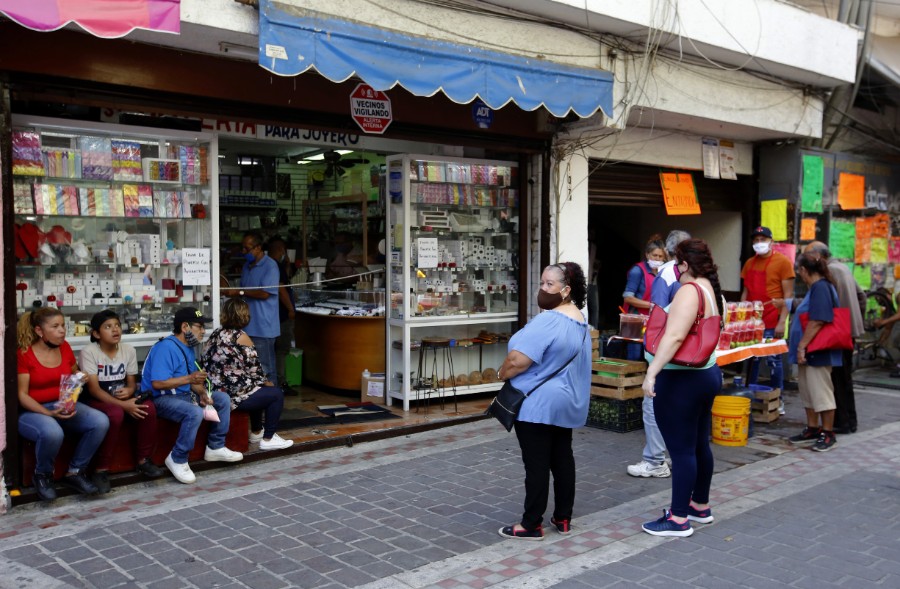
The countries in the region are experimenting a gradual or partial reopening of economic activity, but there are sectors, such as industry and entertainment, that require human closeness in closed areas, meaning that they will not be able to fully restart until the virus is under control.
There are sectors, such as industry and entertainment, that require human closeness in closed areas, meaning that they will not be able to fully restart until the virus is under control. (Photo: internet reproduction)

Capital flees… and returns

The Mexican peso has depreciated 20 percent against the dollar since February 20th, the day markets began to react aggressively to the pandemic. In the same period, the Brazilian real declined 23 percent and the Colombian peso by ten percent. This is not so much due to investors’ distrust of specific countries, but to the uncertainty of the pandemic itself. An initial reaction was to take investments from these countries to place them in assets considered safer, such as US government bonds. This is the so-called “capital flight”, feared by all governments of emerging countries around the world.

The International Monetary Fund (IMF) states that investors have already withdrawn approximately US$100 billion (R$540 billion) from emerging countries, a larger amount than the 2008 financial crisis outflows. But there are indications that this may change. According to analysts at JP Morgan investment bank, the outflow of financial capital has slowed down. There have been foreign capital inflows into emerging countries in May. Several Latin American countries were able to issue bonds on international markets under relatively good conditions. Chile, Guatemala, Mexico, Colombia, Paraguay, Peru, and Panama raised funds by selling sovereign bonds. For governments, these funds are a breath of life in times of great need.

While governments implement aid programs for the most vulnerable, Latin Americans have been forced to conform as best they can to the new reality. And those most affected are in the Caribbean, since tourism, one of the most severely impacted sectors in the world, accounts for between 50 and 90 percent of their GDP. These countries are used to welcoming between 12,000 and 20,000 tourists a day to their islands as part of the cruise liners’ stopovers departing from Cancún, Mexico. Since February, the islands have not hosted a single cruise. According to the IMF, Aruba and Belize will be most affected, with an economic contraction of 14 percent and 12 percent this year, respectively.

The aftermath of the crisis

“The long-term social impact is what concerns me the most,” says Germán Ríos, professor of economics and director of the Latin American Observatory at IE University in Madrid. Ríos proposes an exercise in economics. “Suppose that in 15 days the vaccine for Covid is found. We all get vaccinated and that’s it. Let’s assume that it will allow economies to recover quickly. However, what do you do about the scars? With all those people who have lost their jobs, who have shifted from middle class to poverty, who have suddenly become obsolete because now the survivors are those with a certain knowledge of digital and online issues? For me, this is the most important issue in Latin America,” he says.

The IMF projects that the region’s rebound will be moderate, at 3.7 percent in 2021. Ríos says Latin America is recognized for its innovation in social assistance programs, which is why, compared to other emerging countries, it has managed to reduce poverty in recent decades. These advances are currently in danger, and governments must capitalize on this acquired knowledge in their efforts to reduce income inequality so as not to allow a large part of their population to fall into poverty during the pandemic. “Rebound may be swift and vigorous. The issue is the aftermath. And I believe that the most important consequences will be unemployment and poverty – and how we will address these issues in terms of public policy,” Ríos says.

Source: El País

This article was produced by The Rio Times’ automated newsroom system. How we use AI · Report an error

Read More from The Rio Times

The Rio Times · Power Map
See who really holds power in Latin America
Click to open the Power Map

Rotate for Best Experience

This report is optimized for landscape viewing. Rotate your phone for the full experience.