By Robert J. Bowman, SupplyChainBrain
RIO DE JANEIRO, BRAZIL – As a favored source of low-cost manufacturing for U.S. markets, Mexico seems to come and go.
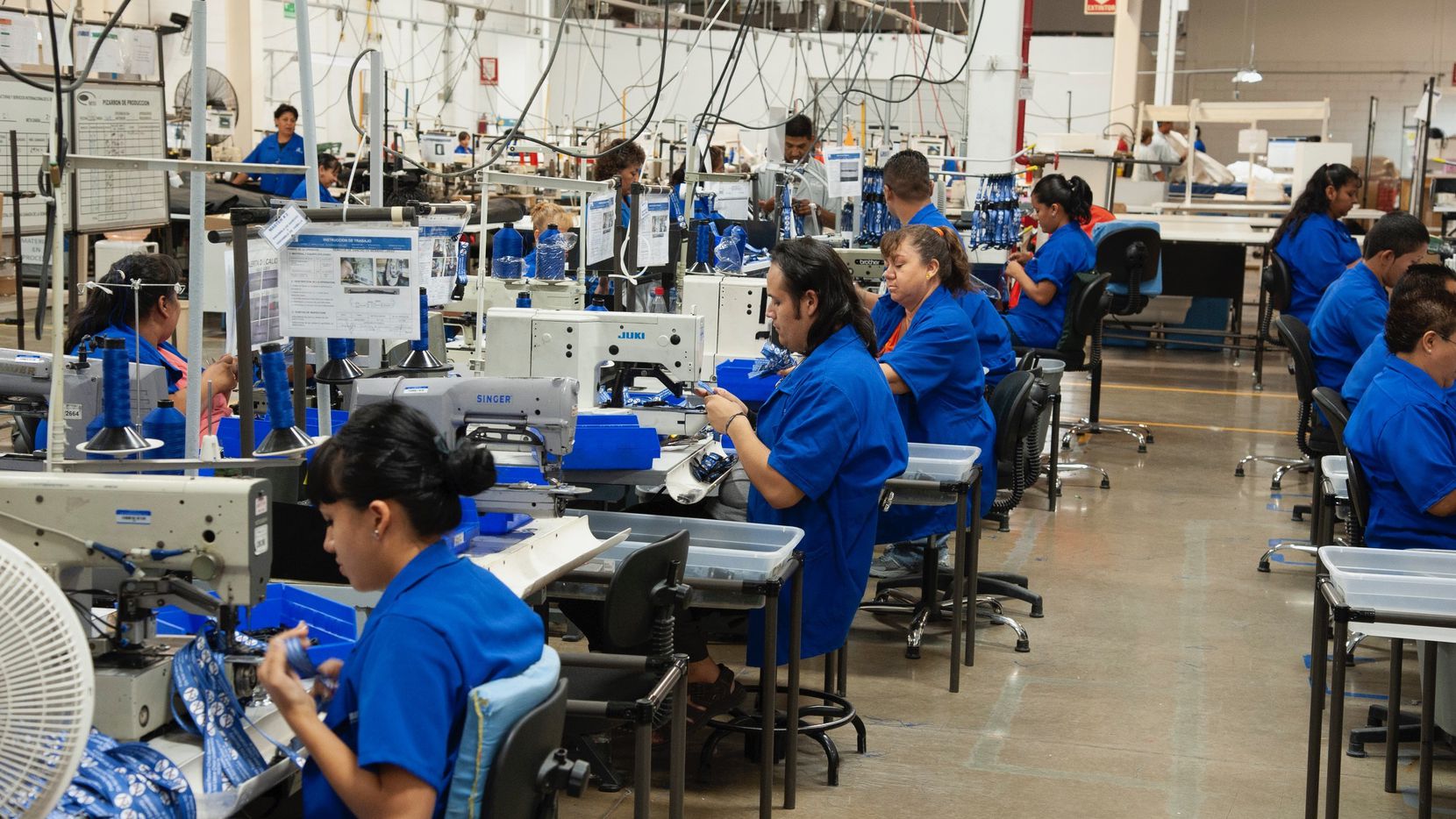
The formation of maquiladoras, factories mostly located in areas close to the U.S. border, kicked off an era of vibrant manufacturing activity in Mexico in the 1960s. For years afterward, they churned out large volumes of components that could be exported to the U.S. duty-free. By the late 1990s, the maquilas were employing more than one million Mexico workers. Further spurring production in Mexico was the launch of regular double-stack train services that carried parts north for U.S. automakers.

Activity slackened when U.S. companies began shifting production to China, where labor rates were cheaper and more readily available than in Mexico. But recent geopolitical shifts and other factors suggest that Mexico might be poised for another surge of manufacturing activity.
So believes Deepak Chhugani, founder and chief executive officer of Nuvocargo, a software-centric freight forwarder and customs broker specializing in shipments between Mexico and the U.S. Thanks in part to the U.S.-China trade war, as well as the rising cost of production in China, manufacturers are beginning to turn their attention back to Mexico, he says.
“For a lot of small importers [from China], the tariffs have become untenable and impossible to pass on,” Chhugani says. “That has made Mexico the obvious alternative.”
Successful negotiation of the United States-Mexico-Canada Agreement (USMCA), which replaced the 25-year-old North American Freight Trade Agreement (NAFTA), was another “accelerant” of the nascent trend toward stepped-up production in Mexico, Chhugani says. Then there was the coronavirus pandemic, which temporarily shut down Chinese plants along with many of the passenger plane services required to expedite shipments from China under precisely such a scenario.
All of which has contributed to Mexico’s current status as the United States’ number-one goods trading partner, with US$614.5 billion in two-way trade during 2019, according to the U.S. Trade Representative. Top categories include machinery, vehicles, fuels and agricultural goods.
For all the factors in its favor, the shift in manufacturing from Asia to Mexico isn’t happening overnight. USMCA, created to make trade between the U.S. and Mexico more seamless, actually has had the opposite effect in its first year of life, Chhugani notes. “People have had to adapt to new regulations,” he says, but even a few months later we can see a very positive trend.”
Chhugani says 2021 could be “a marquee year” for Mexican industry, as mid-sized shippers look to reshore manufacturing back to the western hemisphere. Many are likely to start with small facilities, then gradually expand their reliance on Mexican production if the experiment proves successful.
No single part of the country stands to benefit above all others, with various regions specializing in certain key areas such as automotive, alcoholic beverages and agriculture.
Where they probably won’t go, Chhugani says, is the state of Sinaloa, which despite its traditional strength in agriculture and fishing is hindered by its reputation as a home for powerful drug cartels. In fact, justifiably or not, the drug trade has made all of Mexico a dubious place to do business in the minds of many importers and exporters. Chhugani points out that crime and corruption are present in nearly all developing countries, but says shippers can mitigate the risk of theft or violence in Mexico by knowing which routes are the safest to travel, and crossing their goods into the U.S. at the earliest possible opportunity.
In any case, Chhugani says, technology in recent years has greatly improved carriers’ ability to track and secure goods traveling throughout Mexico. The advent of GPS and electronic logging devices (ELDs) are among the innovations that are providing increased visibility and control of freight no matter where it happens to be.
Some shippers and manufacturers have shied away from Mexico in recent years because of excessive delays in getting freight over the border. Anywhere from seven to 11 million truckloads of goods make that transit each year, Chhugani says, with 15,000 trucks crossing each day at Laredo alone.
Congestion has proved to be less of a problem during the pandemic, which was responsible for a steep drop in cross-border traffic. Most of the shipments handled by Nuvocargo from Mexico to the U.S. make the transit in three to seven days, Chhugani says.
Still an open question is how the Biden Administration will address trade and political relations with Mexico. President Biden is likely to take a far more conciliatory approach to immigration than his predecessor, but there’s no guarantee that simmering tensions over that issue will be resolved in the short term. Nor are concerns over congestion and logistics infrastructure likely to go any time soon.
Still, Chhugani pronounces himself “bullish” on the prospects of better ties between the two countries, with a resulting boost in Mexican manufacturing and cross-border trade in the coming years at the expense of China and other Asian producers. “We’re very excited to help companies with the transition to near-shoring to Mexico,” he says.
More: Latin America news in English, every day from The Rio Times.
This article was produced by The Rio Times’ automated AI newsroom. Editorial responsibility: Matthias Camenzind, Publisher and Editor-in-Chief. The Rio Times also runs Ask Rio Times, which answers from 100,000+ of our own articles, the daily Latin America Power Map, and prediction-market odds on elections and markets.. How we use AI · Report an error