Pandemic Darkens Brilliance of Latin America’s Three Economic Lighthouses
RIO DE JANEIRO, BRAZIL – The examples of Latin America’s economic success in recent years have suddenly faded with the coronavirus, leaving the rest of the region lacking its lighthouses. Colombia, Peru, and Chile, the three engines that have driven the bloc’s modest growth over the past half-century, in contrast to Brazilian and Mexican instability and the eternal Argentine crisis, have been slowed down by the coronavirus.

The limitations on the domestic displacement of its citizens have depressed consumption, and the reduced hunger of raw material buyers has dried up an external market that is also crucial to its economy. The result: although they are not the economies most affected by the pandemic, they are among those that have plummeted the most in the macro context when compared to the pre-coronavirus scenario.
The growth projected by the International Monetary Fund (IMF) earlier in the year – up 3.6 percent for Colombia, 2.6 percent for Peru, and 3.0 percent for Chile – is behind us. The projection now is for Colombia’s GDP to contract by 2.4 percent (or 2.6 percent, according to ECLAC), and 4.5 percent for the other two. Their light has faded, at least temporarily.
At this stage, however, “all growth projections need to be met with caution: we learn each day with what is happening, and we often have echo phenomena [between bodies] when there are reductions,” said Martín Rama, the World Bank’s chief economist for Latin America and the Caribbean; he added that the final jolt may be smaller than initially projected.
The jolt will be severe for the three countries that have so far been locomotives pulling the regional train, he concedes. “But they also remain the strongest economies with the largest fiscal margin. They have reserves, low [public] debt, and access to financial markets”. And they are also the ones able to implement the soundest policies to support the economy, “the most similar to advanced economies in the region,” Rama notes.
At the monetary level, the trends are also relevant: Colombia and Chile were, along with Costa Rica, the only countries in the subcontinent to launch debt purchase programs to ease tensions in the markets and favor public sector financing.
The World Bank’s projection is still of “a V-shaped recovery” in virtually the whole Latin American bloc, according to Rama. “In the coming months we will understand more how Covid-19 works and we will be able to contain it at a lower cost to the economy. And the three world engines (the United States, Europe, and China) have launched very significant stimulus packages: should they rebound successfully and the epidemic be contained, external demand will improve and so will the situation in Latin America.
The countries to experience the worst recovery in the region will be those where companies stop paying their debts massively and banks will run into problems in their balances. “But Colombia, Chile, and Peru should not be among that group, so their rebound should also be faster afterward,” projects the World Bank’s head of analysis for the subcontinent.
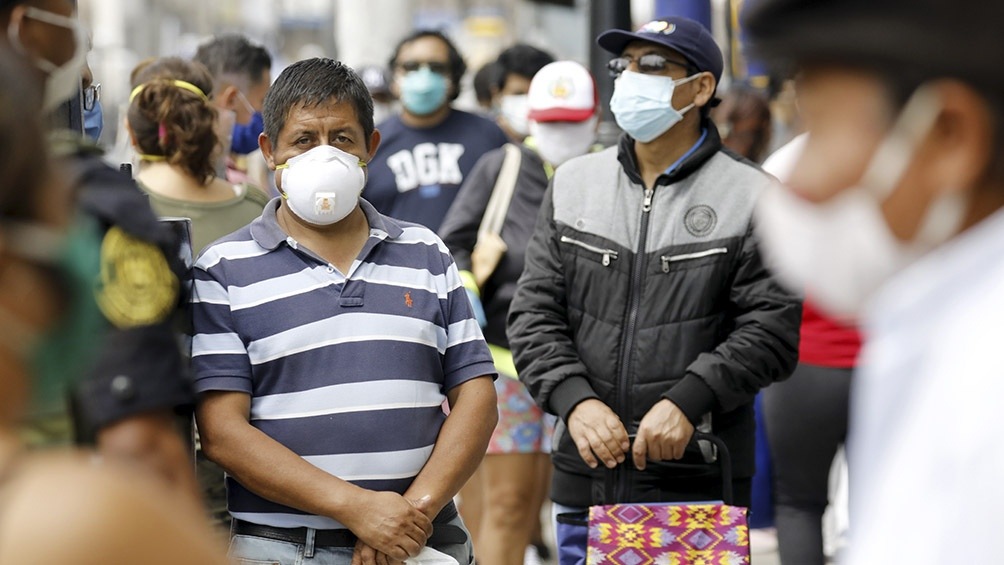
Although Colombia is rightly seen as one of the most stable Latin American economies, the sting of the coronavirus has been felt. This week, the Iván Duque government extended until late May the national quarantine, in force for almost two months now, but also insists on restoring “productive life” through a phased economic reactivation, which started about two weeks ago. Sectors like construction, industry, and some businesses are allowed to operate under certain protocols.
The Colombian economy – with only one year of negative GDP in over half a century – was in a good relative position before the advent of Covid-19 changed it all. It started 2020 with the best figures among the region’s large nations, but in the first quarter its growth dropped to 1.1 percent, a figure that already reflected a greater-than-expected impact of the virus, although the tighter restrictions had just begun. Growth in the first two months exceeded four percent, but the uncertainty in March, when quarantine began, was enough to halt that surge.
Calculations suggest that April will be the worst month for growth in Colombia’s history, according to analyst Ricardo Ávila. “The reopening of the economy has been happening under tremendous fear because, unlike in other countries, here we have not passed the peak [of the epidemic],” he said. “To have been prudent and to have, in practical terms, a nine-week confinement is violent for the economy”.
The spasms of the pandemic add to the drop in international oil prices, the country’s main export product. As a result, the Ministry of Finance is projecting a downturn of around 5.5 percent this year. Of particular concern is a traditionally high unemployment rate, which last year was again in double digits (10.5 percent) and which the coronavirus threatens to push to over 20 percent. There are also troubling indicators regarding poverty and inequality: a study by the University of Los Andes cautions that the crisis could lead to a two-decade regression, back to a time when almost half the population was below the poverty line – in 2018, it had dropped to 27 percent.
Despite these figures, the Colombian economy is known for its resilience, as it has continued to grow even in major crises, such as that of 2008-2009 or with the drop in the price of raw materials.
Peru, for its part, surprised by adopting the region’s most ambitious stimulus plan. Equivalent to 12 percent of GDP, it garnered multiple kudos for María Antonieta Alva, the young Minister of Economy in Martín Vizcarra’s administration. It amounts to US$26 billion (R$143.8 billion), largely to inject liquidity into companies and provide aid to 2.8 million vulnerable families. She faced obstacles, however, such as the low levels of use of banking services. “In its design it is magnificent, but in its logistics it is still facing difficulties in reaching everyone,” says Hugo Ñopo, head researcher of the Development Analysis Group (GRADE).
“Peru will most likely experience one of the most severe crashes, but it will also likely experience one of the fastest rebounds,” he adds, echoing current estimates in the absence of an updated official projection. The Andean country has grown at an average rate of 4.5 percent per year for the past two decades. In the game of additions and subtractions, it is an oil-importing country, and the drop in prices favors it. But its main export is copper, the price of which has also been dropping, and this is affecting it strongly.
“On the external front, in terms of the trade balance, the extent of our shock is not as clear,” says Ñopo. But on the domestic front, there are dark clouds looming over a country where seven out of ten jobs are casual. “Our economy is quite casual, fairly self-employed, quite precarious, where everyone needs to be confined to their homes, and many homes are unable to earn the daily income to survive”.
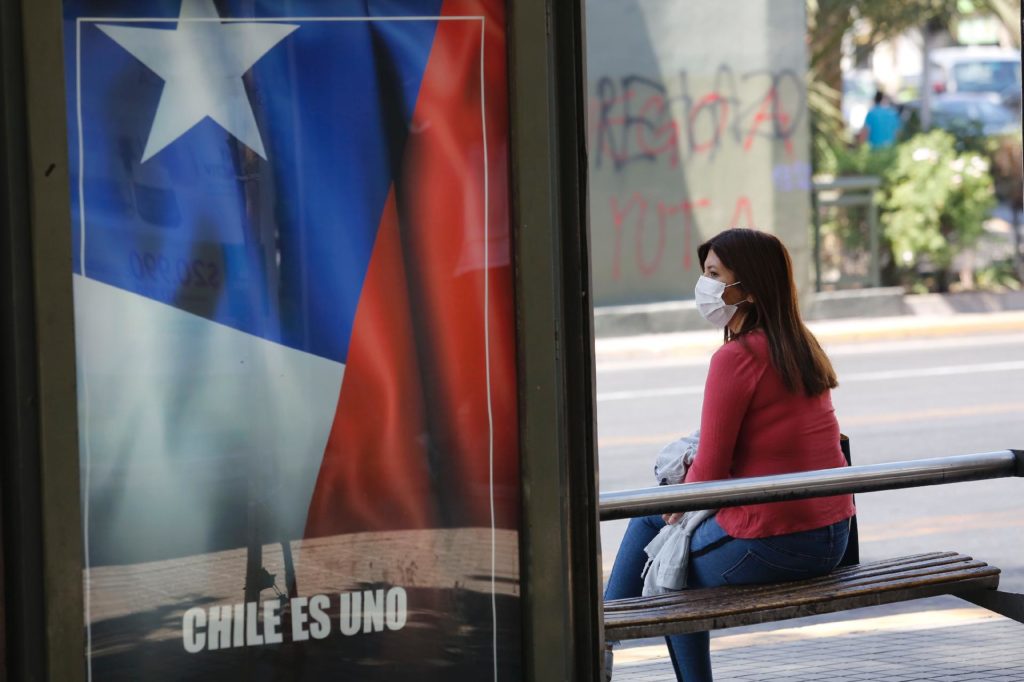
In Chile, the pandemic met a severely troubled economy shortly after the October social uprisings. GDP grew only 1.1 percent in 2019, a third of the figure the government aspired to at the start of last year. Economist Oscar Landerretche, an academic at the University of Chile, goes even further back: “For the past ten years, Chile has been on a downward trend in terms of productivity and economic performance, which has nothing to do with social upheaval. There are greater structural problems due to the exhaustion of the productive structure”.
Despite the panorama -the government of Sebastián Piñera acknowledged that unemployment could reach 18 percent, a huge figure even in a long-term historical perspective-, Landerretche says that “the central engines of Chilean growth, which are natural resources, have been relatively isolated from the impacts of the social upheaval and the pandemic”.
According to the former president of the state-owned copper company Codelco, the country has two important assets built at least three decades ago that are useful when facing the crash: a very healthy financial sector, with an extremely conservative banking law, and a public sector with tax accounts in order and low foreign debt.
The Chilean government mobilized two economic plans worth US$17.1 billion, equivalent to 6.9 percent of GDP. Its focus worries Landerretche: “Fiscal packages are being discussed as emergency packages, under the assumption that this pandemic will be short, as if very soon – in three or six months – we will be free of it”. It would be more convenient to design a “pandemic economy” for the next three or five years, he argues.
“Chile could get into debt very heavily. Approach entrepreneurs and say: ‘I will help you, but in return, you will make some commitments, like firing as few people as possible, for instance. By the end of the pandemic we should have world-leading companies with features of the future economy: greener, with gender equality, with workers sitting on boards…”. However, the economist fears that Chile will not choose this path after all: “We have not had this strategic discussion and, on the other hand, a certain level of fiscal austerity prevailed in the government’s discourse, which seems incomprehensible to me”.
After the jolt, the good news for the trio will come in 2021 and 2022: if the downturn will be abrupt this year, the rebound also shows signs of going down that same road. Next year, Chile’s GDP should rebound 3.3 percent, Peru’s 6.4 percent, and Colombia’s 3.6 percent, according to Goldman Sachs’ figures.
The US investment bank’s report features a headline (“Latin America: Coming out of a deep hole”) and projects a rebound of 3.2, 3.5 and 3.2 percent for 2022, respectively. In other words: the three would be able to recover in about a year and a half everything that they are losing in 2020.
The road will be bumpy until then, but as a result of a recent and phased return to normality, there is some light at the end of the tunnel.
Source: El País
More: Brazil news in English, every day from The Rio Times.
This article was produced by The Rio Times’ automated newsroom system. How we use AI · Report an error · Editorial responsibility: Matthias Camenzind, Editor-in-Chief