RIO DE JANEIRO, BRAZIL – The Congress of Peru ratified this Wednesday (14) the Comprehensive and Progressive Agreement for Trans-Pacific Partnership (CPTPP), signed on March 8, 2018, by the Peruvian Government in Santiago, Chile.
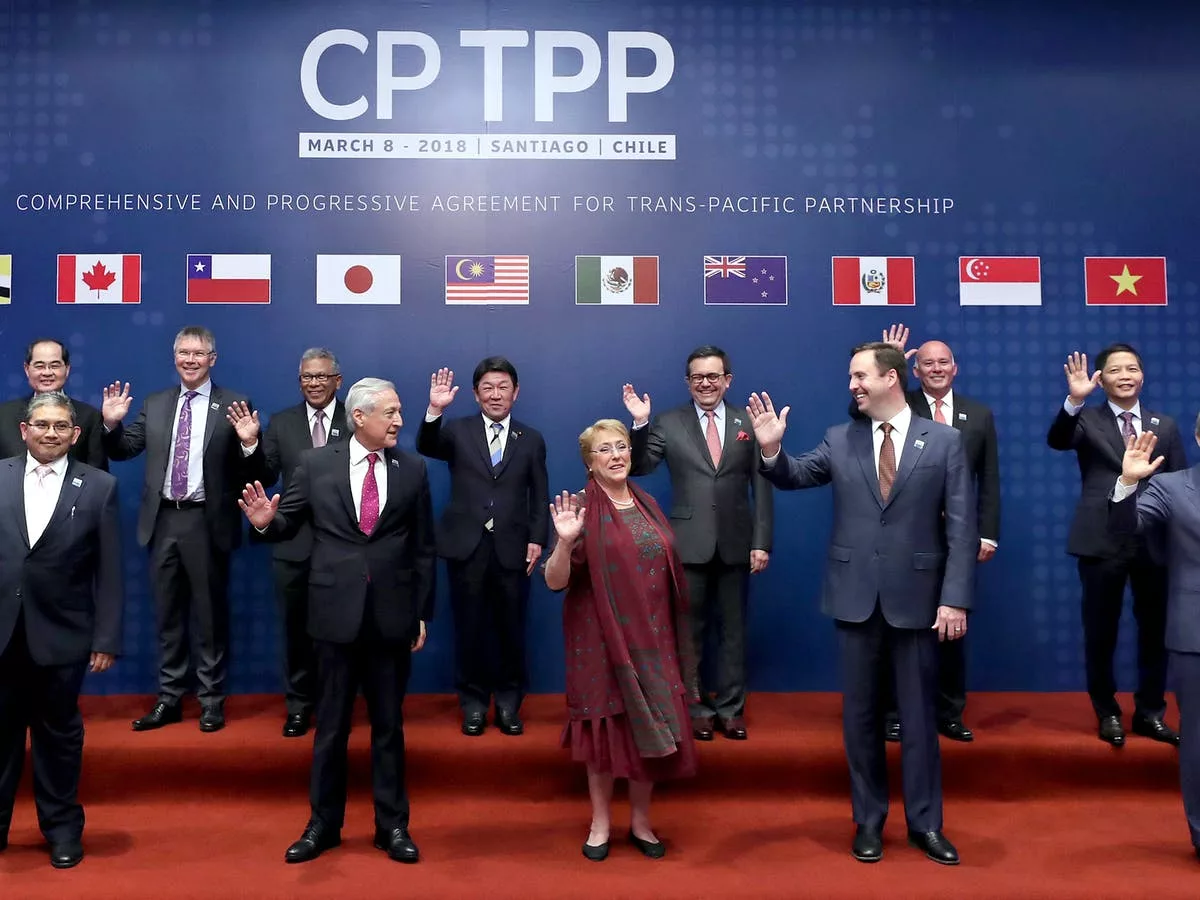
The decision was taken with 97 votes in favor and 9 abstentions. It included a series of letters from countries such as Australia, Canada, and Malaysia reaffirming a series of agreements regarding products, cultural industries, and dispute settlement.
In supporting the proposal, the president of the Congressional Foreign Relations Commission, Gilmer Trujillo, of the Popular Force (FP), pointed out that the CPTPP seeks to establish a free trade zone by incorporating or referring to the text of the Trans-Pacific Partnership Treaty (TPP).
Trujillo added that approving the agreement was of “strategic relevance” for Peru. It will allow it to access the markets of 11 member countries, with a total population of 502 million inhabitants, a 13.5% share of global GDP, and 14.5% of global trade.
“It is relevant in the current context, where multinational companies are looking to diversify their suppliers and relocate their supply chain due to covid-19,” he said.
Included in the approval of the CPTPP were letters with Australia reaffirming agreements regarding distinct products and the termination of the agreement on reciprocal promotion and protection of investments.
In addition, letters with Canada on cultural industries and others with Malaysia on electronic payment card services and non-recourse to dispute settlement for non-conforming measures in state-owned enterprises, among other aspects.
After learning of the legislative decision, the Minister of Foreign Trade and Tourism, Claudia Cornejo, welcomed the ratification of the CPTPP and highlighted that Peru has taken “an important step” to put into force a treaty that integrates 11 Asia-Pacific economies.
“The approval of the CPTPP contributes to continuing incorporating Peru into global production networks and global value chains. Its ratification represents an opportunity to continue positioning our exports in the Asia Pacific,” he added.
With the entry into force of the CPTPP – which is formed by Australia, Brunei, Canada, Chile, Japan, Malaysia, Mexico, New Zealand, Singapore, Vietnam, and Peru – Peruvian exports will be able to enter, immediately and free of tariffs to New Zealand and Vietnam, and once ratified, to Brunei and Malaysia, countries with which it does not have a bilateral trade agreement in force.
The Ministry of Foreign Trade and Tourism (Mincetur) informed that the country will now proceed “to notify the Depositary” that “this stage has been completed and the treaty will enter into force for Peru 60 days after such notification.”
Cornejo indicated that “Peruvian exporters now have a range of opportunities to easily access and choose various inputs that will allow them to be more competitive in the international market.”
In this sense, Mincetur estimated that among the Peruvian products that will benefit are cotton T-shirts and polo shirts, avocados, grapes, cranberries, animal feed preparations, copper cathodes, wood products, plywood, dairy products, iron and steel products, chemical inputs, ethanol, and sweet cookies.
Peru signed the CPTPP on March 8, 2018, in Santiago, Chile. The agreement entered into force on December 30 of that year for Australia, Canada, Japan, Mexico, New Zealand, and Singapore, while for Vietnam, it did so on January 14, 2019.
More: Peru news in English, every day from The Rio Times.
Editorial responsibility: Matthias Camenzind, Editor-in-Chief · Editorial standards · Report an error