RIO DE JANEIRO, BRAZIL – Two years after Juan Orlando Hernández of the National Party began his second term as president in Honduras at the end of January 2018, the country remains in a deep crisis. Corruption, impunity and the severe threat to human rights activists shape the situation.

Hernández ran for the presidential elections again in 2017, although the Honduran constitution did not authorize his re-election to office. Clear signs of electoral fraud had subsequently led to mass protests with road blockades. The government declared a state of emergency for ten days in December 2017. The army and military police used live ammunition against the protesters, killing 23 people and injuring some 60. The majority were victims of violence by the state security forces.
As the United Nations Office of the High Commissioner for Human Rights in Honduras (OACNUDH) stated in a recently published report, these crimes have not yet been prosecuted. “Two years after the events, most of the serious human rights violations under investigation, including extra-judicial executions, torture and forced disappearances, are still under investigation and the perpetrators have not been held accountable, nor have the victims received justice,” the summary states. This situation is partly the responsibility of the Prosecutor’s Office, which has been inactive in many instances, but also of the armed forces and the military police, who obstructed the investigation.
The High Commissioner’s Office is not only calling for the investigation and reparation of these crimes, but also for a legal review of the deployment of the armed forces domestically. Even after the state of emergency, in June 2019, military forces fired on unarmed protesters. Parliament is required to legally safeguard the independence of the judiciary and reform the National Security Council in order to ensure the separation of powers within the state.
The Security Council is under the President’s direct control and combines the three governmental branches of the state. “One of the features of Juan Orlando Hernández’s regime is the absolute control of institutions. He has filled the positions in key institutions with his followers. Therefore, he is able to breach the law in order to keep himself in power,” Honduran human rights expert Joaquín Mejía Rivera explained to Amerika21.
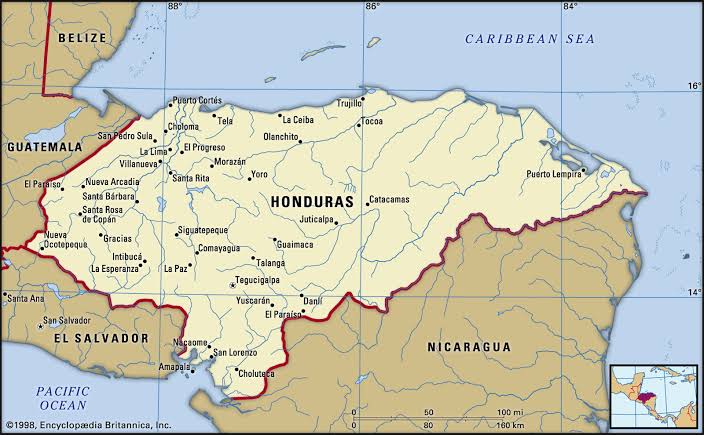
Instead of implementing the High Commissioner’s recommendations, the Honduran government is resorting to kicking out unpopular institutions such as the International Assistance Mission against Corruption and Impunity in Honduras (MACCIH). A number of high-ranking politicians are suspected of corruption.
President Hernández has been suspected of being a “co-conspirator” in the drug business since the trial of his brother Juan Antonio “Tony” Hernández in New York in October. Juan Antonio Hernández was found guilty and the sentence will be handed down on February 24th.
Meanwhile, human rights organizations fear that the government will try to limit control of international institutions even further. The focus would be on the OACNUDH office, which was agreed to open in 2015. “The High Commissioner’s Office, headed by María Soledad Pazo, has played an important role for civil society, which human rights organizations have rated very positively. This is why the government has launched a campaign in Geneva, similar to the MACCIH, against María Soledad Pazo and her team, with the aim of having her replaced,” explains Rivera.
The goal of the governmental campaign is to ensure that the post is filled by a politically suitable person or that the office in Honduras is closed, which would further increase the threat to the Honduran population, the human rights expert fears.
More: Latin America news in English, every day from The Rio Times.
This article was produced by The Rio Times’ automated newsroom system. How we use AI · Report an error · Editorial responsibility: Matthias Camenzind, Editor-in-Chief