Venezuela Emigration May Exceed That from Syria by 2020, Says UNHCR Envoy
RIO DE JANEIRO, BRAZIL – “Latin America will never be the same again,” proclaims former Guatemalan Vice President Eduardo Stein.
As Venezuela’s special representative to the International Organization for Migration (IOM) and the United Nations High Commissioner for Refugees (UNHCR), he is in charge of coordinating efforts to address an unprecedented migration emergency in the region.

More than 4.5 million Venezuelans have fled the devastating crisis in their country, 1.5 million of whom have found refuge in neighboring Colombia, by far the main destination, followed by Peru (860,000), Chile (371,000) and Ecuador (330,000).
“No country can face this exodus alone,” Stein said in a conversation with EL PAÍS during a recent visit to Bogotá to launch a regional plan that meets the growing humanitarian needs of Venezuelan refugees and immigrants in Latin America and the Caribbean, as well as the communities that host them.
Question: You are the special envoy to serve one of the largest flows of people in the world. How serious is this immigration emergency?
Answer: Latin America is experiencing the largest forced immigration flow in its history. Neither in the periods of the wars of independence nor in the tragedies of natural disasters have we faced a phenomenon of this magnitude.
Governments began to react at first with enormous generosity, welcoming the Venezuelan population that left and continues to leave, but now they are reaching saturation levels in which their national budgets and institutional capacity are exhausted. We are facing a phenomenon of profound transformations throughout the region. Latin America will never be the same again after what we are experiencing.
Q: And the flow continues.
A: As long as there is no stable internal political solution in Venezuela, the people who find themselves in situations of extreme need will continue to leave at a rate of between 4,000 and 5,000 a day. As a region, we have to prepare ourselves for a phenomenon of forced emigration that puts pressure on public structures to provide health care, education and, above all, the ability to offer jobs.
And this directly affects domestic communities in each of the countries. Regional coordination is indispensable. Alone, we weaken ourselves. Integration becomes a great requirement.
Q: How much money does a migration emergency like this require?
A: At UNHCR and IOM we made an effort in late 2018, in consultation with Governments, to prepare a regional plan to meet the needs of refuge and forced immigration. We have reached a figure of US$732 million (R$3.1 billion) for 2019, of which 52 percent has been raised to date. But the flow of people is uninterrupted, and more and more people leave in extremely precarious conditions, compared to 2015, when most of them were high-level professionals who could be quickly inserted into neighboring countries.
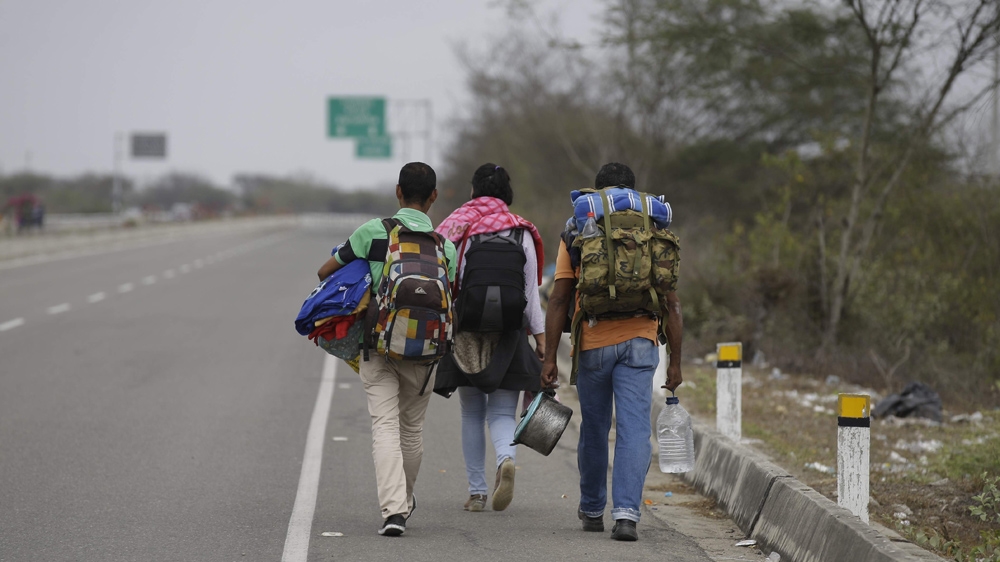
Argentina, for instance, absorbed nearly a thousand oil engineers who left PDVSA [Venezuelan Oil SA] almost immediately. But now they are a population with extreme needs and very great vulnerabilities. The humanitarian and development response plan for 2020 includes US$1.35 billion (R$5.7 billion), and we have managed to engage the European Union’s Member States more broadly and more deeply, which has been a very important contribution.
Q: These figures exceed the response capacity of any country in South America. Colombia, by far the main destination, has repeatedly called for greater international cooperation. Is this happening?
A: The times of political negotiation in the different groups created to find a way out of the internal crisis in Venezuela are not equivalent to humanitarian times. Humanitarian needs cannot wait. And that is why not only the Colombian authorities but all the countries that coordinated in the so-called Quito Process are insisting on the urgency of humanitarian aid to at least face the first demands of this crisis.
Some countries have imposed a type of visa that has reduced the flow of legal entry but has increased the number of irregular crossings, which makes this population more vulnerable because it has to resort to criminal gangs in order to cross borders. There is a level of urgency due to the unforeseen and rapid nature of this crisis. But there are also needs of a structural nature, of investment in host communities. This is essential. The solution is to create jobs for everyone, not only for Venezuelans.
Q: Colombia seems increasingly alone in its position of welcoming and migratory flexibility.
A: I want to highlight the intrinsic value of the Quito Process as a space to share successful experiences, particularly in the area of legalization and documentation. When a migrant or a person seeking refuge is legalized, the risks of abuse and violation of their fundamental human rights are reduced. What all governments ask is to be able to reach an agreement on tools that enable this regularization to be achieved, above all.
Q: How have host societies behaved? Do you fear that Latin Americans will lose their patience and that xenophobic outbreaks will emerge?
A: These outbreaks have occurred, they are happening. But, fortunately, so far there have been few. It is curious how they admire us from outside Latin America for this effort of conciliation, solidarity, and openness. The region has organized itself to innovate in the most fundamental issues of service, not only to the specific Venezuelan crisis but, in general, to our integral development needs.
The Quito Process is producing results in terms of regional understanding, even in educational issues, going beyond the schemes that already existed for the validation of professional qualifications.
Q: Beyond the fact that there may be a change in Venezuela that alters migratory trends, it is a phenomenon of immense magnitude. What scenarios do you envisage for next year?
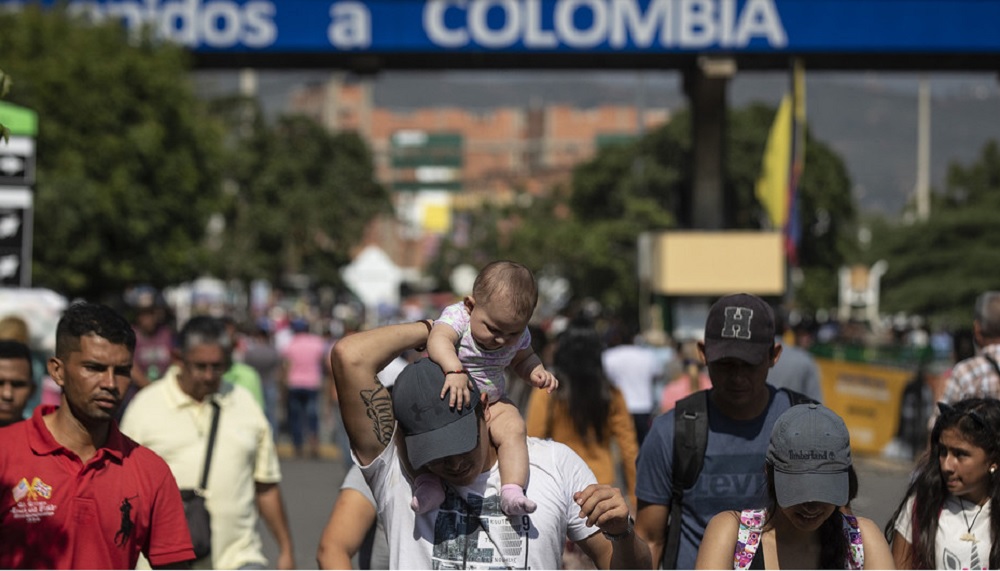
A: Judging by the crisis in other regions of the world, this population, in important numbers, does not return to its country anymore; it lays down roots in the country of destination. But the return takes at least two or three years or more.
In other words, we need to be prepared to continue to address humanitarian emergencies at least for the next two years. That is why we have drawn up this plan for the year 2020, in the hope that the absorption and social and labor insertion of those who have already left may continue in the pace that the governments would expect to achieve in the coming months.
Q: Will the number of displaced Venezuelans exceed that of Syrians next year?
A: If these flows persist, we could reach about 6.4 million people by the end of 2020. In other words, they would exceed the numbers of the Syrian phenomenon. With two important differences: people are leaving a country that is not at war and a country that has the largest proven oil reserves in the world.
Q: What lessons have you learned in your long year in office?
A: It was possible to secure international support for the times of humanitarian emergency, which are the crossing and the subsequent weeks. The need to invest in the host communities, in full terms, also emerged very strongly. If jobs are not created for everyone, these populations are immediately bothered by what they perceive to be more attention paid to “outsiders”, so to speak, than to locals.
Colombia has been a very notable experiment because it quickly identified legal or regulatory issues that needed to be modified to expedite the delivery of basic services to the population that continues to flow in.
More: Brazil news in English, every day from The Rio Times.
This article was produced by The Rio Times’ automated newsroom system. How we use AI · Report an error · Editorial responsibility: Matthias Camenzind, Editor-in-Chief
Venezuela and the United States
- What Is Going On Between Venezuela and the United States?
- What Is Going On Between Venezuela and the United States?
- Venezuela Geopolitics Explained, US Now Runs Its Oil
- Venezuela Politics 2026, Who Holds Power After Maduro